VIEWS: 644
February 5, 2026Just Passing Through: Geese Drop In on the Community During Migration
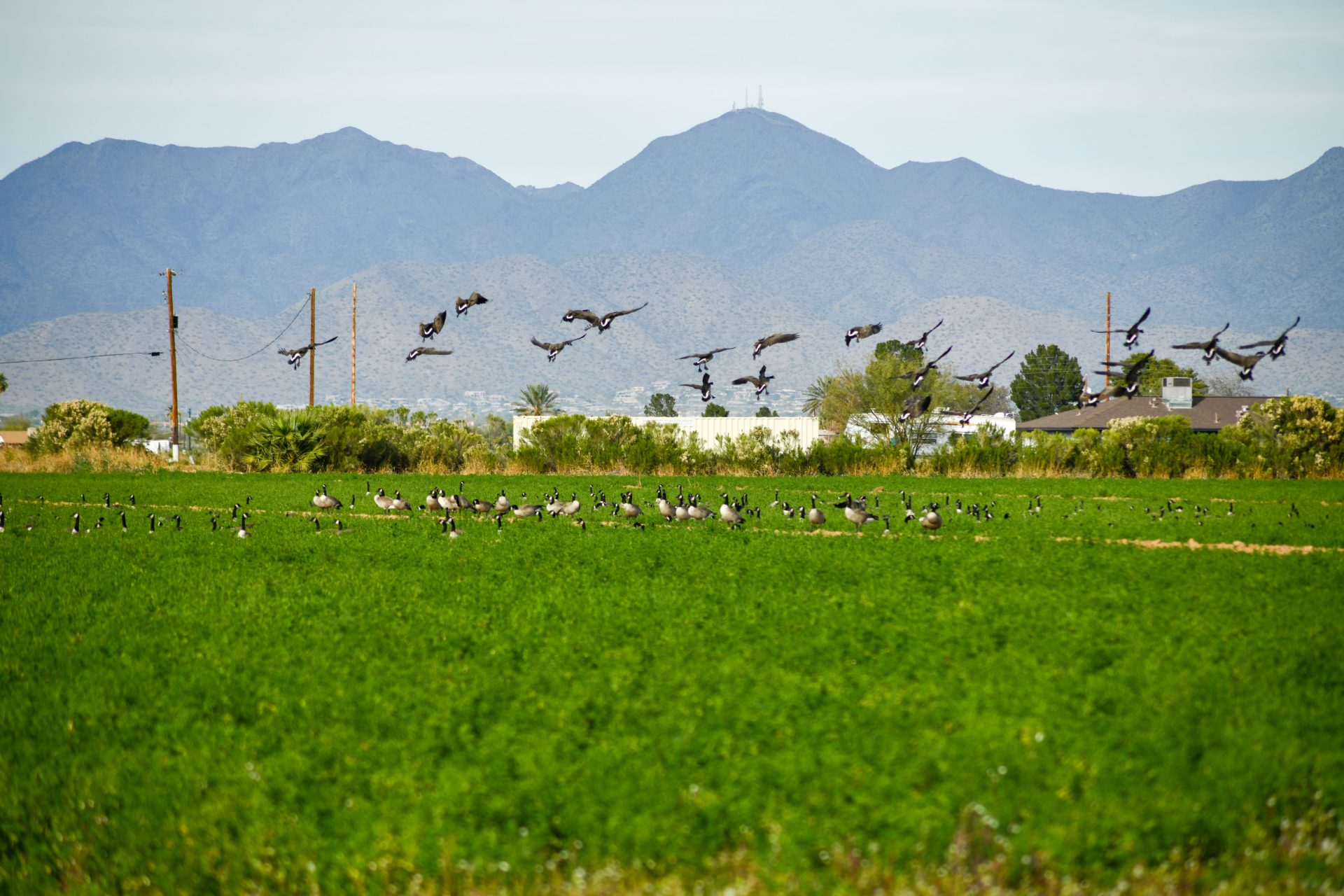
If you grew up in the Salt River Pima-Maricopa Indian Community, particularly during the winter and spring months, you probably have heard the familiar “honk” calls of migrating Canada geese flying overhead in a V formation. You might even catch them taking a pit stop in your own backyard.
The geese that travel through Arizona are following the Pacific Flyway, one of Turtle Island’s major bird migration corridors that stretches from Canada to Mexico. Western Population Canada geese nest and winter west of the Rocky Mountains from northern Alberta and British Columbia to southern California and Arizona, according to the 2025 Waterfowl Population Status Report. The report includes the most current breeding population and production information available for waterfowl on the continent.
For geese, Arizona sits at the wintering edge of the flyway and serves as a stopover rather than as a migration superhighway.
Being on the wintering edge means Arizona sees these geese each winter, but in smaller numbers than along other flyways. Some brave geese even stay in the Valley year-round.
This winter, Community members have documented the presence of the geese.
Kasheen Walker often sees geese this time of year in the evening time, beginning around 5 p.m., from the field on the northwest corner of Longmore and Osborn roads, continuing westward to the intersection of Osborn and 92nd Street.
3 Takeaways:
- Migrating Canada geese make a yearly pit stop in the Salt River Pima-Maricopa Indian Community.
- The O’odham and Piipaash word for “geese” is one of only a handful of words that are shared between the two languages.
- Scare tactics and planting thick vegetation are methods used by farming companies and Community members to deter the flying visitors.
“Depending on how close the geese are toward a residence, and if [the resident] has dogs, they will be there for quite a while if the dogs don’t chase them off,” said Walker.
Lillian Manuel, another Community member, said a certain local wild relative of dogs has also been known to give the geese a good chase.
“At about 6:30 p.m. it’s time for the geese to go home for the night, because it’s when the coyotes come out and try and get them,” said Manuel.
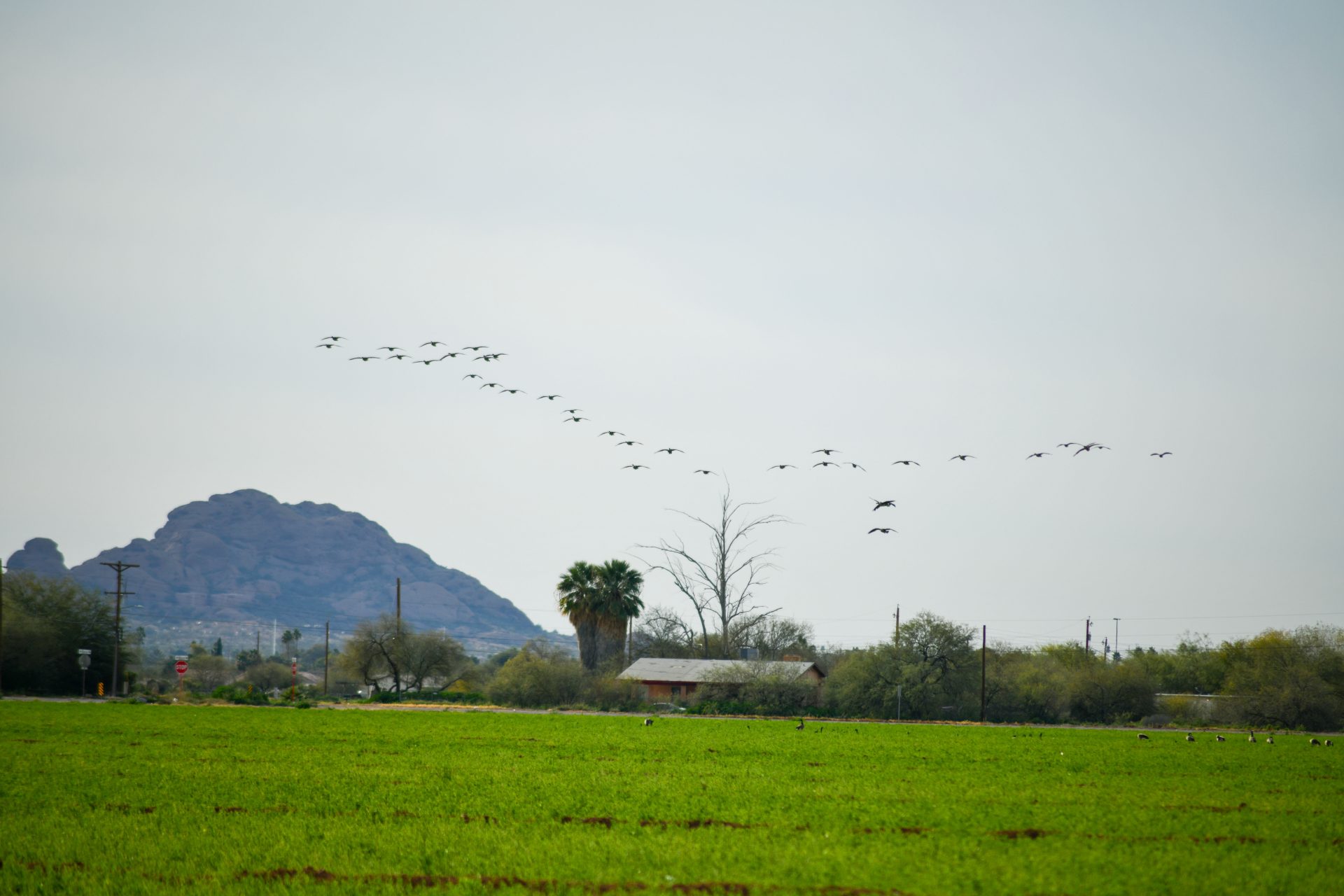
Canada geese can be identified by their brownish body with a black head and neck and a white chinstrap, as Senior Environmental Specialist–Wildlife Victoria Olmstead of the Community Development Department Environmental Protection and Natural Resources Division describes them.
“Historically, Canada geese flew through Arizona during migration, using ideal habitat as an important stopover point to refuel for their journey,” said Olmstead. “But now, more and more, they are seen year-round in urban areas, specifically where there are water features, natural or man-made, and easy-to-access food sources.”
Cultural Resources Department Director Kelly Washington said that he is not aware of any traditional uses or specific cultural meanings associated with geese for the O’odham and Piipaash. However, he noted that the word for “geese” is one of the very few words that may have been shared between the two languages.
“Other than the words borrowed from Spanish, the number of known words shared by O’odham and Piipaash can be counted on one hand,” said Washington.
“In Piipaash, a goose is called yalak. It is similar in other related Yuman languages. Most O’odham speakers today have difficulty remembering the name for a goose and may use terms for other similar-looking birds. Ethnobiologist and ornithologist Amadeo Rea documented that he found hialak to be the O’odham word. He had only one speaker share it with him. After doing more research, he found several documents from the 1800s that recorded this O’odham name for goose. It’s probable that the O’odham borrowed this word for a time from Yuman speakers but no longer use it. The name is probably onomatopoeic.”
Onomatopoeic means that it is a word that phonetically imitates, resembles or suggests the sound that it describes. In this case, yalak or hialak would sound like a goose’s honk in the way that the words “meow” or “chirp” reflect the sound a cat or bird would make.
And while the honking tends to get the attention, it’s nothing compared to the sights—and smells—that the geese leave behind on the farming lease lands and at the golf course.
“On golf courses and farms in particular, Canada geese are considered a nuisance because their presence damages turf and reduces harvest. For example, they will eat crops such as alfalfa, barley, beans, corn, soybeans and wheat, and trample turf,” said Olmstead. “Golf courses have additional concerns; the amount of feces [geese] produce can cause safety issues, such as making surfaces like sidewalks and walking paths slippery, and present the possibility of human health risks, introducing fecal coliform bacteria to an area.”
Have you ever heard a sudden bang echo across a field, followed by the chaotic whoosh of wings as birds scatter into the sky? Farming companies (or the nuisance wildlife removal companies they employ) will use a variety of methods to decrease the presence and impacts of geese in their fields, according to Olmstead.
“These methods are mainly scare tactics to produce loud noises, like car horns; pyrotechnics called bangers, which make a sound similar to the bang of traditional fireworks or a gunshot; and screamers, which emit a high-pitched screaming whistle. [They’ll also put] predator decoys in the fields,” said Olmstead.
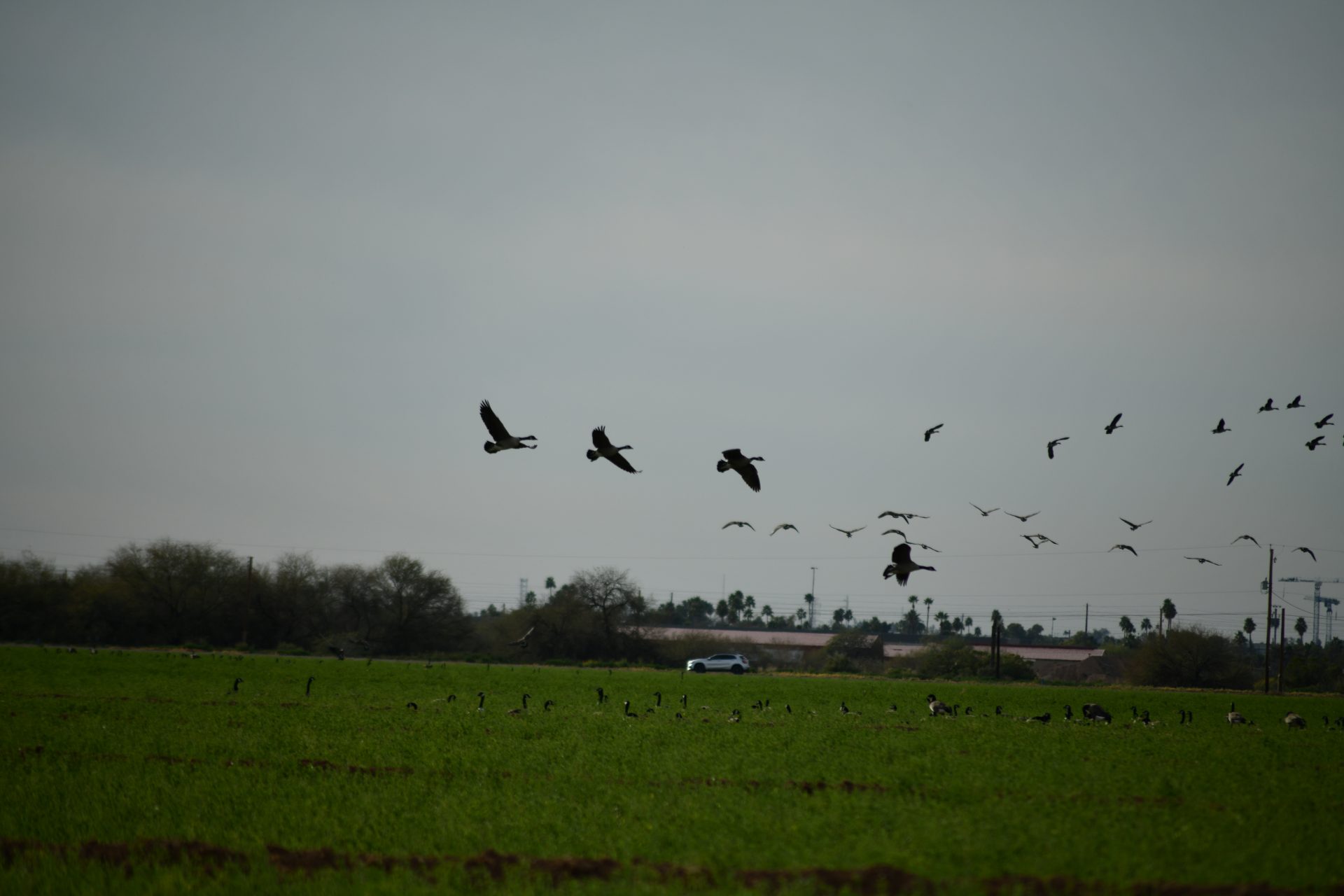
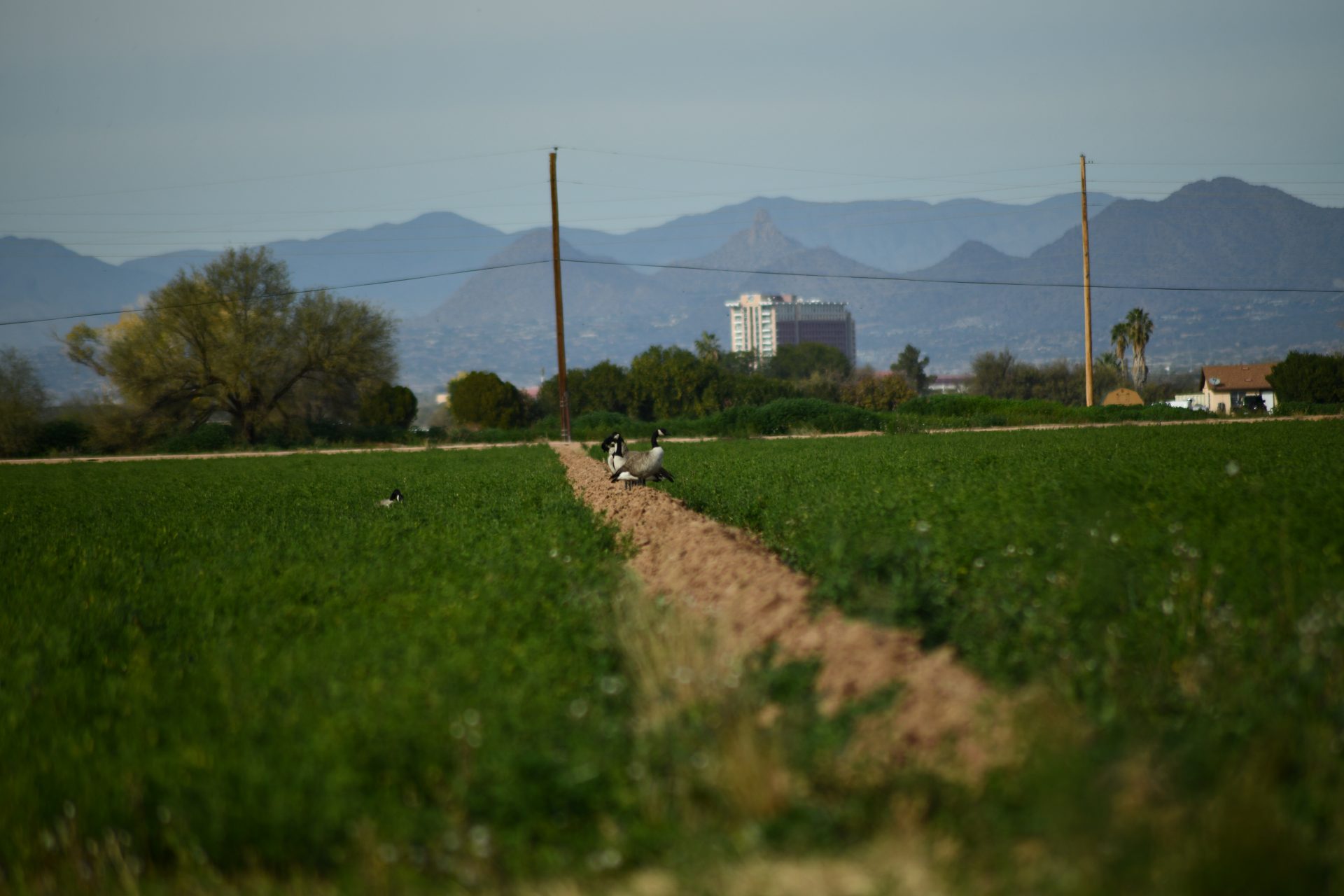
“Sometimes they’ll use trained dogs to scare the geese. These methods are often also used to scare away other birds that can be a nuisance, such as European starlings and pigeons.”
Community members with smaller backyards or living spaces can use small-scale scare tactics to help lessen the impact of geese.
When the geese are on the ground, Olmstead said they can be scared away by clapping, screaming, playing dog-bark recordings or running toward them waving your arms like a “wacky inflatable tube man.”
To deter the geese from landing in your yard, you can plant thick clumps of vegetation, such as shrubs, grasses or cacti, and attach strips of Mylar to the tops of fence posts, which create movement when blowing in the wind.
As we transition from winter to spring, Olmstead reminds Community members that the start of spring also marks the start of nesting season. This is when birds pair up, build a nest and raise their young. Birds will nest in trees, shrubs, cactus and even on the ground.
“When doing springtime yard work, trimming and pruning trees and shrubs, try to remember the birds,” said Olmstead. “Before you cut, take a quick break and check branches for nests. Don’t cut branches that have nests on them and try to make sure any cut branches won’t hit a nest as they fall.”