VIEWS: 606
December 22, 2025Jonathon Curry Brings O’odham World & Song Trails Program to Ske:g Himdag Ki:
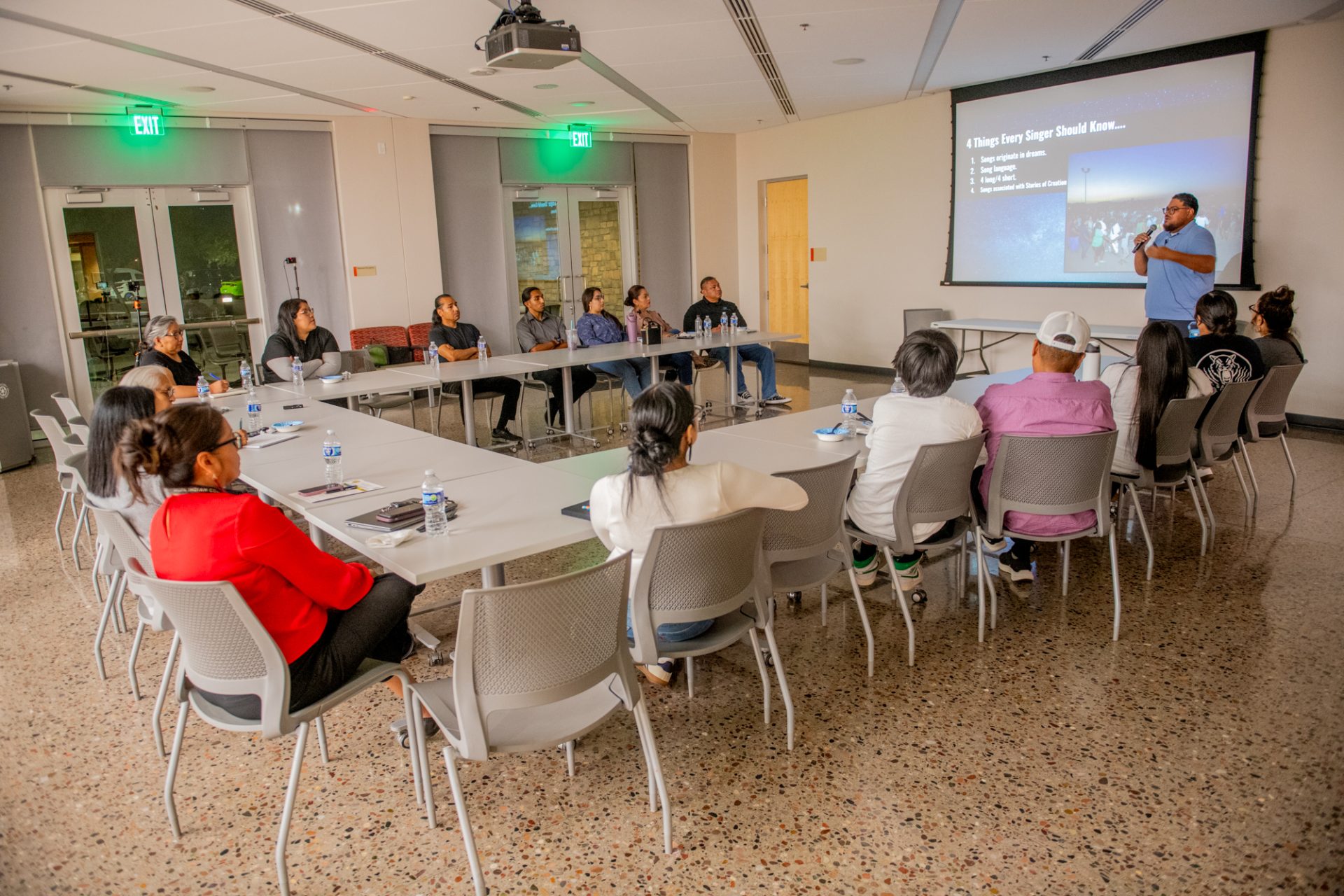
The Salt River Pima-Maricopa Indian Community’s Recreational Services Leisure Education Program at Ske:g Himdag Ki: brought the Community together for a special evening of season-appropriate cultural stories and songs on Nov. 4 with a program at the Salt River Tribal Library called O’odham World & Song Trails, hosted by Jonathon Curry.
Curry works for environmental planning firm Logan Simpson on their ethnography team as a tribal cultural specialist. He also has a passion for growing food and plants.
His focus of the evening was to inform the Community about their vast traditional land known as Akimel O’odham and the immense knowledge of the land that the Community carries.
“If we were to take our known knowledge of places, whether they be tied to stories of creation, songs or general knowledge of land, and we put it on an equivalent globe, that’s how I picture it in my mind,” said Curry.
The land he talked about ranged from the SRPMIC to Mount Graham in the east, along the Colorado River to the west, and down to the Sea of Cortez in Mexico to the south.
“You could be fooled—and I was—thinking that our understanding, our existence solely exists within these invisible borders of our tribal land, but it’s far more extensive than that,” said Curry.
“We are truly from this land. Meaning we are straight from the soil. Our roots grow deep here. Literally.”
Curry pulled up a map of 533 O’odham place names put together by Harry J. Winters Jr. in his book O’odham Place Names: Meanings, Origins, and Histories, Arizona and Sonora from across Arizona and the Southwest. Curry talked about 10 of them during the program.
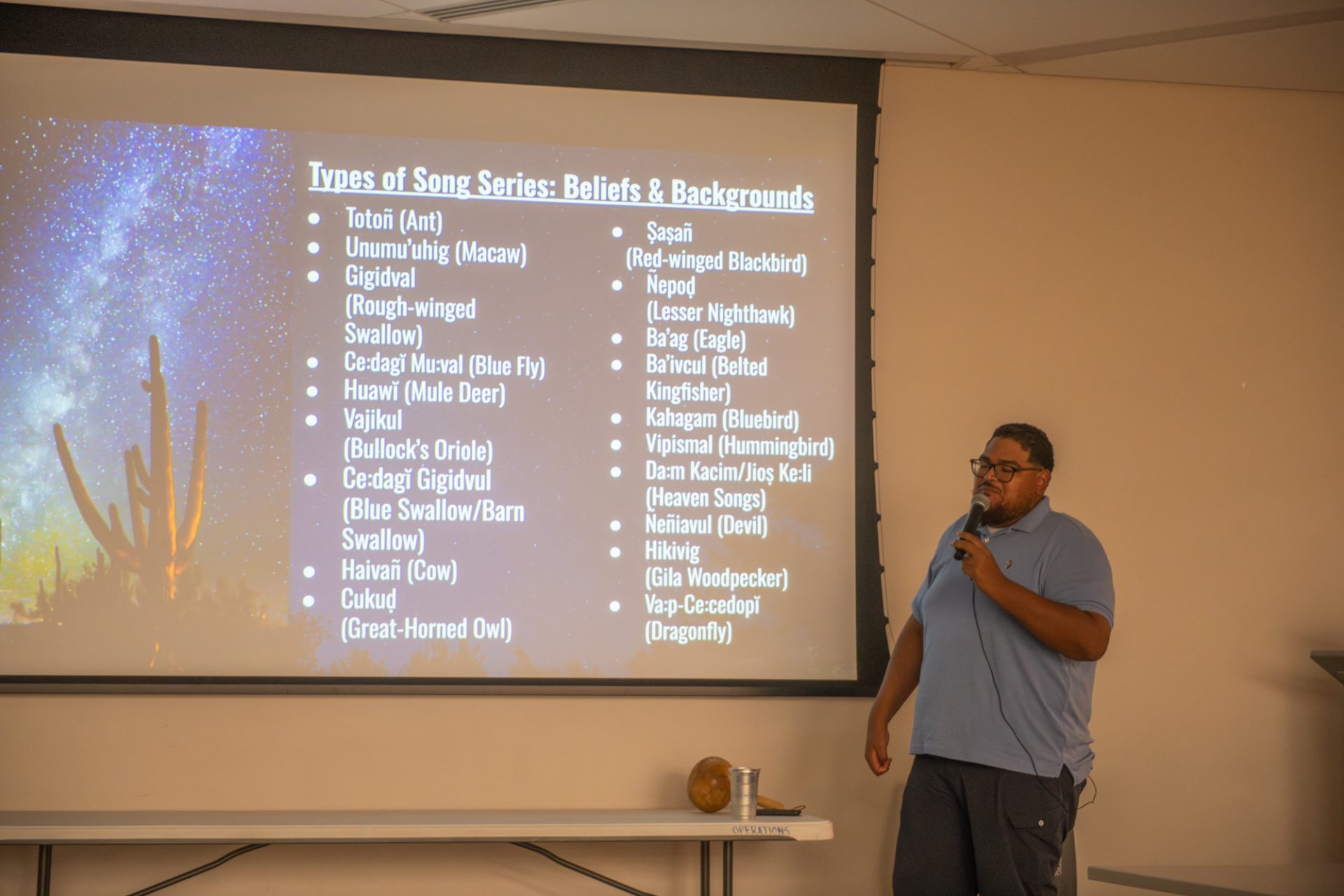
Later he talked about the four things every O’odham singer should know: songs originate in dreams; there is a such thing as a song language; the order of the songs is four long/four short (sing the song all the way through four times, then sing a middle chorus four times); and songs are associated with stories of creation.
“These songs are essentially poems. There is beauty within them,” said Curry.
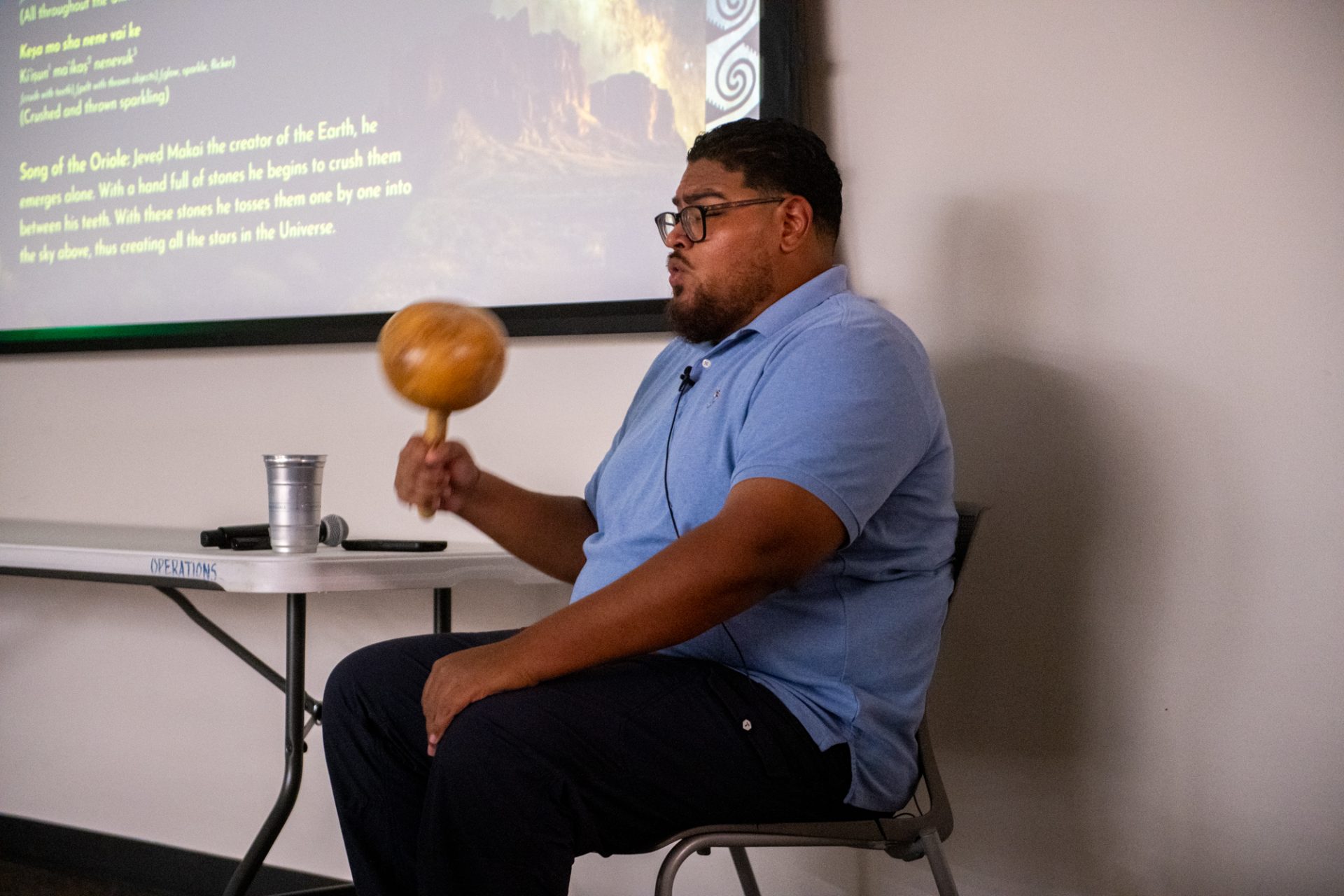
One of the songs talked about was the Song of the Oriole, Jeved Makai Am Na:to Heg Huhu’u. He took a deep dive into the process of translating the song. Here is his free translation of the Song of the Oriole:
Jeved Makai the creator of the Earth, he emerges alone. With a hand full of stones, he begins to crush them between his teeth. With these stones he tosses them one by one into the sky above, thus creating all the stars in the Universe.
Curry said that the types of specialty dances and songs include dance, social, ceremonial and curing. He shared proper etiquette and protocols for participating in O’odham song culture, which includes being on time and shaking hands and acknowledging each other before and after the song.