VIEWS: 1333
December 16, 2025HHS Secretary Robert Kennedy Jr. Tours Journey to Recovery Facility
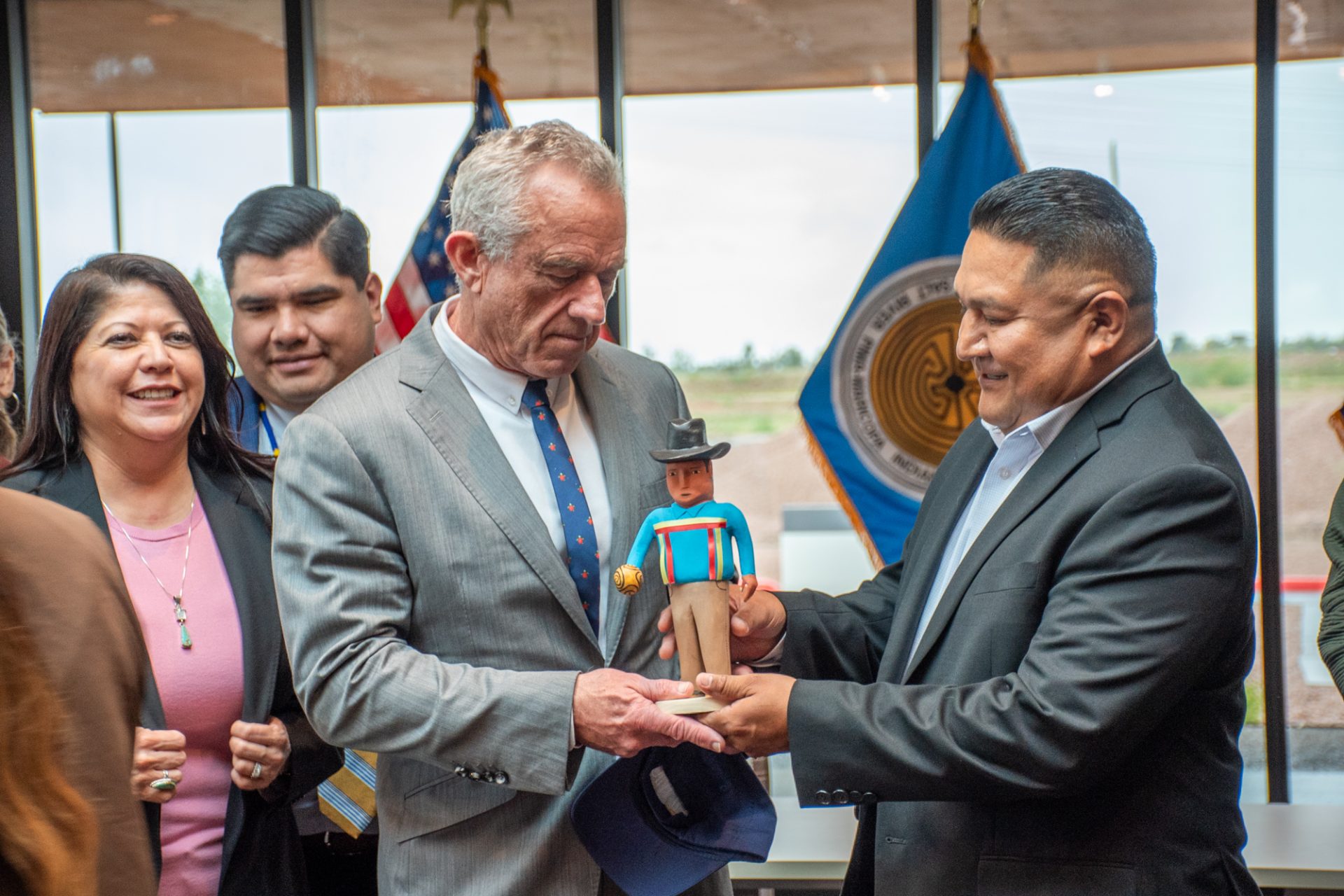
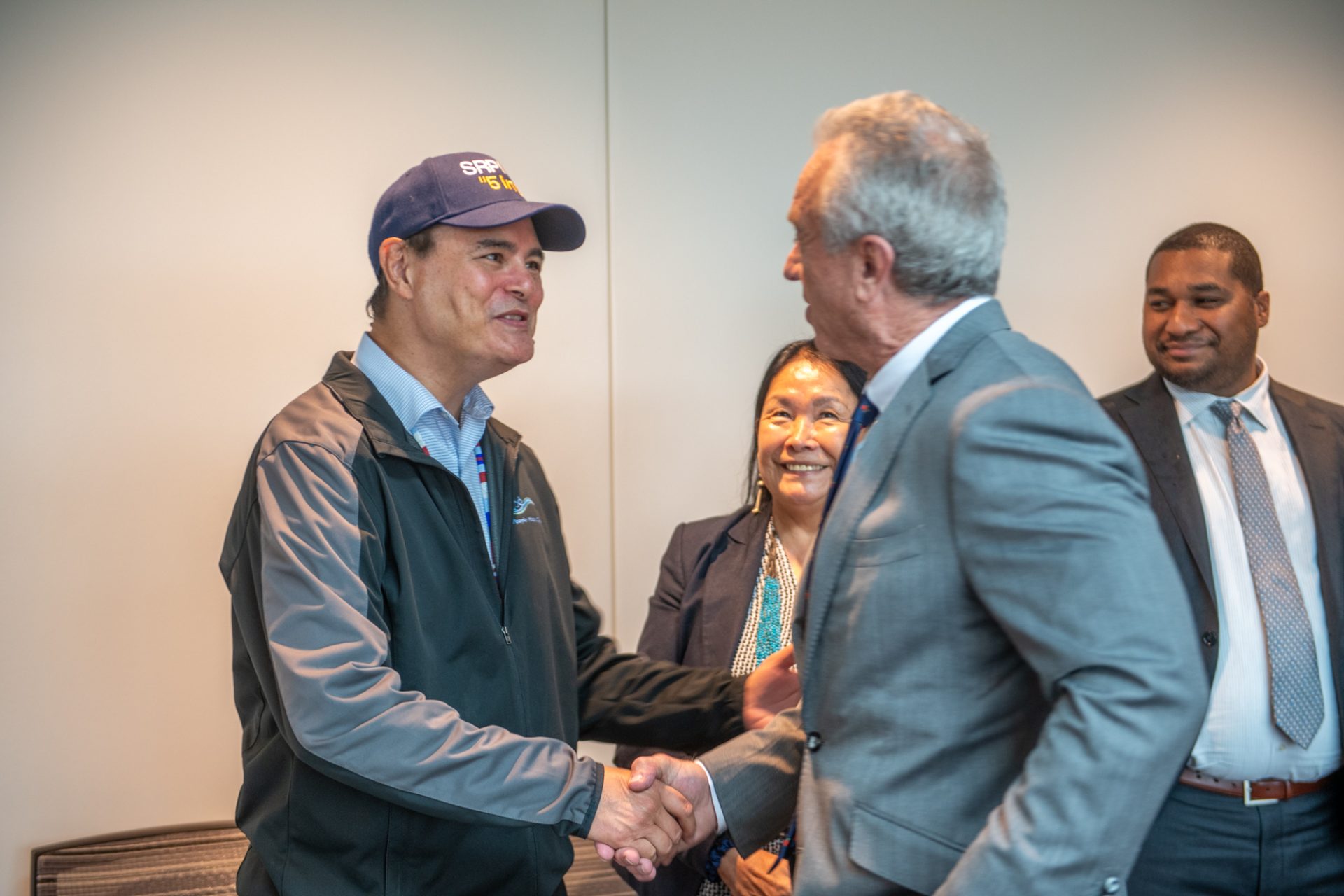
U.S. Department of Health and Human Services Secretary Robert F. Kennedy Jr. made his second stop this year at the Salt River Pima-Maricopa Indian Community on Nov. 19 for a private roundtable discussion and tour of the new Journey to Recovery (JTR) residential treatment facility on the River People Health Center (RPHC) campus.
Kennedy’s first visit to the Community this year, on Aug. 30 at the RPHC, was an impromptu gathering with SRPMIC leadership and SRPMIC Health and Human Services staff which came to fruition that weekend while Kennedy was in town visiting his son, who lives in the Phoenix area.
This time, Kennedy was able to visit the JTR facility, which he called “an extraordinary model, a success story” in an exclusive interview with O’odham Action News.
When asked about the importance of behavioral health and recovery treatment in Native American communities, Kennedy said that it is “important for our whole country” but also that “the crisis is most acute in Indian Country.”
“It’s now the largest killer of young people. We’re losing close to 80,000 kids a year,” said Kennedy. He could have been referring to provisional data from the U.S. Centers for Disease Control and Prevention (CDC), which estimated that about 80,000 people in the United States died from drug overdoses in 2024, a 27% decline from 2023. Available data from the CDC shows that firearms are currently the leading cause of death for U.S. children and teens, accounting for about 18% of deaths in that data pool.
In 2023, the leading cause of death among American Indian/Alaska Native (AI/AN) people ages 10 to 34 was unintentional injury, followed by suicide, according to the CDC.
3 Takeaways:
- This was the secretary’s second visit to the SRPMIC in 2025 to learn more about the Community’s health and addiction recovery facilities.
- A roundtable of SRPMIC, Journey to Recovery, HHS and U.S. HHS leaders met to talk about the health needs of the Community.
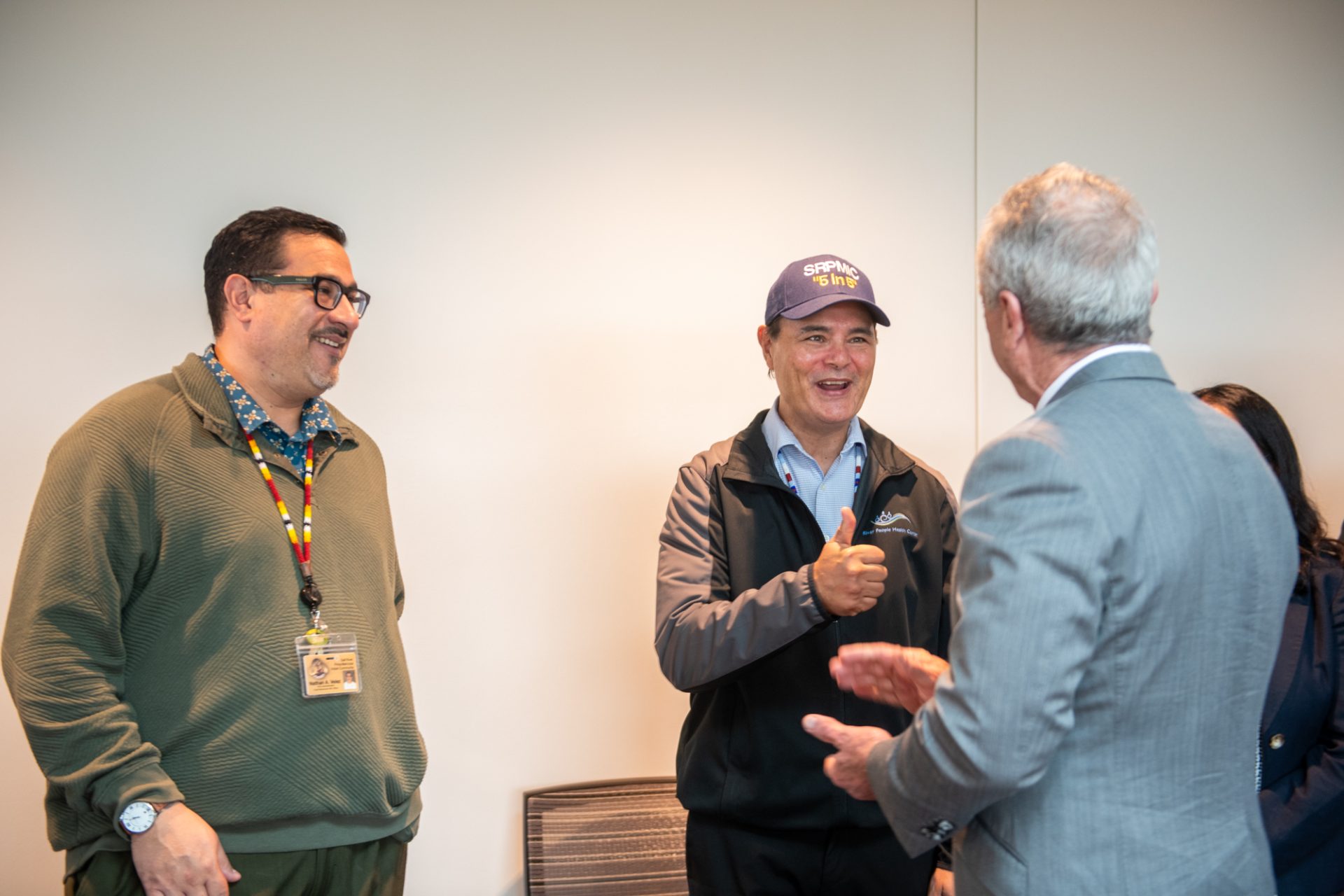
- Kennedy commented on nutrition and processed foods in Indian Country, the Community’s “5 in 5’” initiative, and Journey to Recovery being a model for addiction-recovery services in Indian Country.
After the private tour with JTR staff, Kennedy said that he was impressed with the facility and what it offers to Community members and Native Americans in need of addiction treatment.
“I think if we can figure out how to crack the code in Indian Country, we can deal with the issue everywhere. This is one of the models for how to do it right,” said Kennedy.
The focal point of the roundtable was mental and behavioral health issues, substance abuse recovery efforts, sober housing, traditional healing and how the U.S. Department of Health and Human Services can improve these areas in tribal communities.
In 2024, the U.S. Centers for Medicare & Medicaid Services (CMS) approved 1,115 waivers for AI/AN traditional healthcare practices to be covered under Medicaid in Arizona and three other states. These waivers are now in effect.
“We’re going to look at how it performs,” said Kennedy. “But for the first time, we’re allowing traditional healing to get compensated under those federal programs.”
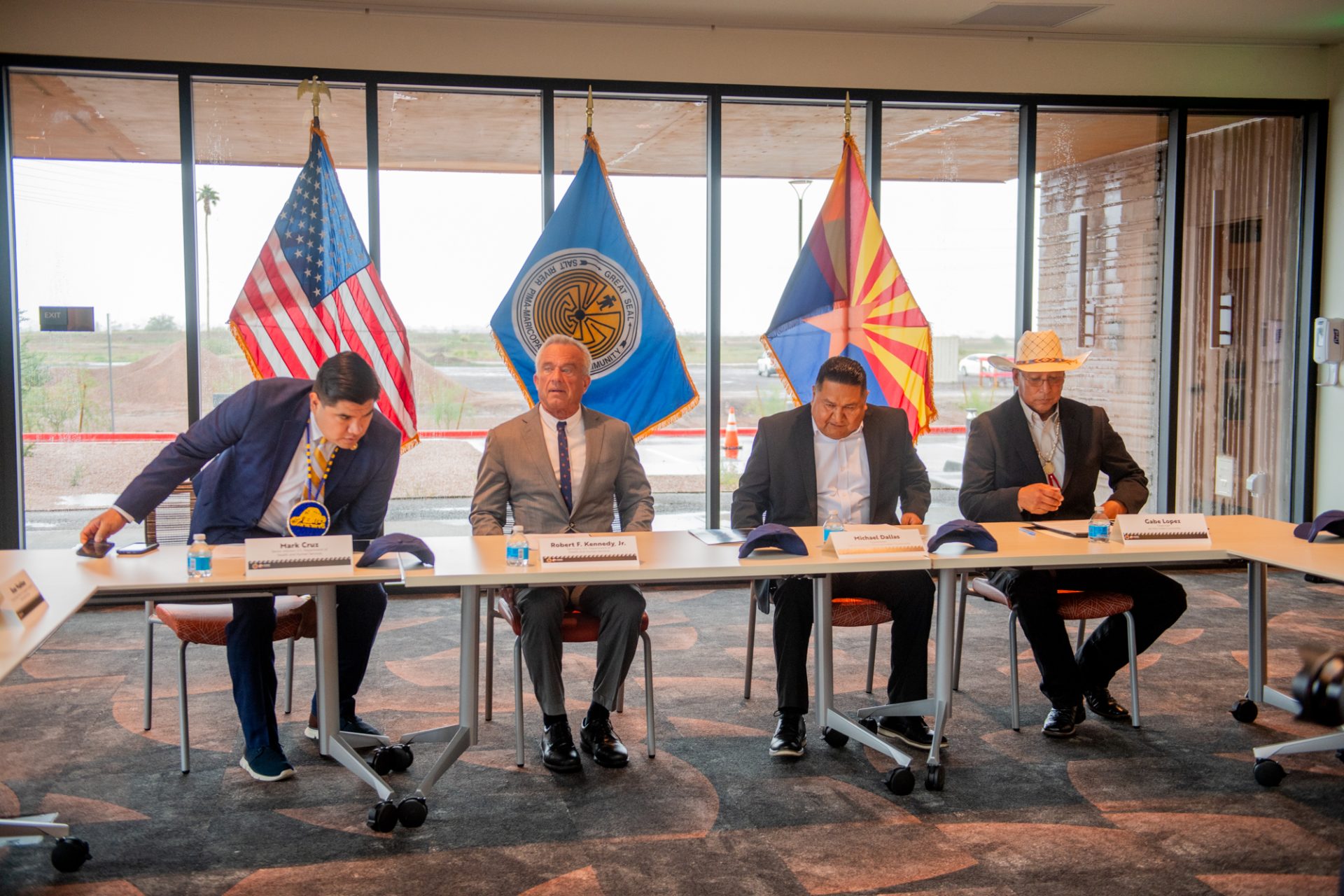
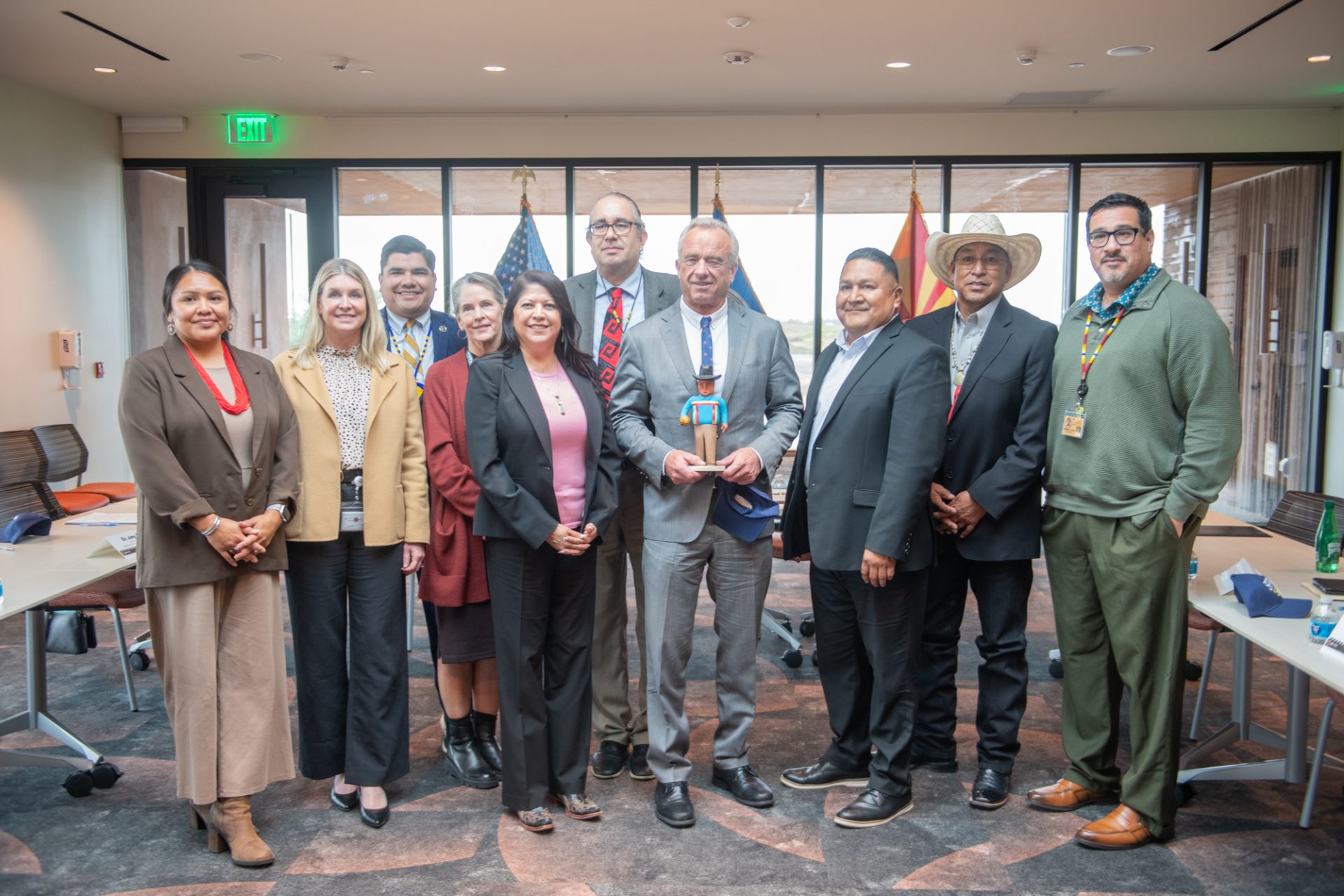
The roundtable included Kennedy, SRPMIC Council member Michael Dallas Sr., U.S. HHS senior advisor Mark Cruz, Ak-Chin Indian Community Chairman Gabriel Lopez, SRPMIC Chief Behavioral Health Officer Dr. Nathan Velez, SRPMIC Chief Medical Officer Dr. Amy Beiter, Native American Connections Clinical Assistant Professor Christopher Sharp, Native Health Director of Behavioral Health Joy Golden, Ft. McDowell Yavapai Nation Director of Wassaja Family Services Tamara Tuia, and Indian Health Service Acting Deputy Director for Management Operations Rose Weahkee.
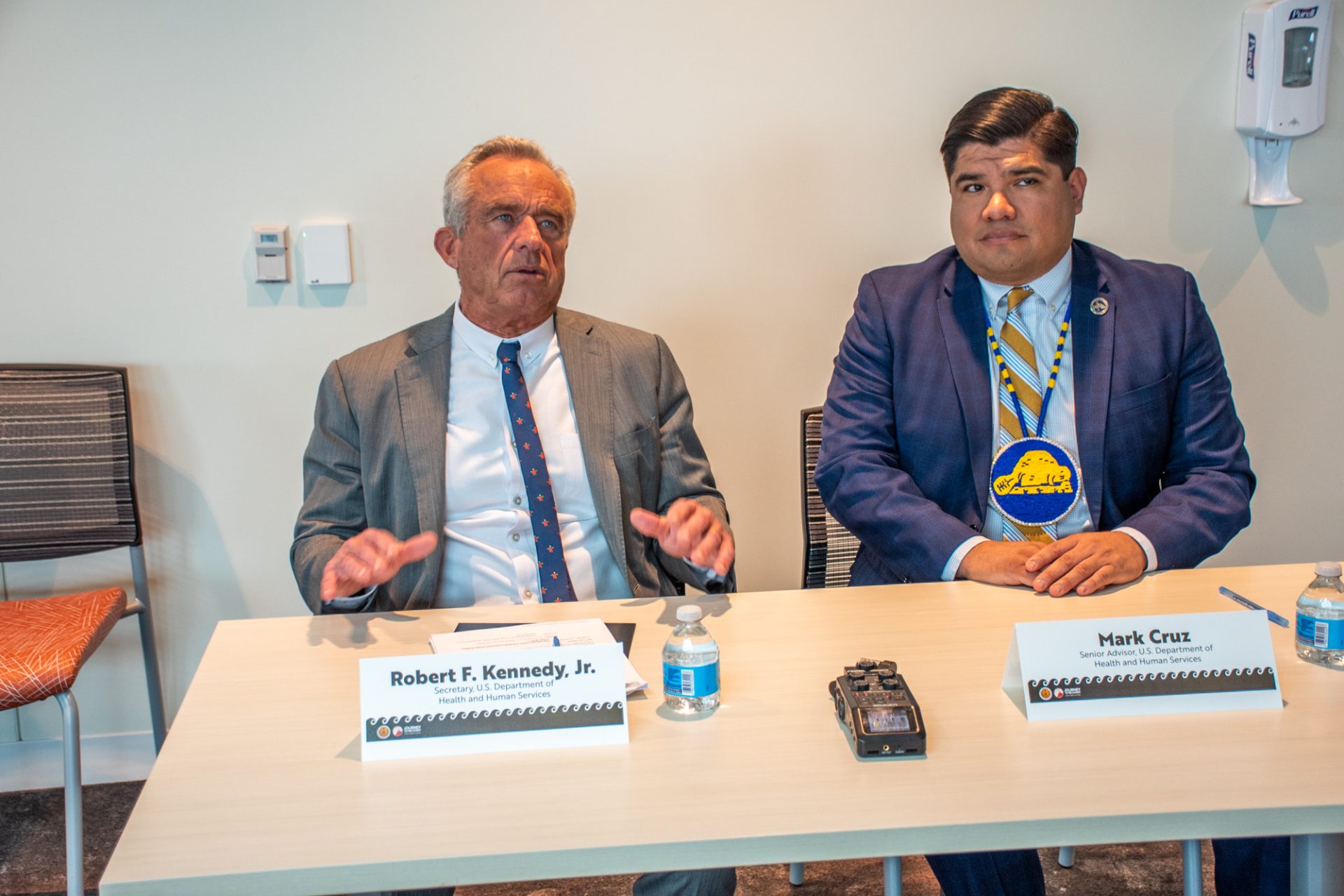

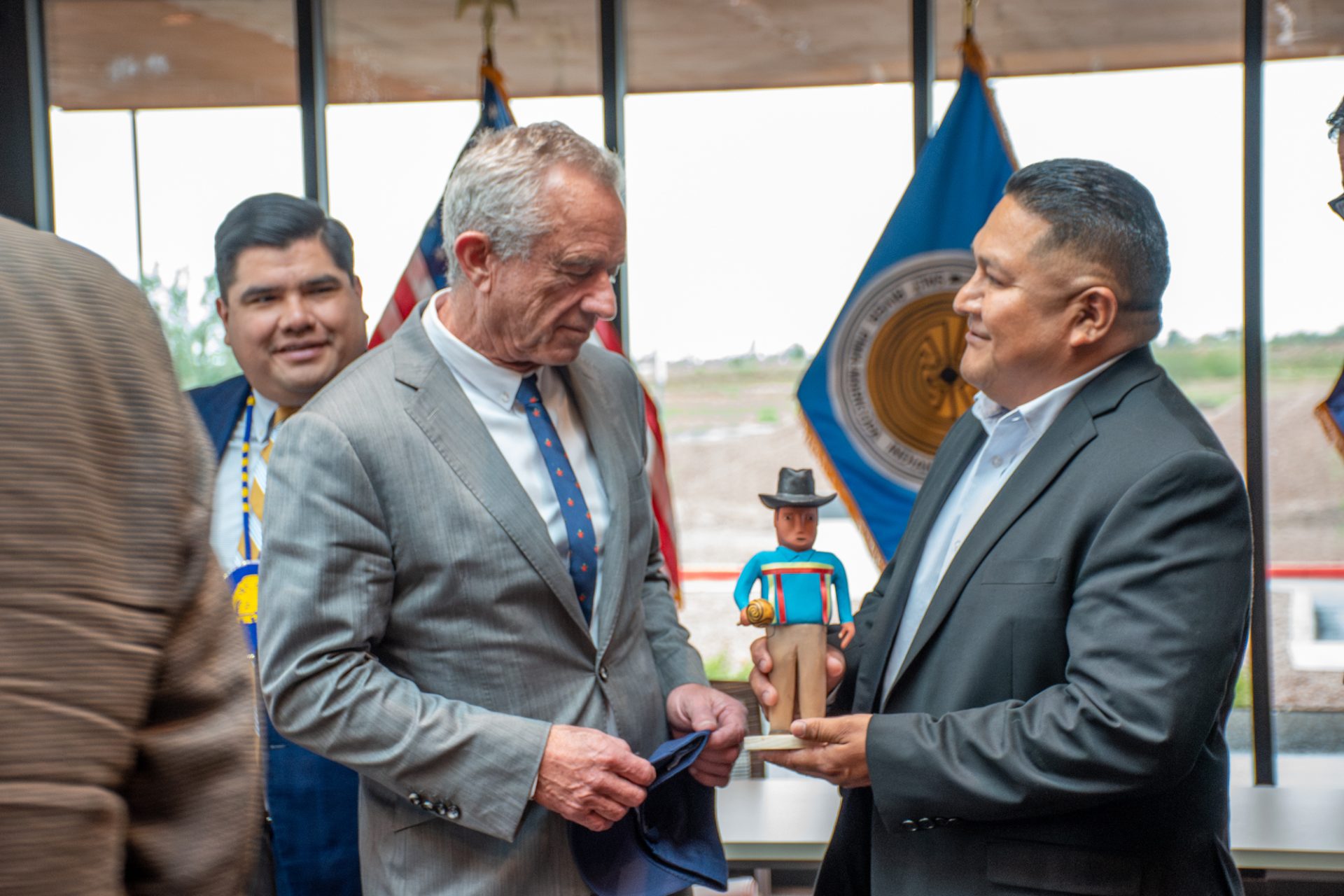
Kennedy said that one big preoccupation for him is nutrition for Native Americans across Indian Country.
“Ultraprocessed foods are killing all Americans. They now have the worst health of [people in] any country in the world. But in Indian Country, once again it’s more pronounced. Ultraprocessed food is bad for everybody, but it’s absolutely poisonous for American Indians,” said Kennedy.
“I remember 20 years ago being on the Hopi Reservation, and I’m talking about white as white flour, white sugar, white grease, and how that was the sort of coup de grâce of the just continuing genocide.”
Kennedy continued, “And the Pima Indians are, you know, a really good example, almost like a natural experiment. Because on this side of the border, Pima Indians, … used to be among the longest-lived populations in North America—they talk about them as being expected to live to 104 years old—and now they are the shortest lived. They have the highest diabetes rates, highest obesity rates, terrible cardiac problems. But if you go across the border to Mexico, other Pima Indians, they’re still slim and long lived and have very, very little diabetes or heart disease. And it’s all because of diet.”
The Community’s “5 in 5” health initiative to increase Community members’ average life expectancy by five years within five years particularly impressed Kennedy.
“I think it’s a really important ambition, and just saying ‘5 in 5’ and explaining to people what it means is important to educate,” said Kennedy.
“Why did they lose so much lifespan? And what is that robbing us of? And a lot of it has to do with kids dying young because of addiction and overdoses. It also has to do with adults being sicker and living less fulfilling lives. And, so I think, you know, that it’s the spear tip of a problem that if we can solve that problem, a lot of other things will fall into place.”