VIEWS: 661
May 28, 2026Shield Raised with First Look at Kavaḍ/Kushov Cultural Center
The Shield of the Salt River Pima-Maricopa Indian Community has officially been raised.
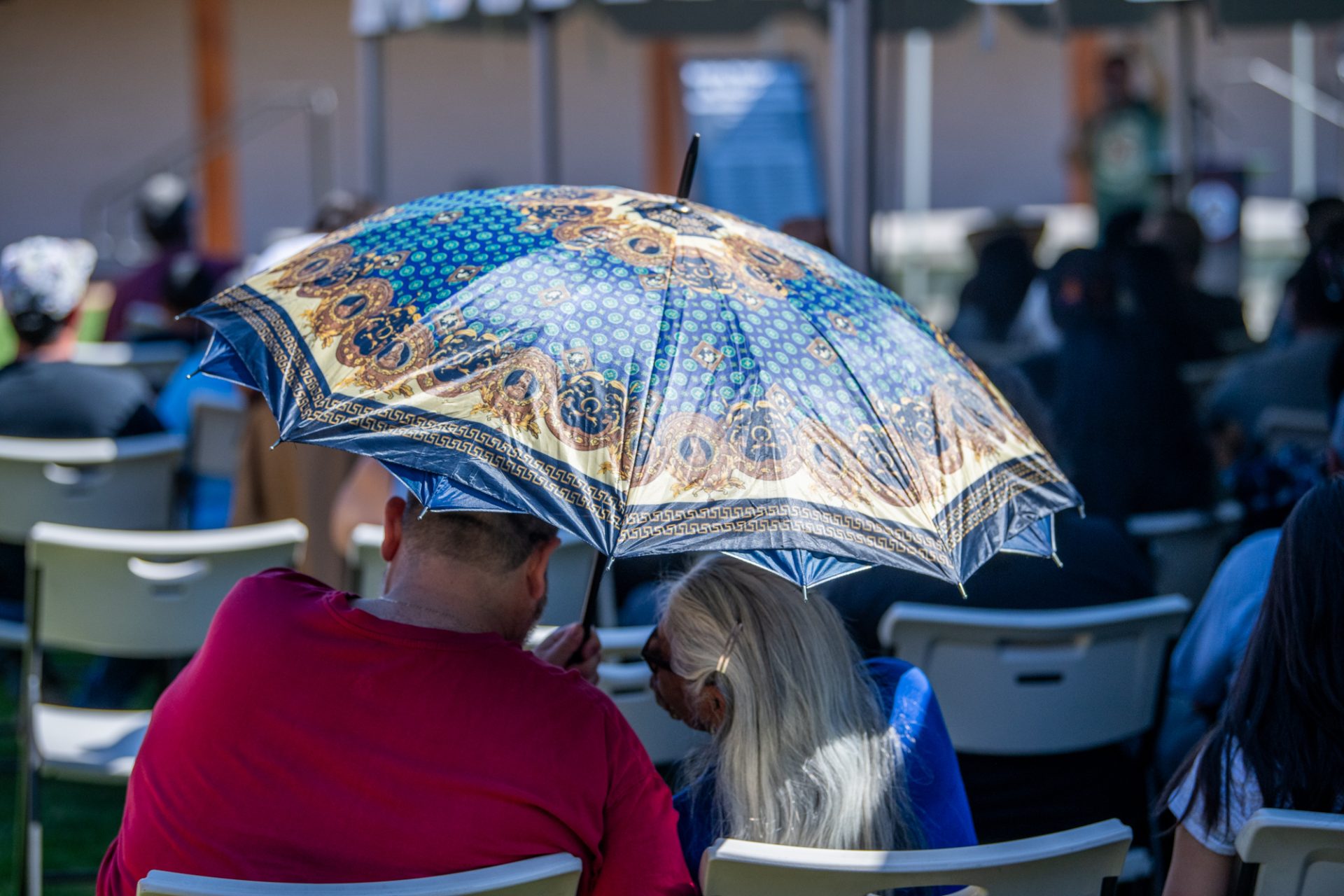
Generations of Community members convened for the grand opening of the Kavaḍ/Kushov Cultural Center on May 2, experiencing a significant moment in time. The center is located across from the Community Building, north of McDowell Road.
The name given to the cultural center, Kavaḍ/Kushov, carries weight and purpose for the Community. The function of the facility is to protect, defend and perpetuate the histories, languages and cultures of the O’odham and Piipaash. To reflect this intention, Kavaḍ (O’odham) and Kushov (Piipaash) both mean “shield.”
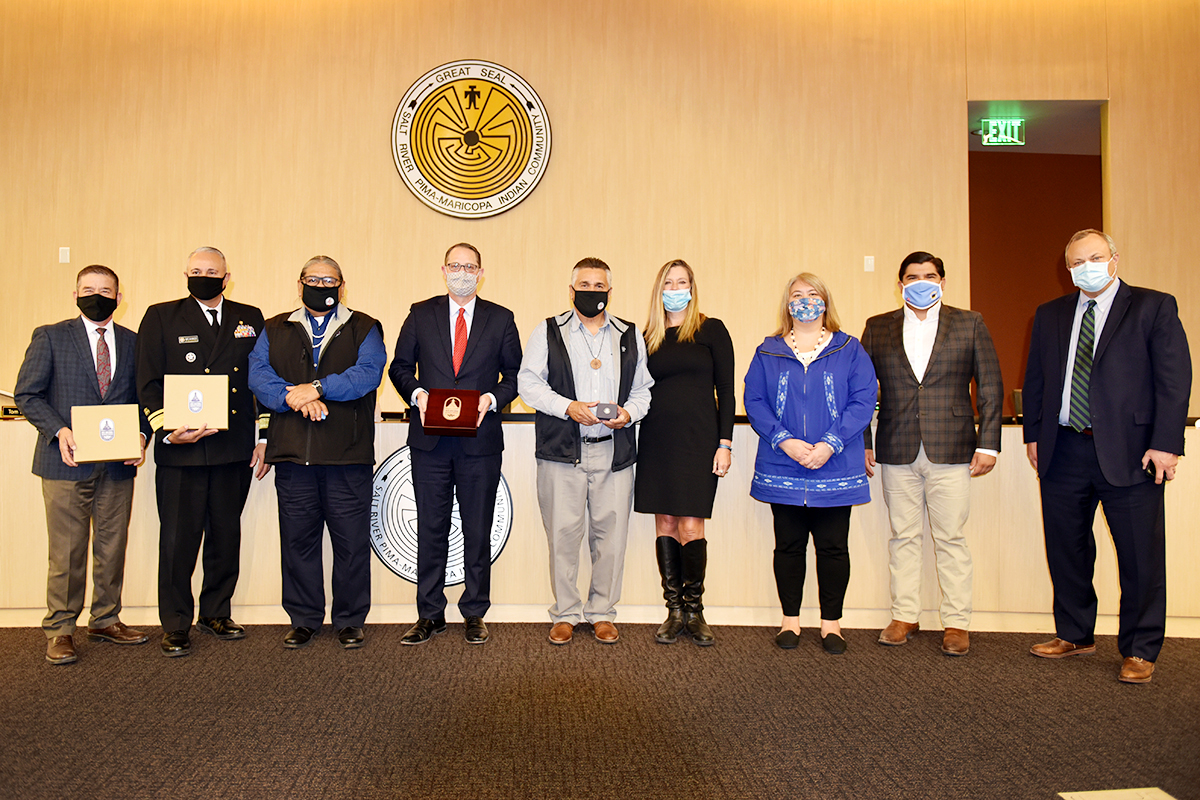
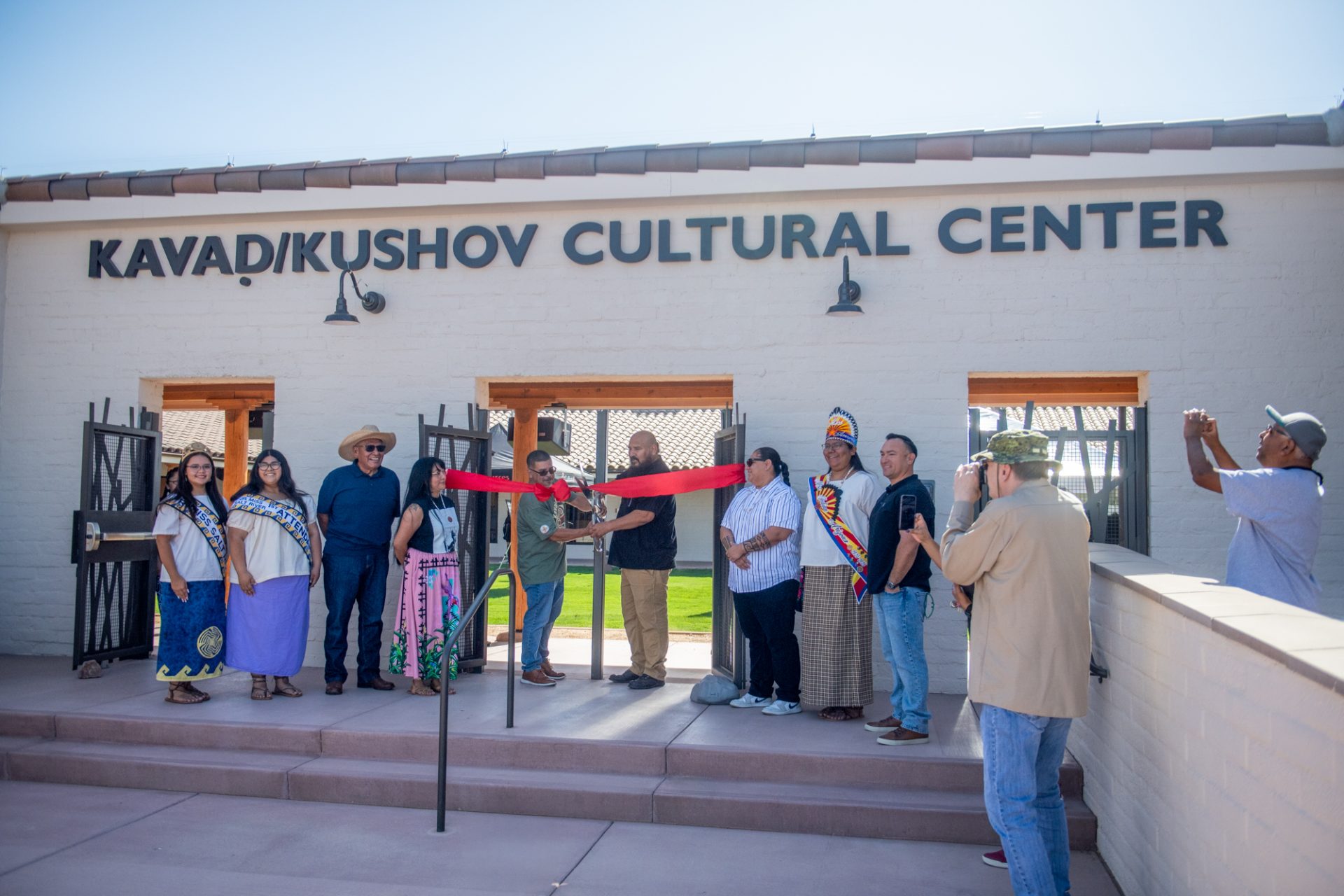
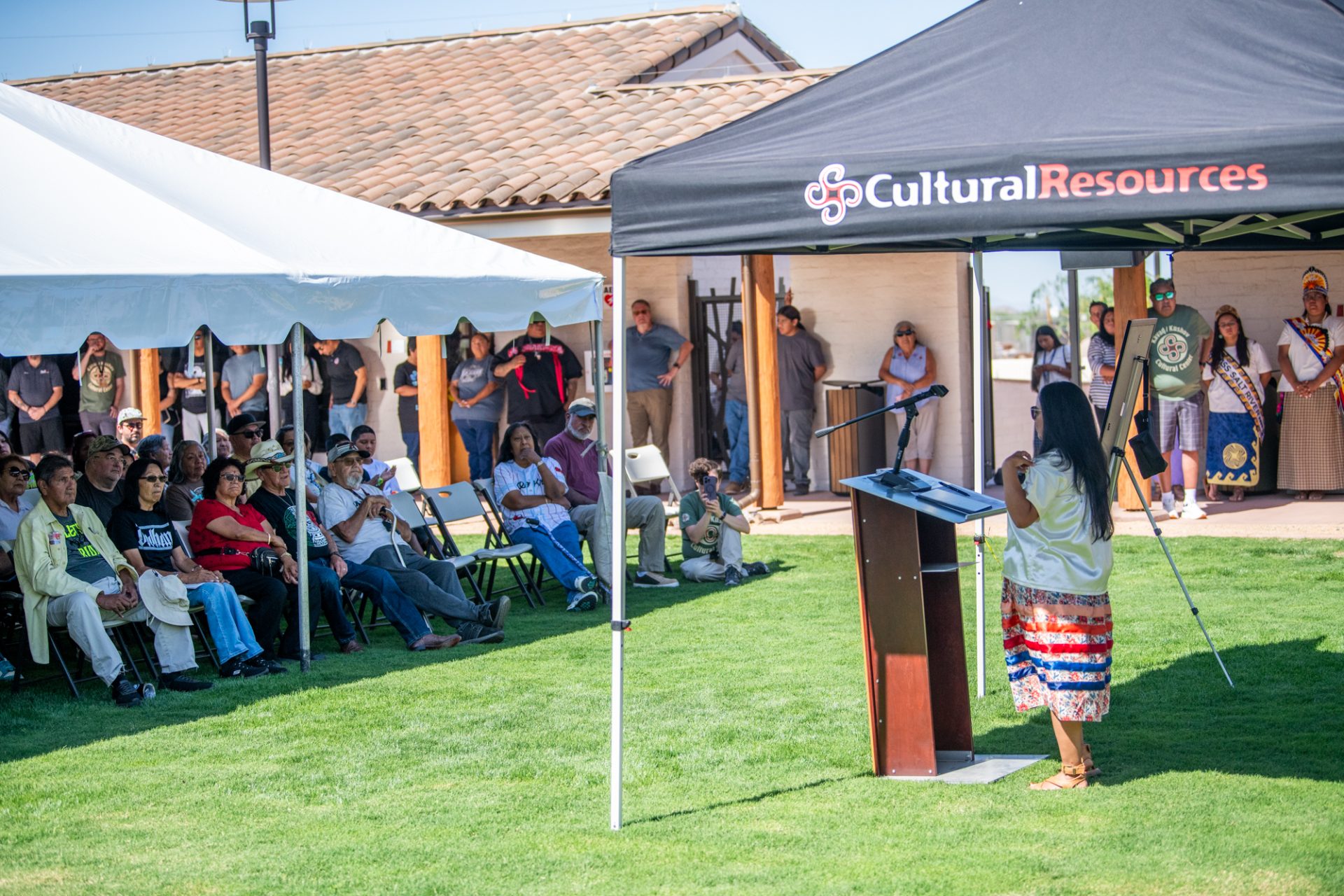
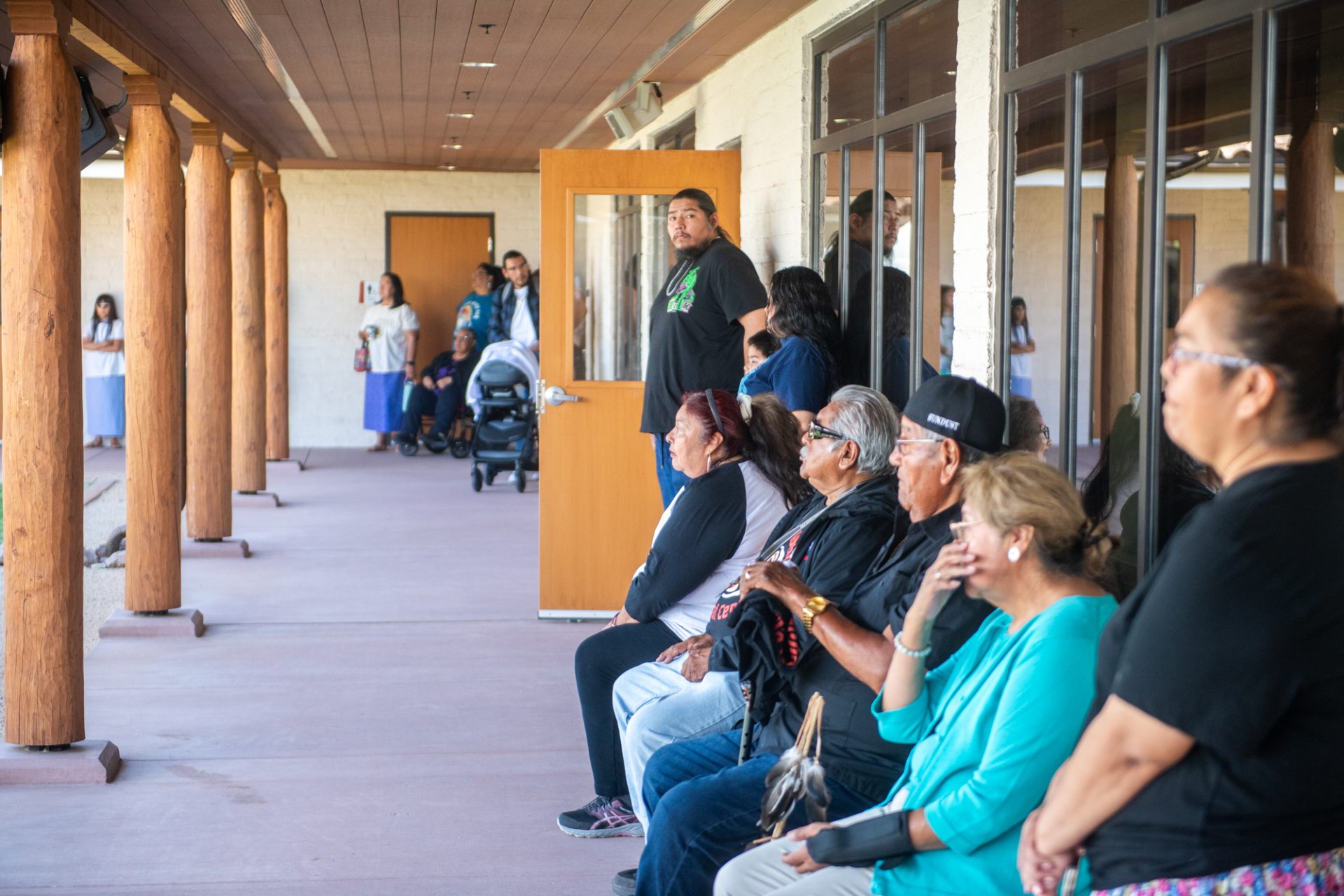
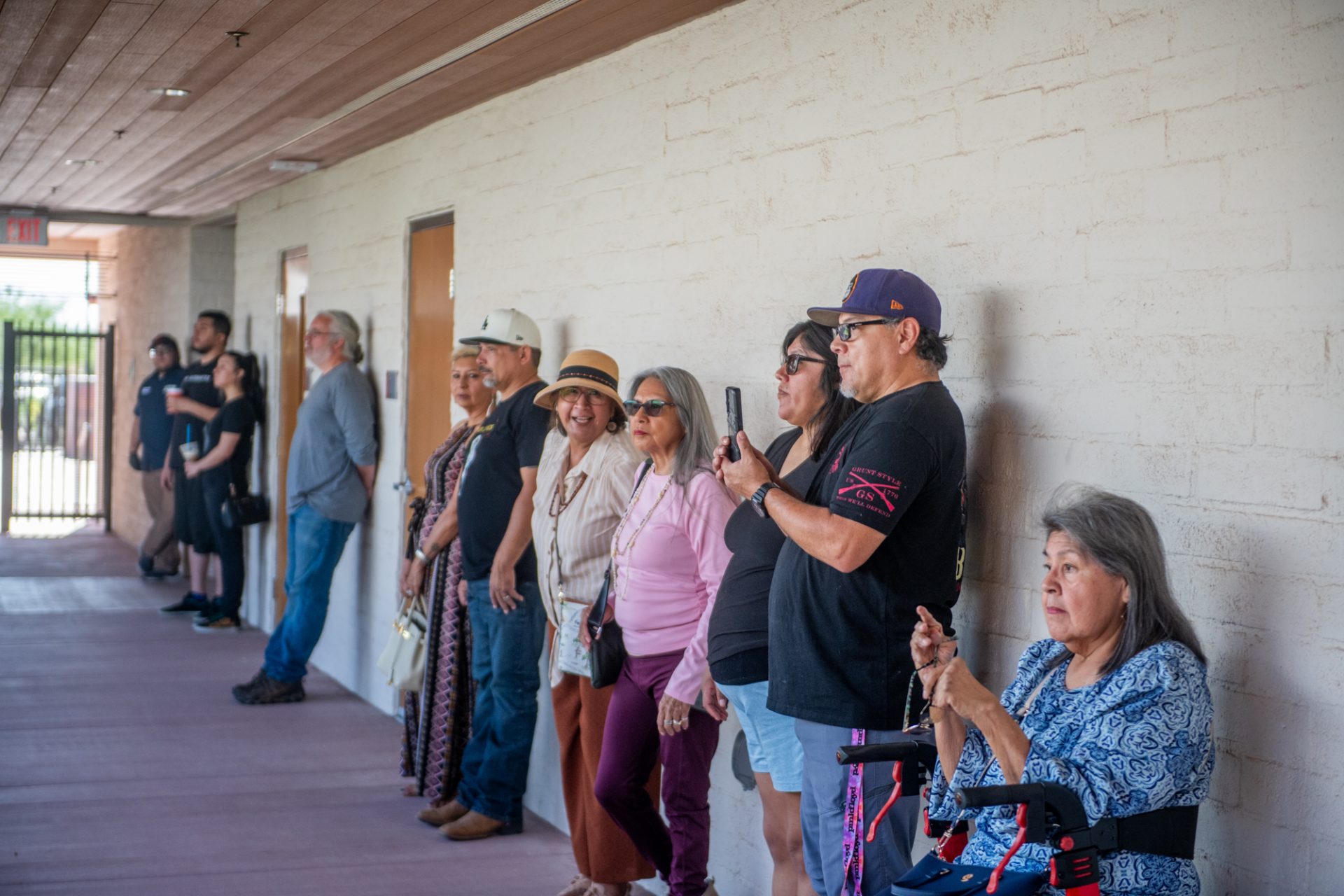
A ribbon-cutting took place with Cultural Resources Department staff and Community leaders at the center’s entrance as eager Community members applauded and made photographic memories of the milestone.
3 Takeaways:
- A ribbon-cutting ceremony signified a new beginning and new memories for the Cultural Resources Department and Community members.
- Kavaḍ (O’odham) and Kushov (Piipaash) both mean “shield.”
- The cultural center was built by many Community members.
The entire campus used to be the home of the Salt River Day School, which opened in 1935. It was built by Native vocational students from the Phoenix Indian School, many of whom are believed to be or to have been Community members. The Day School transitioned into Salt River Elementary School in the 1990s, and on May 23, 2007, that Salt River Elementary School held its final day of classes.
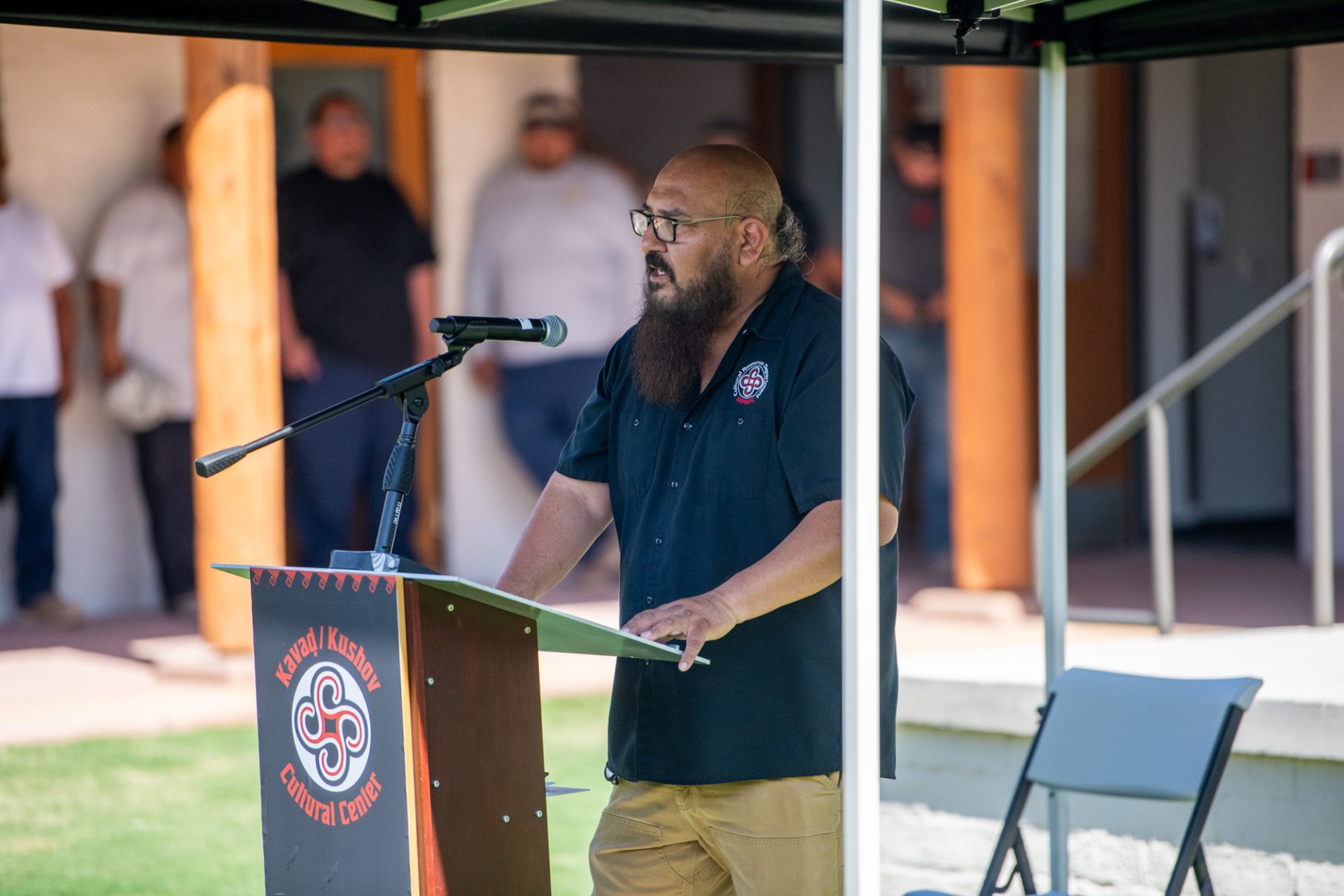
“When this building came to the end of its former life as a day school, we wanted to make sure that we continued the stories and history because this is the day school that served our Community in the longest capacity,” said Cultural Resources Department Director Kelly Washington.
“For better or for worse, either happy or sad times—it depends on when you went here and your experiences, and what teacher you had at the time—it shaped our lives for a lot of generations here.”
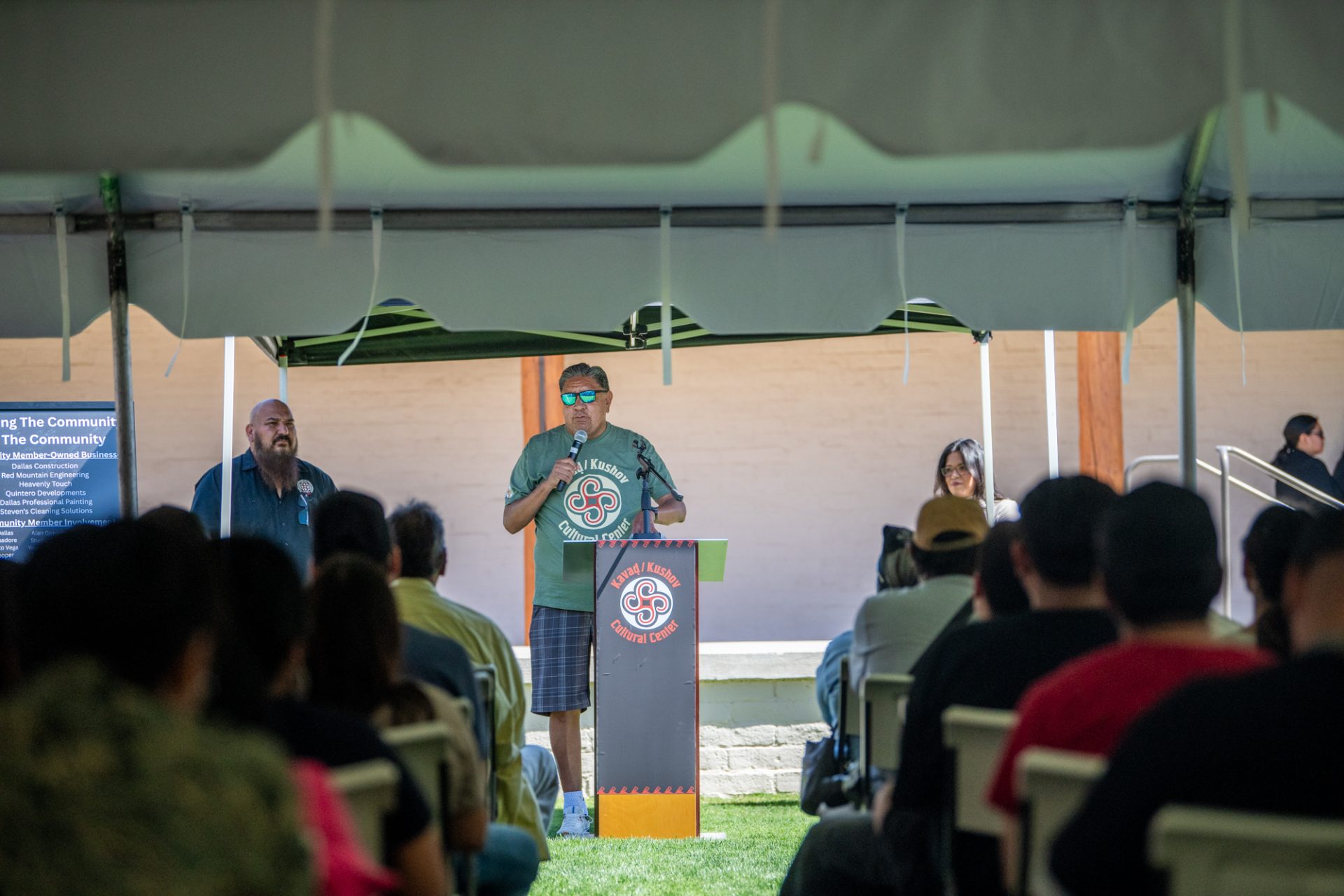
With the ribbon cut, a program was held in the courtyard, a place that seems to evoke memories in many Community members. It is a gathering space in the middle of the campus with a stage. Surrounding the courtyard are the offices and cultural classrooms of the Cultural Resources Department. CRD staff such as language program employees, leadership and historians moved their offices from near Two Waters to the new campus.
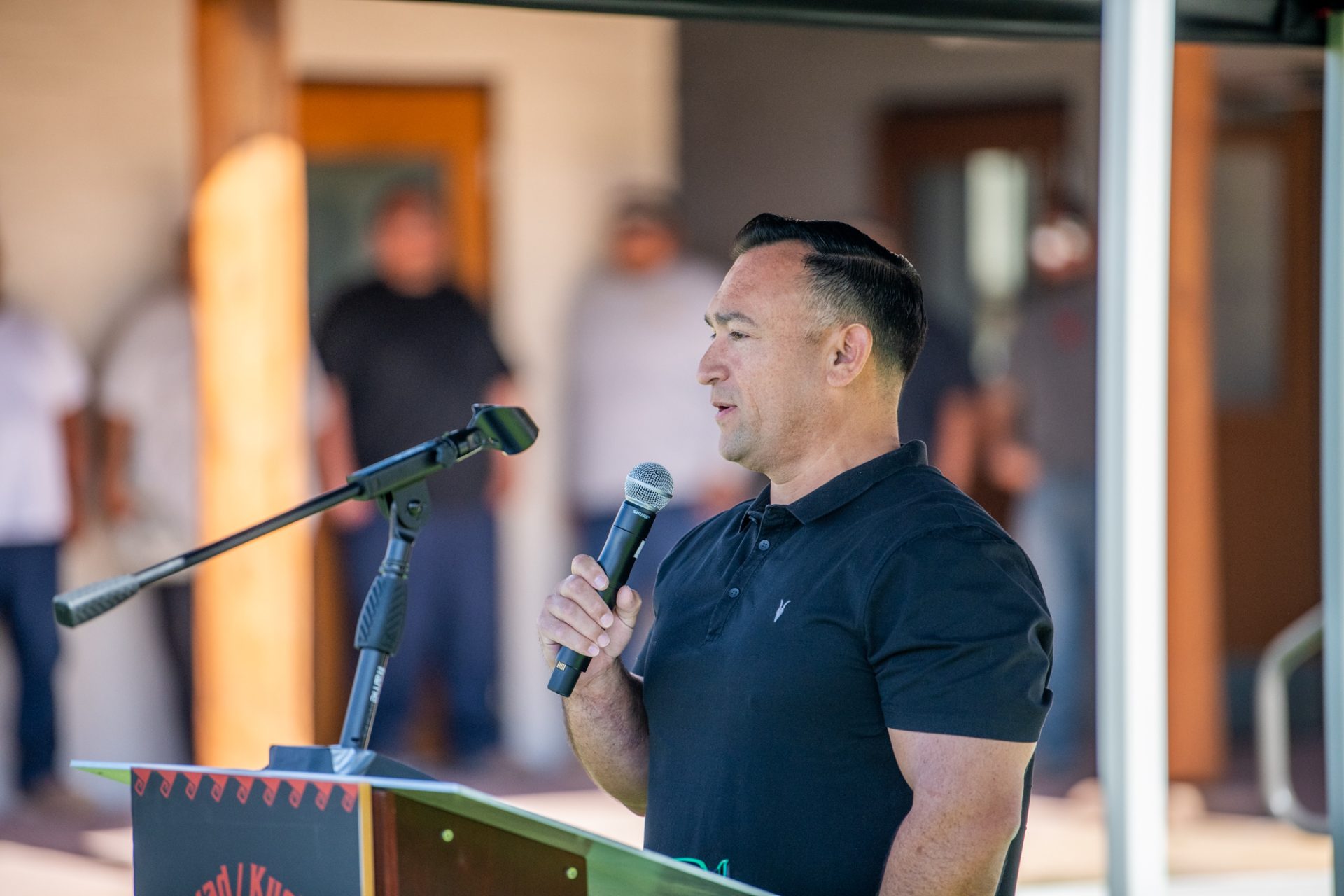
Martha Ludlow-Martinez, the Community’s Native American Graves Protection and Repatriation Act (NAGPRA) coordinator, emceed the program. Martinez and the rest of the Tribal Historic Preservation Office staff now have offices at the old teacher’s dormitory that was located alongside the Salt River Day School.
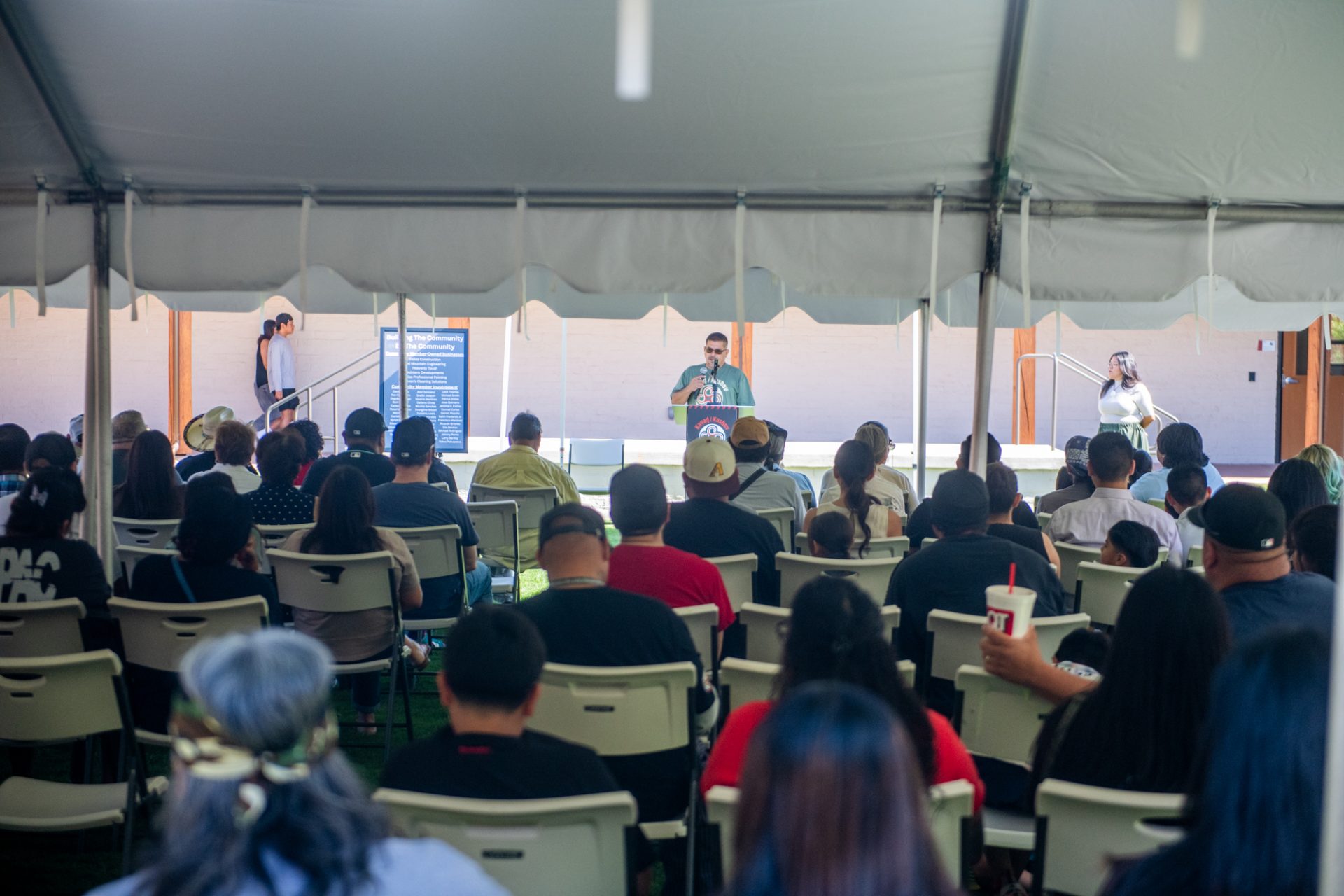


“We welcome everybody to this campus that we are all going to be able to enjoy,” began Martinez.
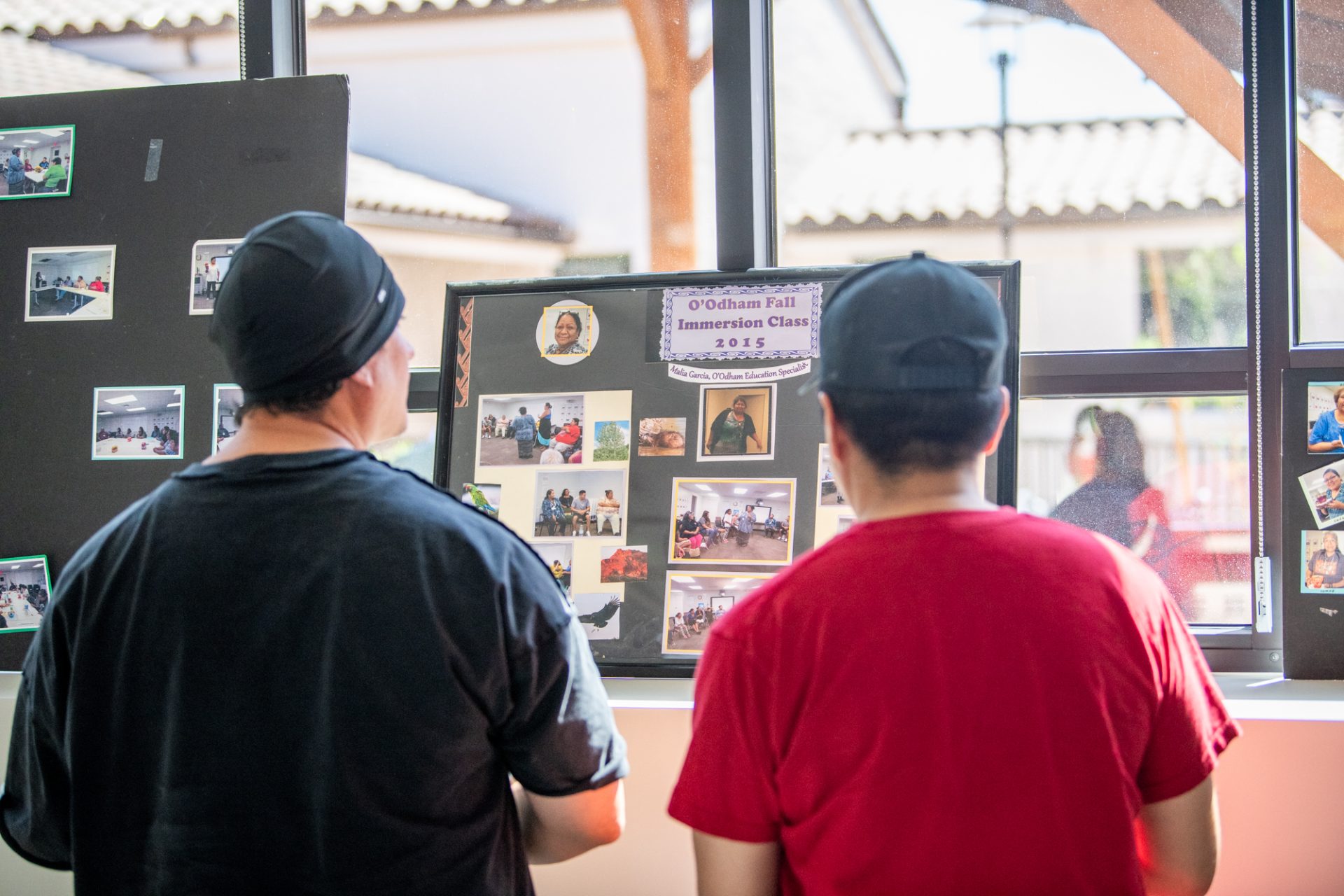
O’odham Education Specialist Malia Garcia gave the morning blessing. Council member Jacob Butler shared his gratitude for the new cultural center, as he was a big part of that department before serving on Council.
Construction of the center began in 2024 with Public Works Department senior project manager Dwayne Wilson overseeing the architectural plans. It was also Dallas Construction’s first vertical project.
David Dallas, owner of Dallas Construction, was proud of all the Community members and Community-owned businesses who had a hand in resurrecting the center. Dallas said that the whole project at Kavaḍ/Kushov was built by as many Community-member hands as possible.
“It means something to all of us that we’re building our own Community,” said Dallas.
As people filtered into the walkways and halls of the center, one could hear them talking about how past experiences came back to life and about all the little details of the building that they recall.
Assistant Community Manager Dawn Sinoqui shared those memories.
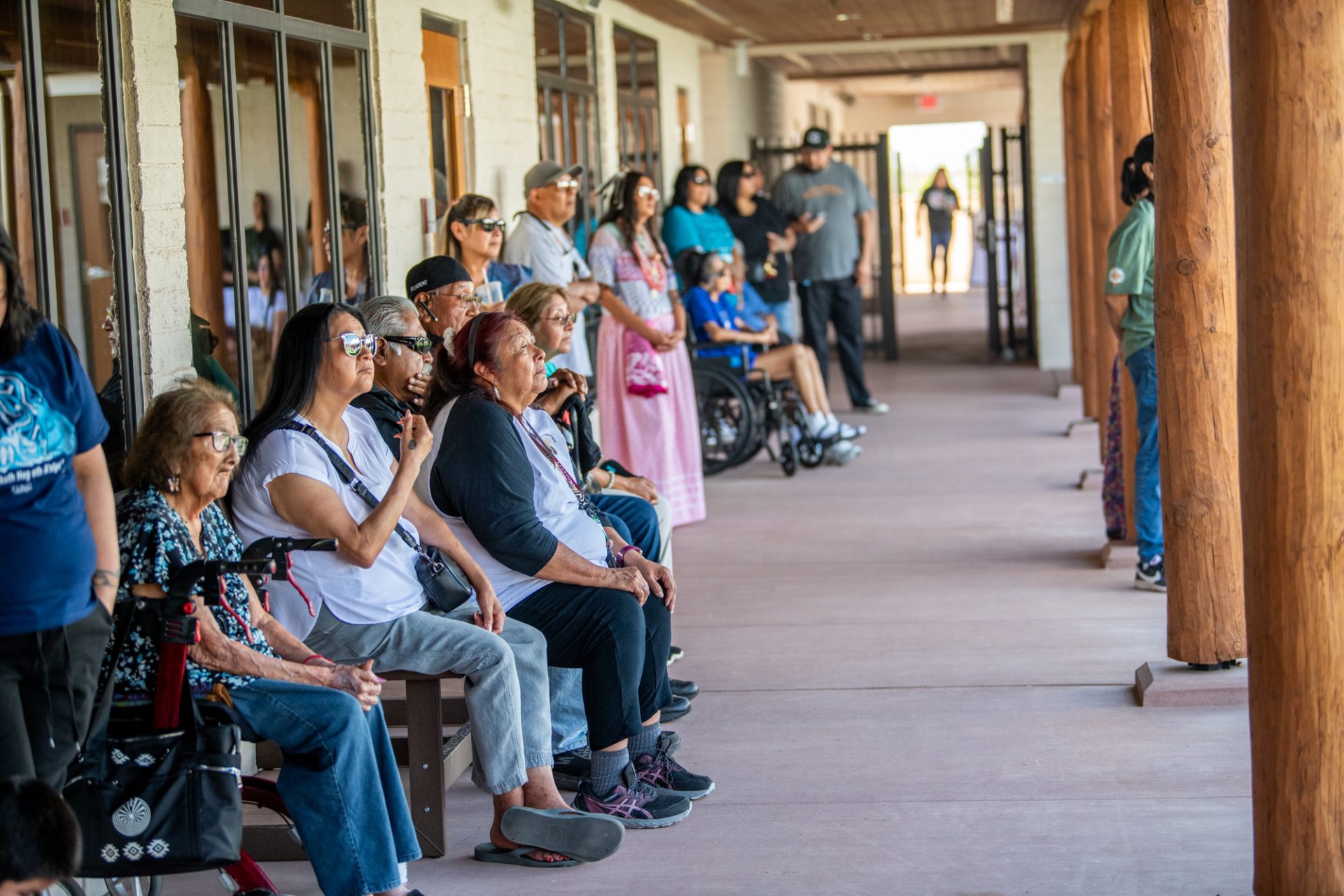
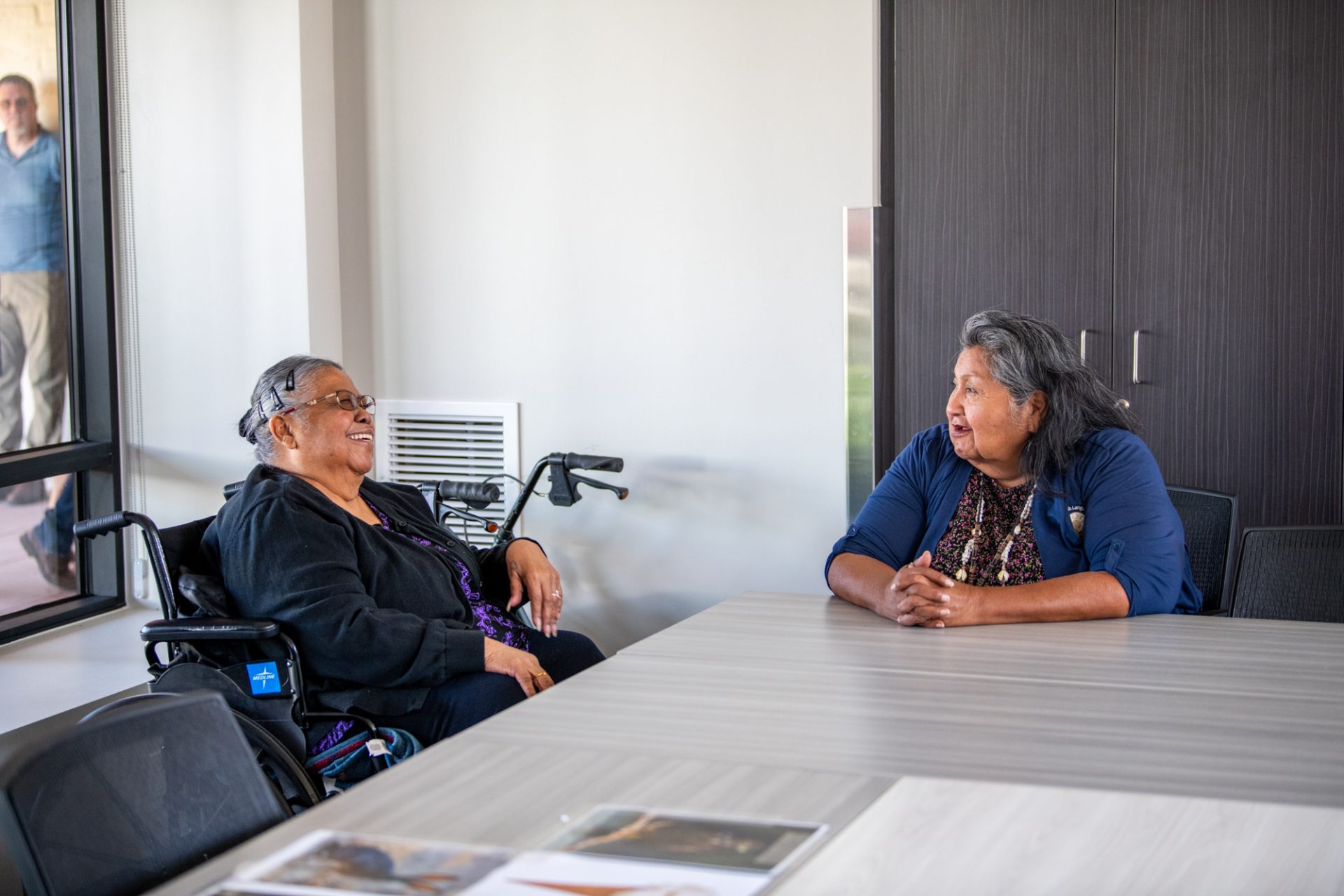
“As you walk the halls, it feels so good because your memories come back and you think about the good times, and maybe you had some bad times,” said Sinoqui.
“But I think in the bad times, those are the times that we are learning and going through life. It’s not going to be easy. It’s hard sometimes, but that’s when we grow and learn the most.”
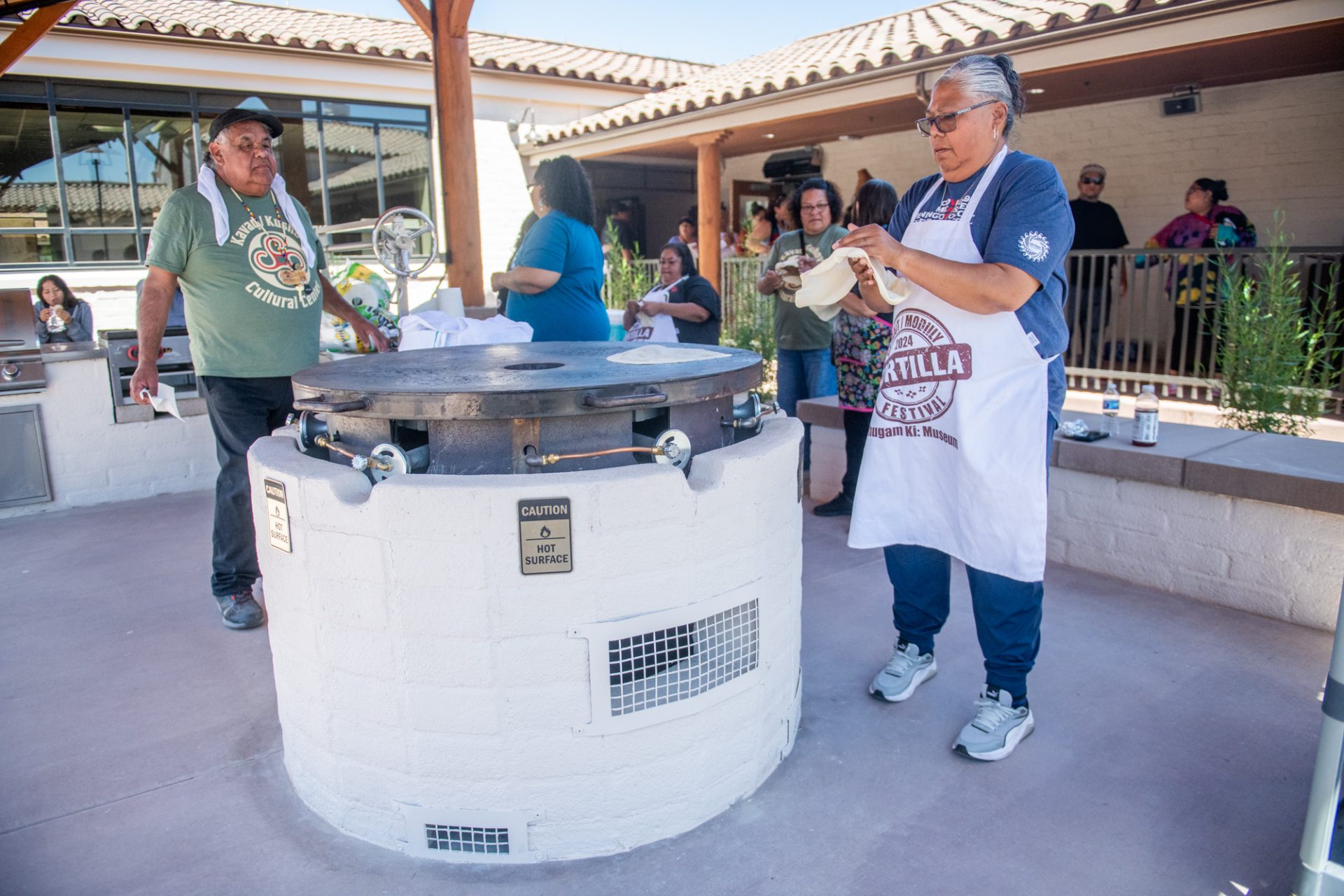
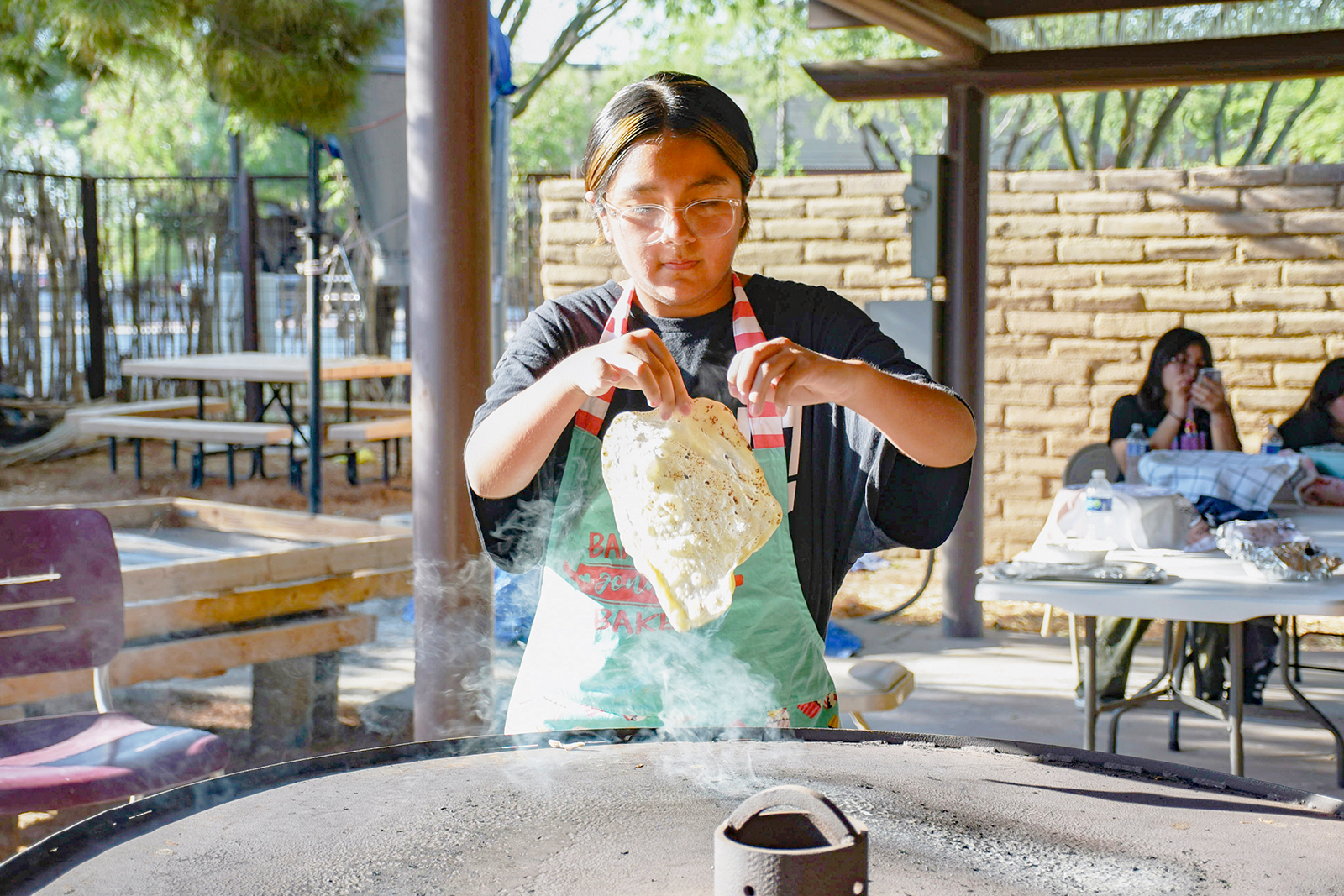
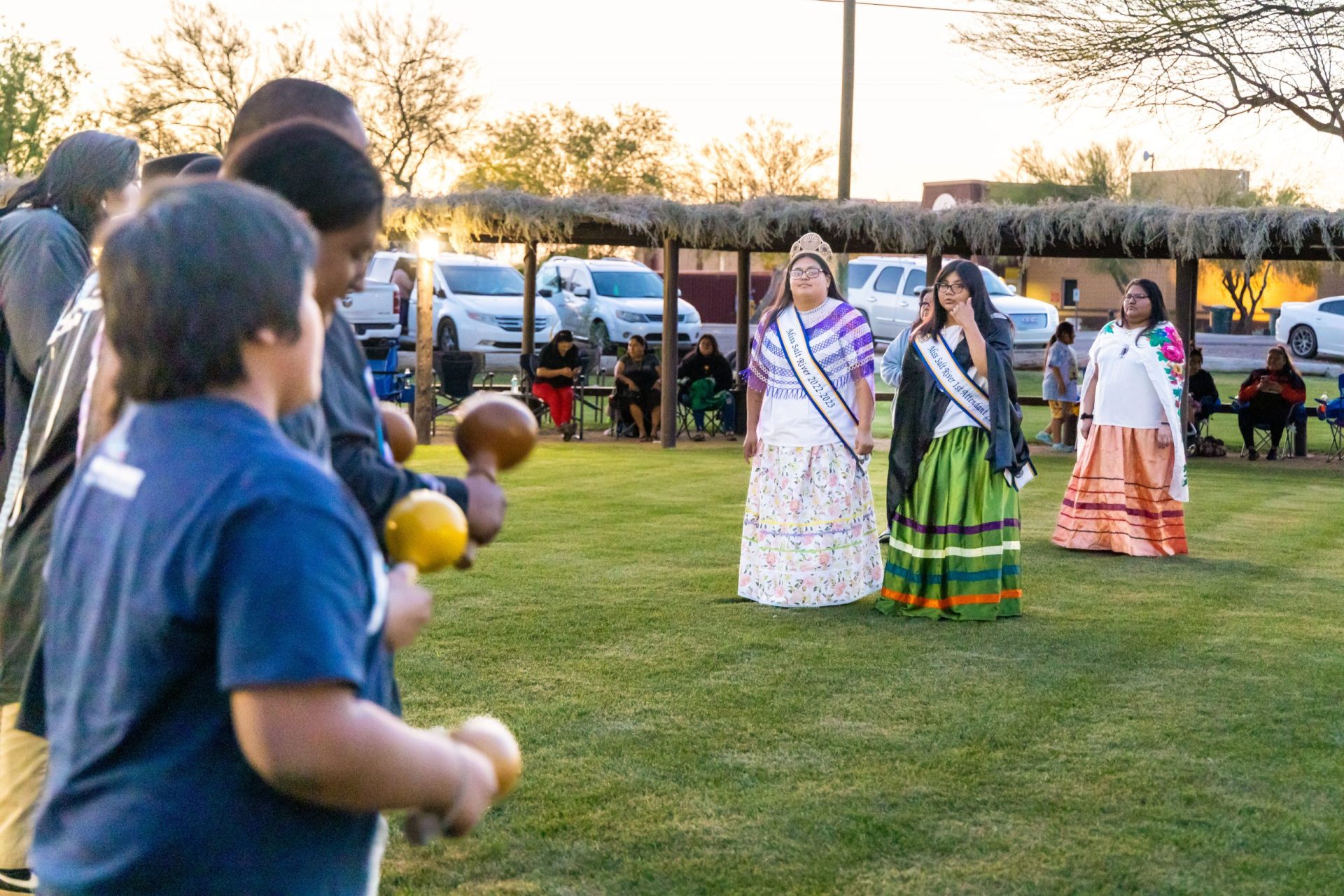
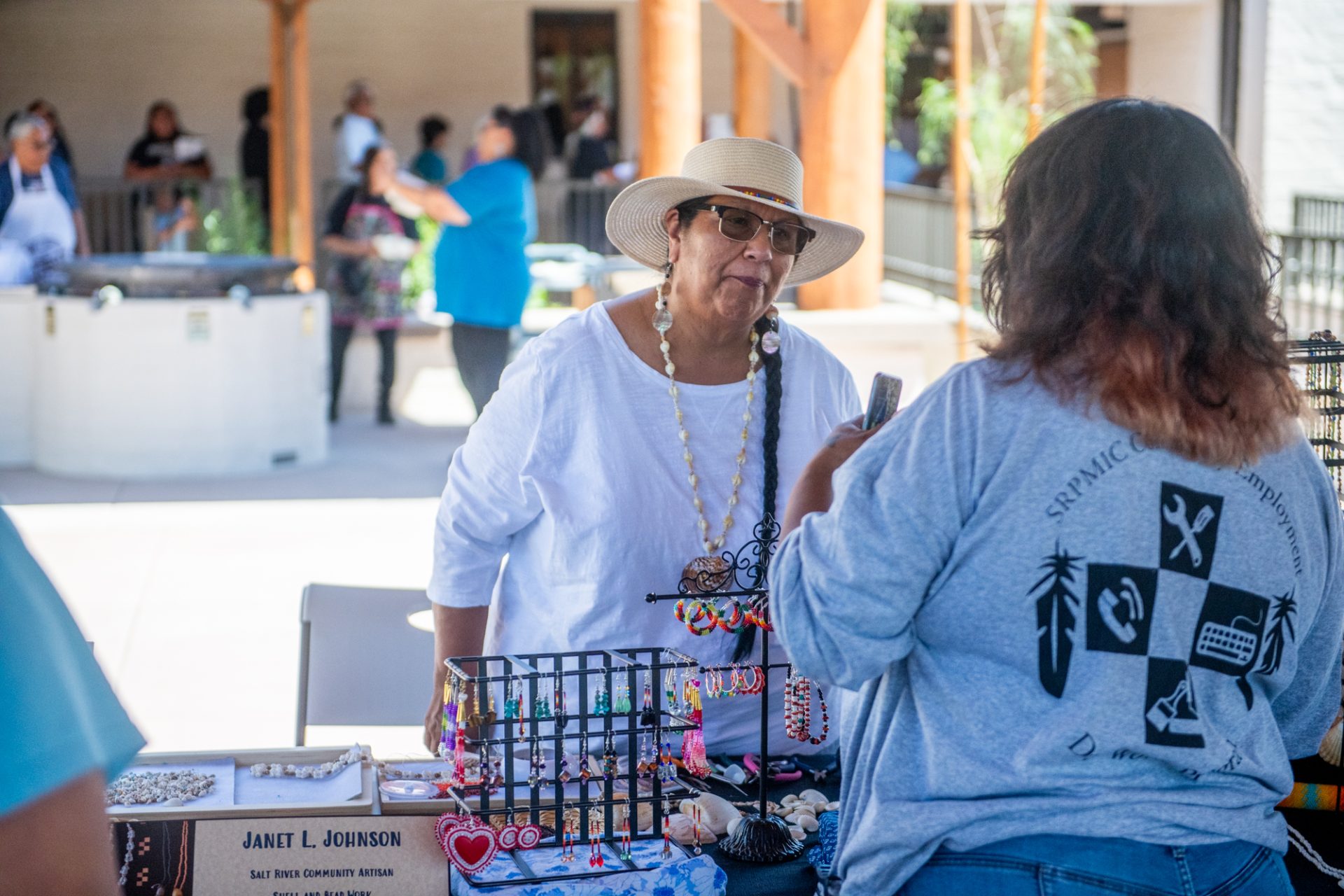
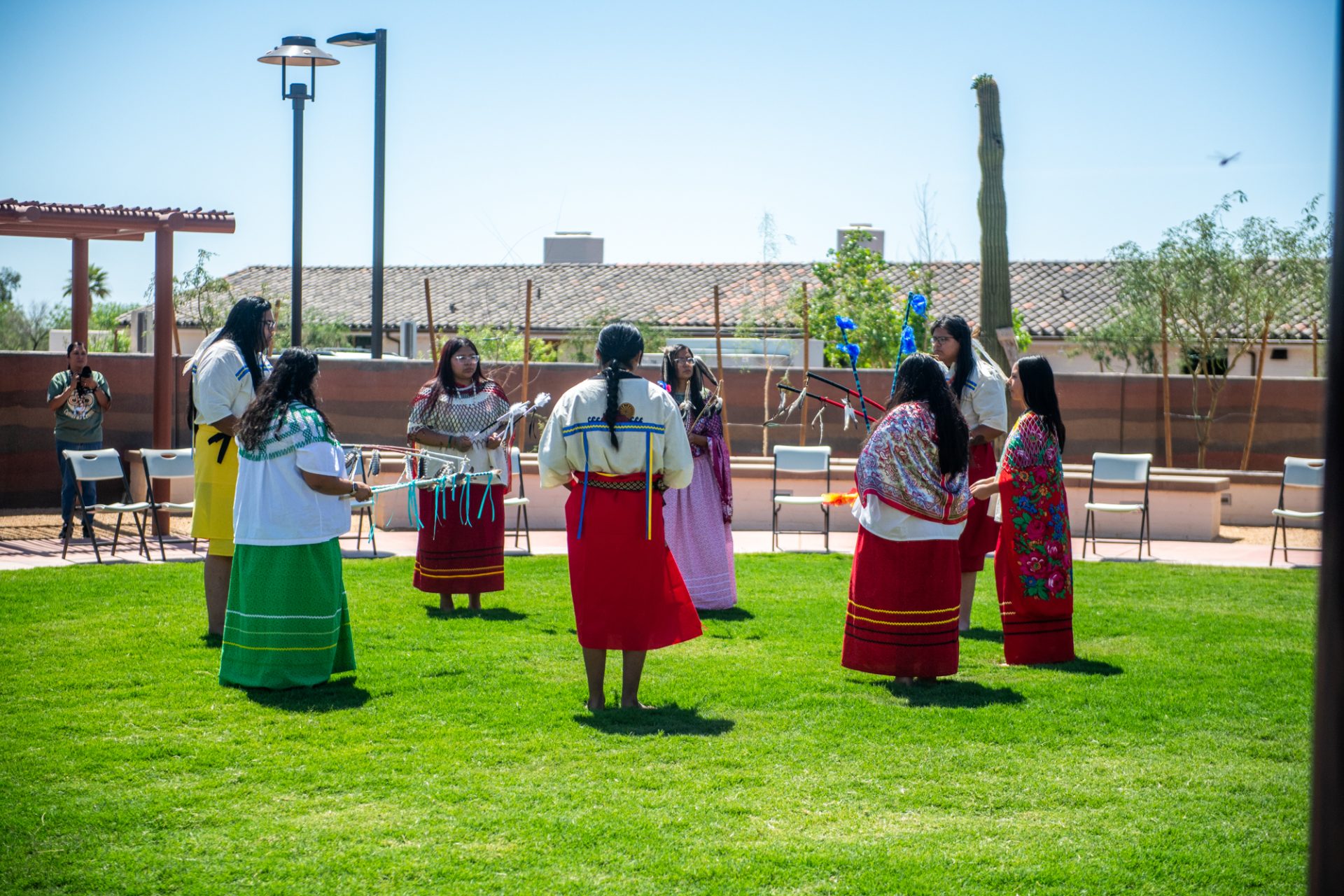
The grand opening ended with a traditional meal and fresh cemait/modiily made on the new komal outside. Vendors and artisans had their items for sale while social dances took place. Among the sounds of the traditional songs were new memories being formed in a new era for the Community.
Although still undergoing some construction in areas, Washington said that the cultural center is available for certain culturally relevant tours. If you are interested in inquiring about a tour, you can reach out to CRD customer service assistant Nicole Carlos at crd-customerservice@srpmic-nsn.gov.