VIEWS: 1872
May 22, 2026‘To Be Put on a Shelf Is Not Where They Belong’
SRPMIC relatives come home after resting for over a century in a museum in Edinburgh, Scotland
Editor’s Note: This article contains culturally sensitive information.
Salt River Pima-Maricopa Indian Community relatives, along with a relative from the Gila River Indian Community, have come back home to rest after over a century across the Atlantic Ocean in Edinburgh, Scotland.
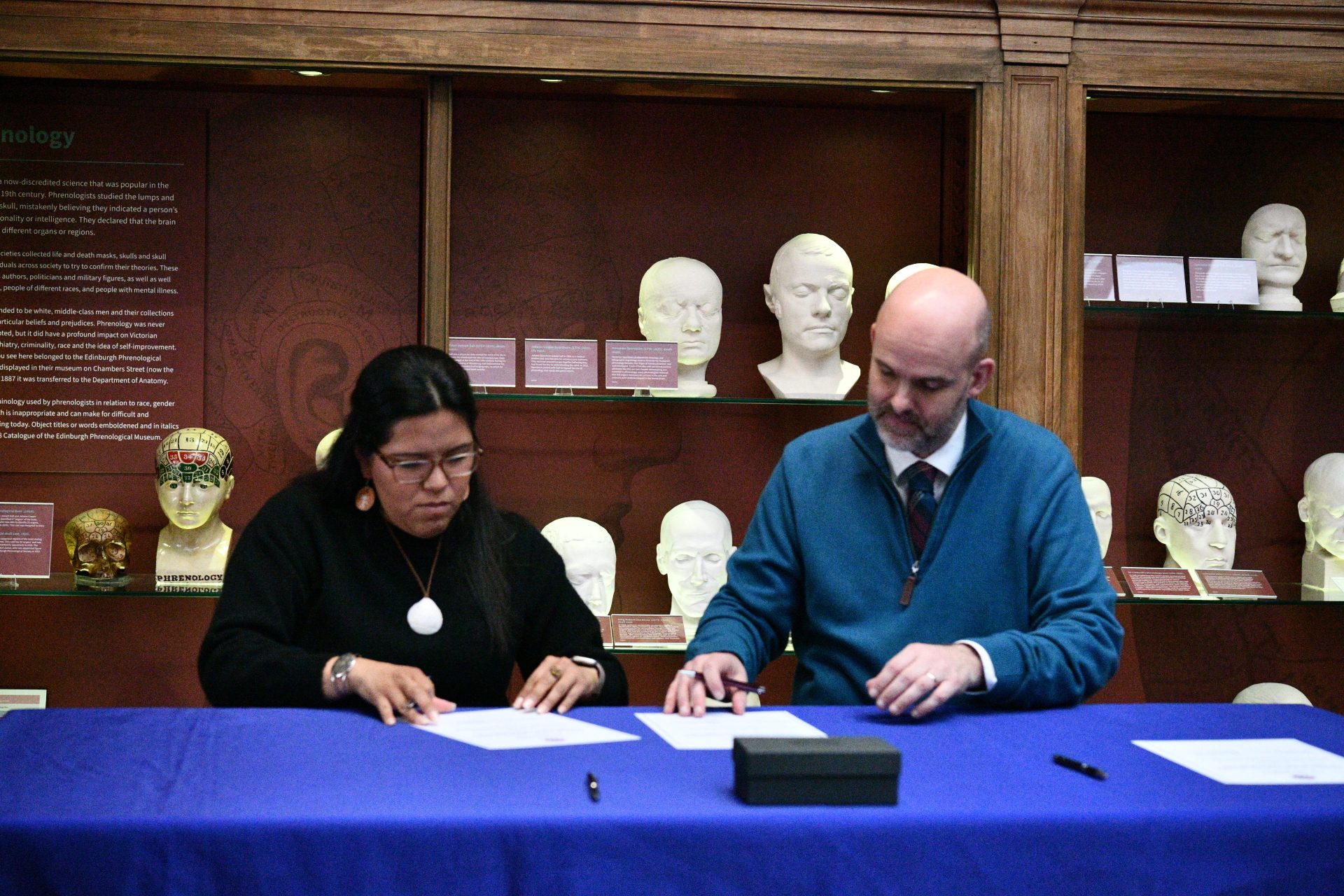
Recently, the University of Edinburgh’s Anatomical Museum invited representatives from the SRPMIC and the Gila River Indian Community to travel to their institution for a repatriation ceremony, as the museum wanted to return remains of O’odham ancestors that were a part of their anatomical collection since the late 1800’s. Repatriation is the return of human remains or objects to their descendant communities.
The museum collection records indicated that there were ancestors from both communities.
Representatives from SRPMIC’s Tribal Historic Preservation Office traveled to Scotland with Community leaders in April to bring the relatives home safely. The Tribal Historic Preservation Office, which operates under the Cultural Resources Department, is responsible for repatriation under tribal, state and federal laws.
The Native American Graves Protection and Repatriation Act (NAGPRA) is a federal law that provides for the protection and return of Native American human remains, funerary objects, sacred objects and objects of cultural patrimony to the tribal communities from which they came. There are also state laws that create a mechanism for repatriation from Arizona lands and private lands.
However, NAGPRA only applies within the United States. With no international repatriation law, Indigenous communities and countries around the world looking to repatriate their cultural artifacts and ancestral remains are usually at the mercy of an institution’s voluntary return and ethical framework.
“It’s just a matter of one entity, the international community, a museum and whatever tribe having an agreement,” said Assistant Cultural Resources Department Director and Tribal Historic Preservation Officer Shane Anton.
Anton said that the historic preservation offices of sibling tribes often work closely together due to their proximity and relationship to each other.
According to Anton, the nonprofit Association on American Indian Affairs did much of the international legwork, contacting museums throughout Europe ahead of the university’s recent repatriations.
Professor Tom Gillingwater, chair of anatomy at the University of Edinburgh, shared the following statement:
“Repatriations are an important part of our efforts to address the University’s historical and contemporary legacy. We work with many communities around the world to engage with our collections and to facilitate the return of remains and artefacts. Rather than being viewed as a diminishment of the University’s collections, repatriations represent truly meaningful opportunities for us to build new relationships and deepen our understanding of our past. We are honoured to have been able to play a part in returning these ancestral remains.”
The first repatriation from the University of Edinburgh was to Ceylon (present-day Sri Lanka) in 1947. Since 1990, the university has had a formal policy in place to work with Indigenous communities around the world to engage with their collections and facilitate the return of ancestral remains and cultural artifacts.
This repatriation with the SRPMIC and GRIC is believed to be the second-ever international repatriation of ancestral remains to tribes in the mainland United States. The first was the return of six relatives to the Muscogee (Creek) Nation in Oklahoma, which took place during a formal ceremony in Edinburgh on Jan. 23. There has since been a third repatriation this year, to the Chickasaw Nation, according to the Anatomical Museum’s website.
This was the SRPMIC’s first international repatriation.
Building a Positive Relationship
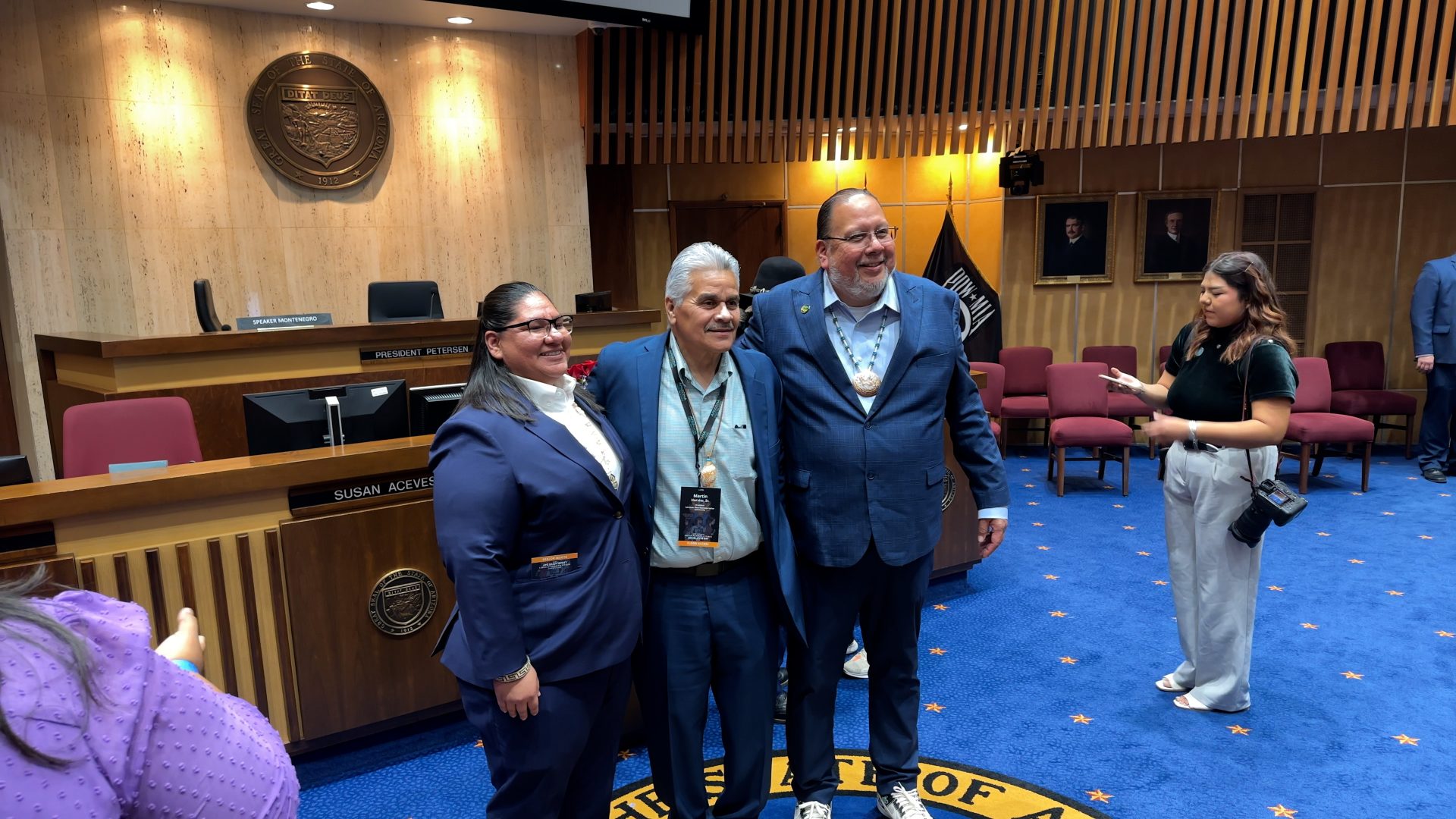
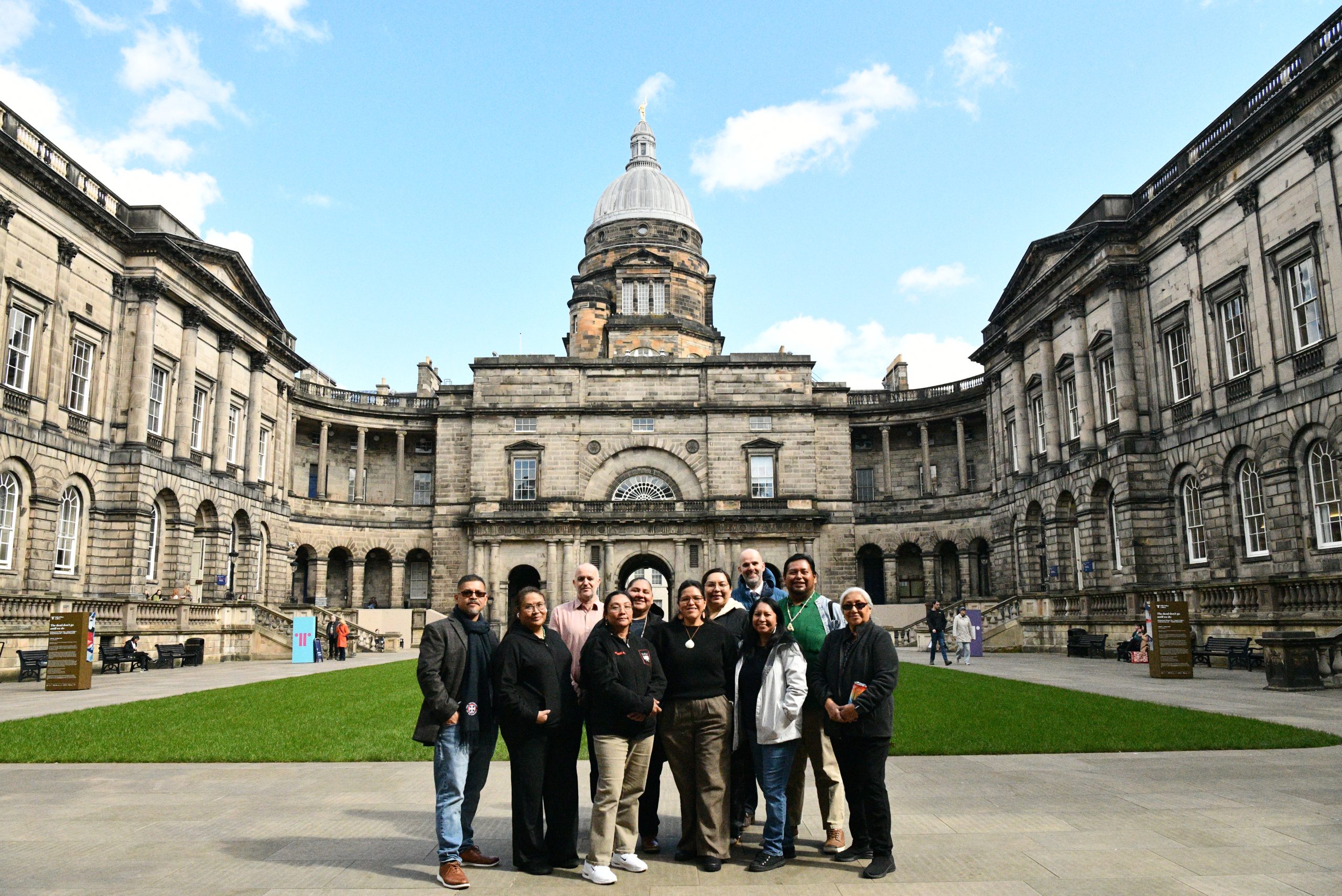
With an unprecedented opportunity for relationship-building, SRPMIC Council members were presented with an open invitation to attend the museum’s April repatriation ceremony in Scotland. Mikah Carlos, Jacob Butler and Su:k Fulwilder represented Council.
Butler’s understanding of pottery and other cultural items and how they’re constructed was valuable in helping all parties understand some of the items in the museum’s collection. He was proud to be part of the repatriation.
“We were there more as dignitaries to show that this repatriation has value and meaning to the people, and that it’s the responsibility of the Community [to] bring home our ancestors,” said Butler.
SRPMIC NAGPRA Coordinator Martha Martinez, Cultural Compliance Supervisor Angela Garcia and Assistant Community Manager Dawn Sinoqui were the Cultural Resources Department representatives for the Community.
“The relationship between [sibling tribes] and university representatives was refreshing because it was even more welcoming than we get sometimes in the States,” Martinez said of the Scottish university’s staff.
“It was [a relief], because we don’t know what’s all going to happen in a whole different country, how they’re going to act, how they’re going to take us. But that relationship we built helped give us a good starting point to what international repatriation should look like.”
This was Fulwilder’s first time flying out of the country. She didn’t think she would get as emotional as she did when the parties met.
“I was just realizing, [these are] our relatives, and they’ve been gone from our Community, our homeland, for so long,” said Fulwilder.
“It’s kind of weird being off the reservation and going to a whole other country, but, like, willingly. Just thinking about how our relatives were taken and stolen.”
During the closing ceremony with Edinburgh university staff, Carlos had an overwhelming feeling to express. She spoke with O’odham Action News about it when she returned home.
At the ceremony, she felt, “I’ve been here (in Scotland) not even a full week at this point, and my yearning to go home is so strong, I can’t even imagine being here for hundreds of years. A hundred years and being so far away from home,” said Carlos.
Carlos said it was an honor to be able to bring these ancestors home and give them a dignified resting place. While she said the university took great care of the relatives, “to be put on a shelf is not where they belong.”
Tracing a Journey to Scotland
A pseudoscience called phrenology gained popularity in the early to mid-1800s among some individuals in Europe and the United States. The now debunked practice involved feeling the contours of a person’s head, using the characteristics of an individual’s skull to supposedly predict their mental traits and character. Phrenology played into racist theories of inferiority that were being spread at the time.
“The two major countries that [practiced] phrenology were Scotland and the United States,” said Anton. “[The remains of] a lot of Native people were given by museums or archeologists to Scotland.”
Although phrenology was founded in the late 1700s by German physician Franz Joseph Gall, the world’s first phrenological society, the Edinburgh Phrenological Society, was established in 1820. The society closed in 1886, and items in its collections were transferred to the Department of Anatomy at the University of Edinburgh.
“Phrenology was never proven. It was always disavowed,” said Anton.
The university maintains that while not officially taught as an academic subject at Edinburgh, phrenology was supported by several influential figures, whose connections with the university gave it legitimacy and prestige.
And while the university believes phrenology played a role in how the relatives ended up in the museum, they maintain that the person who sent the remains to the university did so of his own accord.
We can start with a doctor born in Austria named Julius Silberstein, who worked at the Pima Agency in Sacaton for the U.S. Office of Indian Affairs during the late 1800s and early 1900s.
According to the university, Silberstein wrote to university staff in Edinburgh offering human skulls and other human remains to be used for anatomical research. This is likely how the relatives ended up across the pond.
The Standard Medical Directory of North America of 1902 places Silberstein in Sacaton at that time.
To put his job into context, records found in the Carlisle Indian School Digital Resource Center dated Aug. 1, 1899, show that Silberstein was actively practicing medicine on tribal members when he signed off on medical records that cleared the transfer of eight children and young adults from the SRPMIC to the Carlisle Indian School in Carlisle, Pennsylvania.
Silberstein died in Sacaton in 1913.
Coming Home in Healing
Over a century later, the SRPMIC and GRIC are reclaiming their story and people on their own terms.
While there is a lingering feeling of frustration about the relatives being at the Edinburgh university in the first place, Fulwilder said that the repatriation was also about healing.
“We’re here for a reason and not to be angry about those things, because the past is the past. We can’t change how it is or what happened. But we’re here to try to make it right.”
After the repatriation took place, Tribal Historic Preservation Office staff escorted the ancestors home safely through ports of entry and customs both abroad and at home.
When it comes to culturally sensitive information, Martinez said the Tribal Historic Preservation Office often must balance between sharing with the Community what it can to educate them and following traditional practices protecting ancestors.
“When people ask for details, we can’t always give that to people, but it’s really not because we don’t want to,” explained Martinez. “It’s for their protection. Because [Community members] may not have bad intentions, but other individuals do. People are still looting, still seeking to take the remains of our ancestors and their belongings.”
What we do know, according to Anton, is that very detailed archeological work made the identification of the remains possible. We also know that history is patient. What disappears from sight is rarely lost forever.
This article was edited after its original publication.
Questions? Comments? Please email Podcasts@srpmic-nsn.gov