VIEWS: 575
January 15, 2026Shannon Reina Demonstrates Traditional Foods with ASU Students
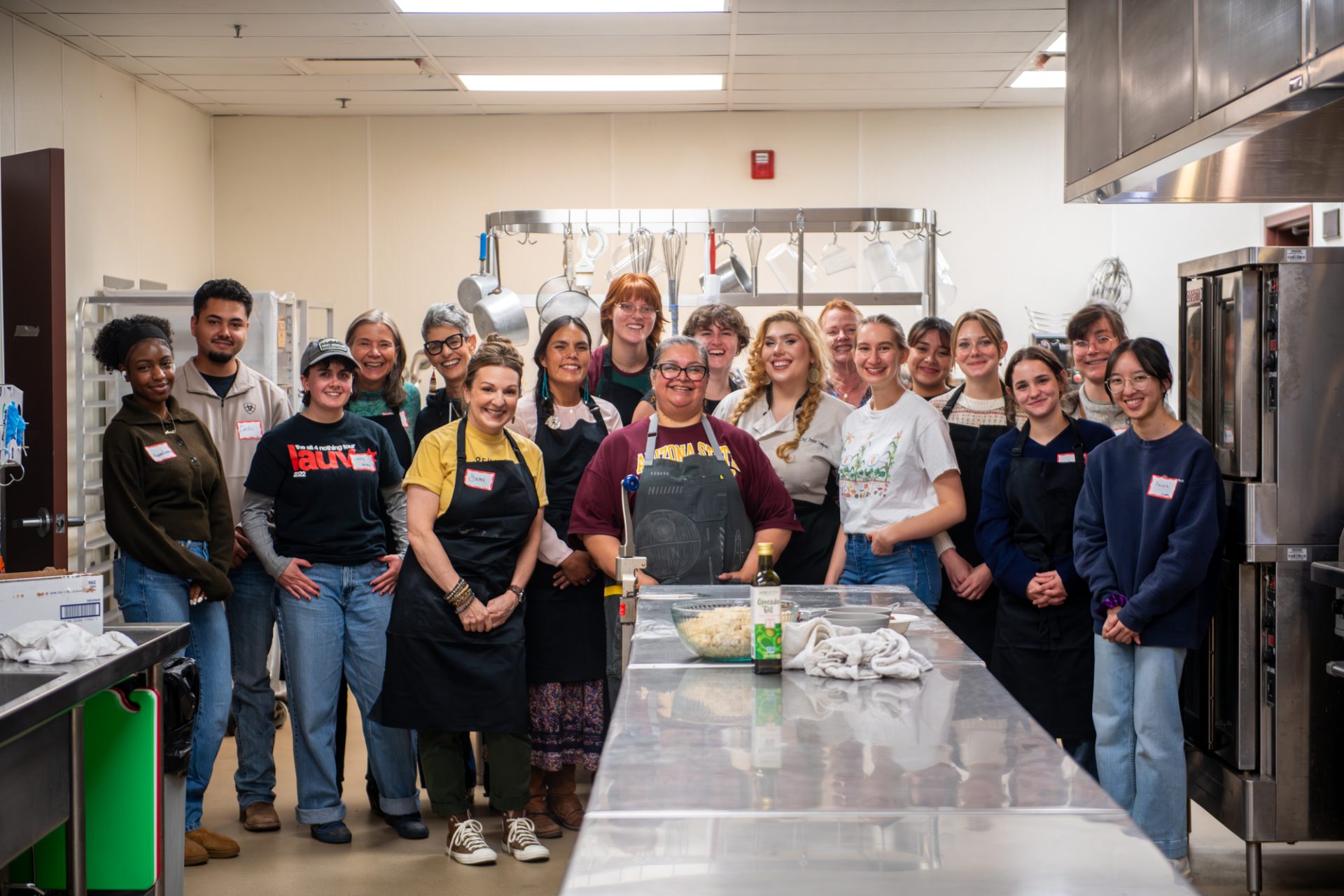
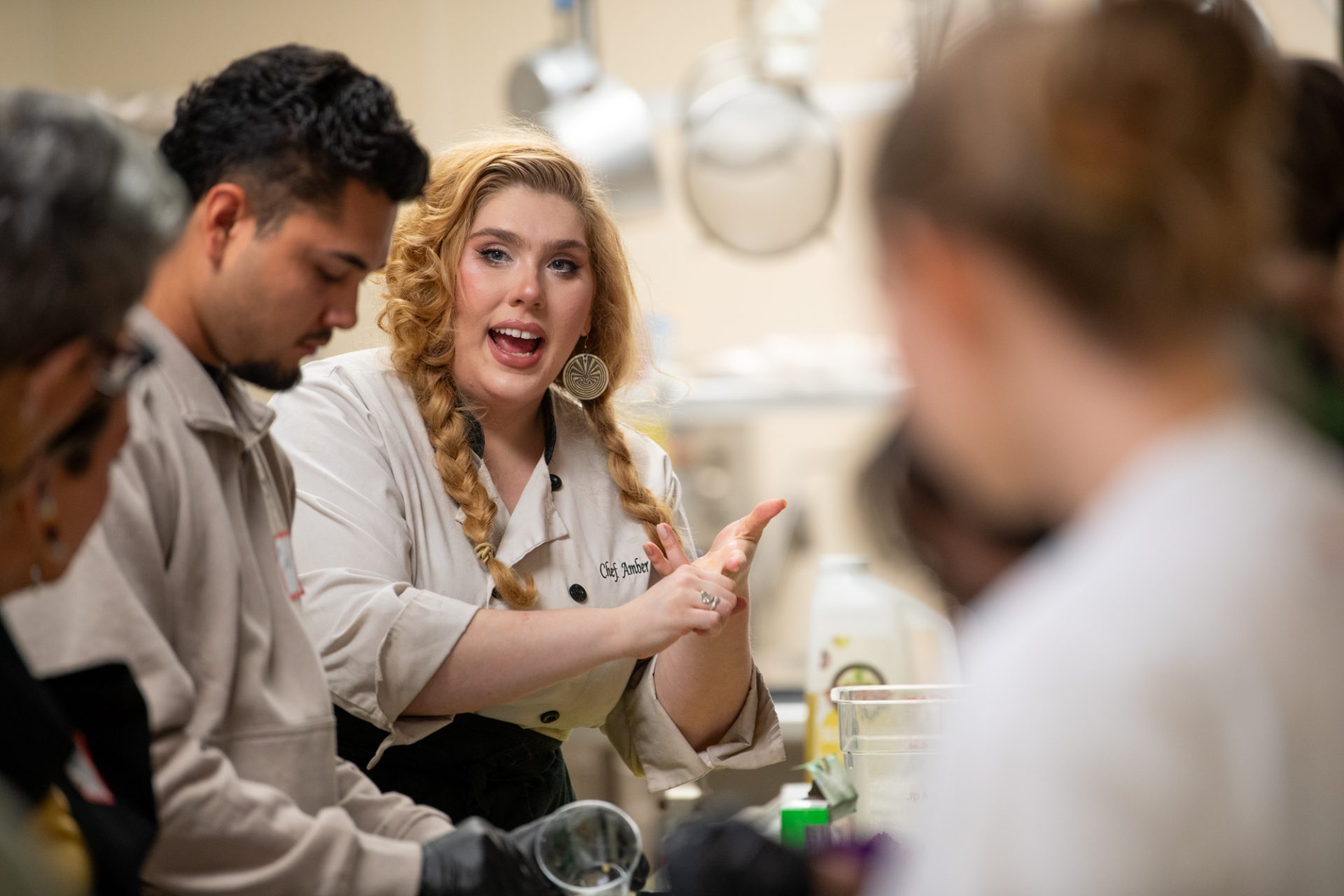
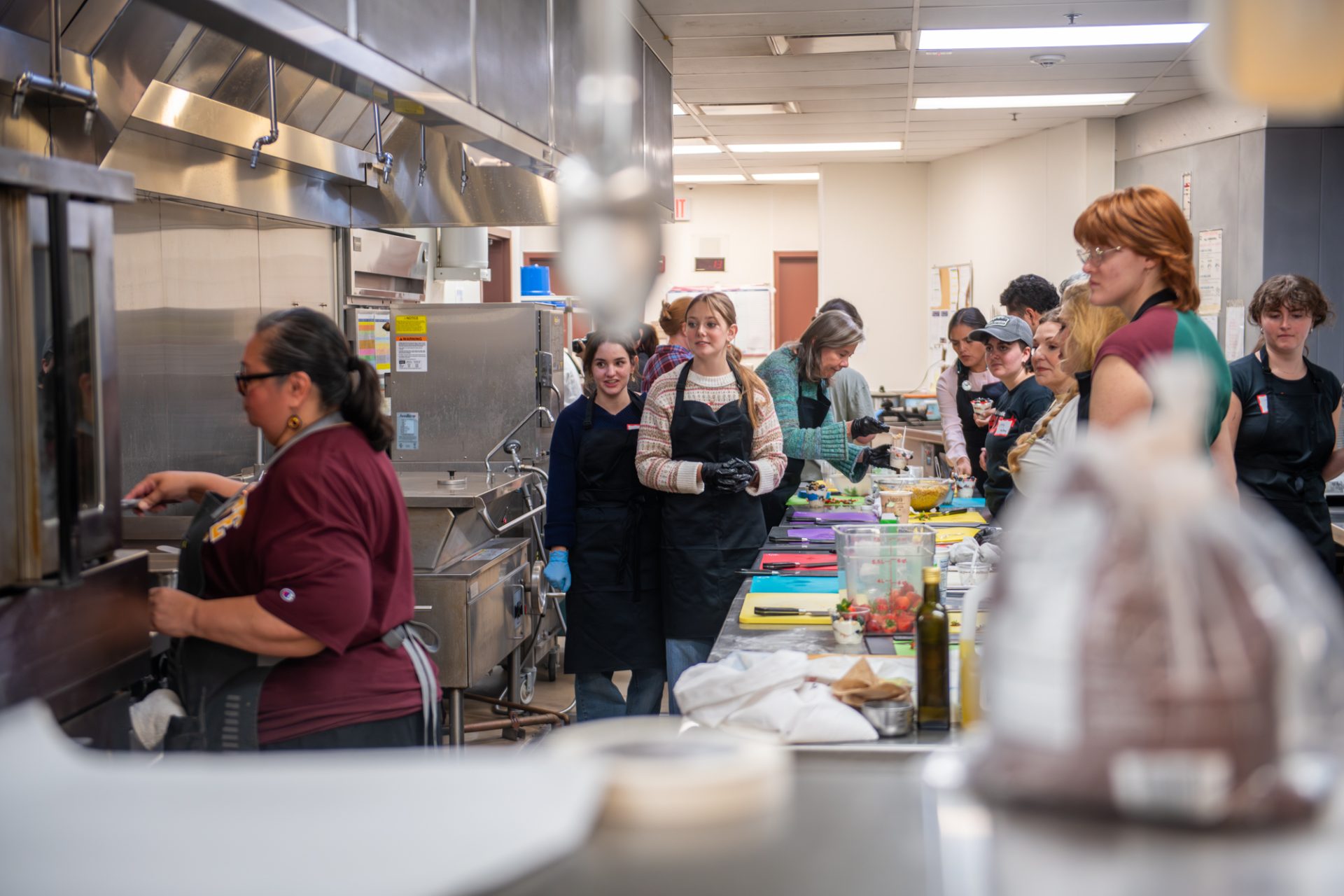
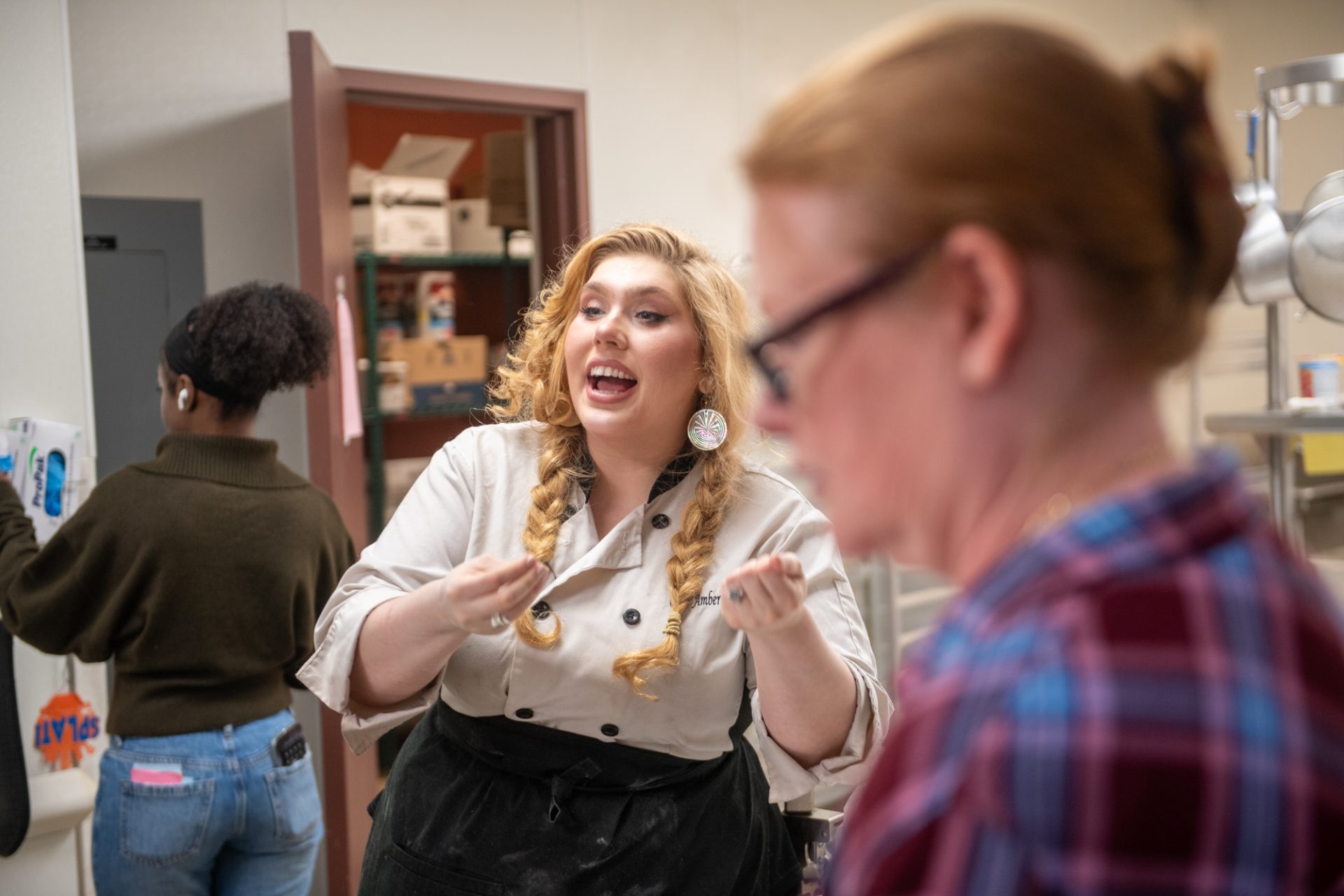
“Let’s do the frybread clap!” exclaimed Salt River Schools Food Service Program Manager Shannon Reina as she demonstrated preparing a traditional meal with Arizona State University students, faculty and cultural anthropologist chef Amber Sampson at the Accelerated Learning Academy kitchen on Dec. 6.
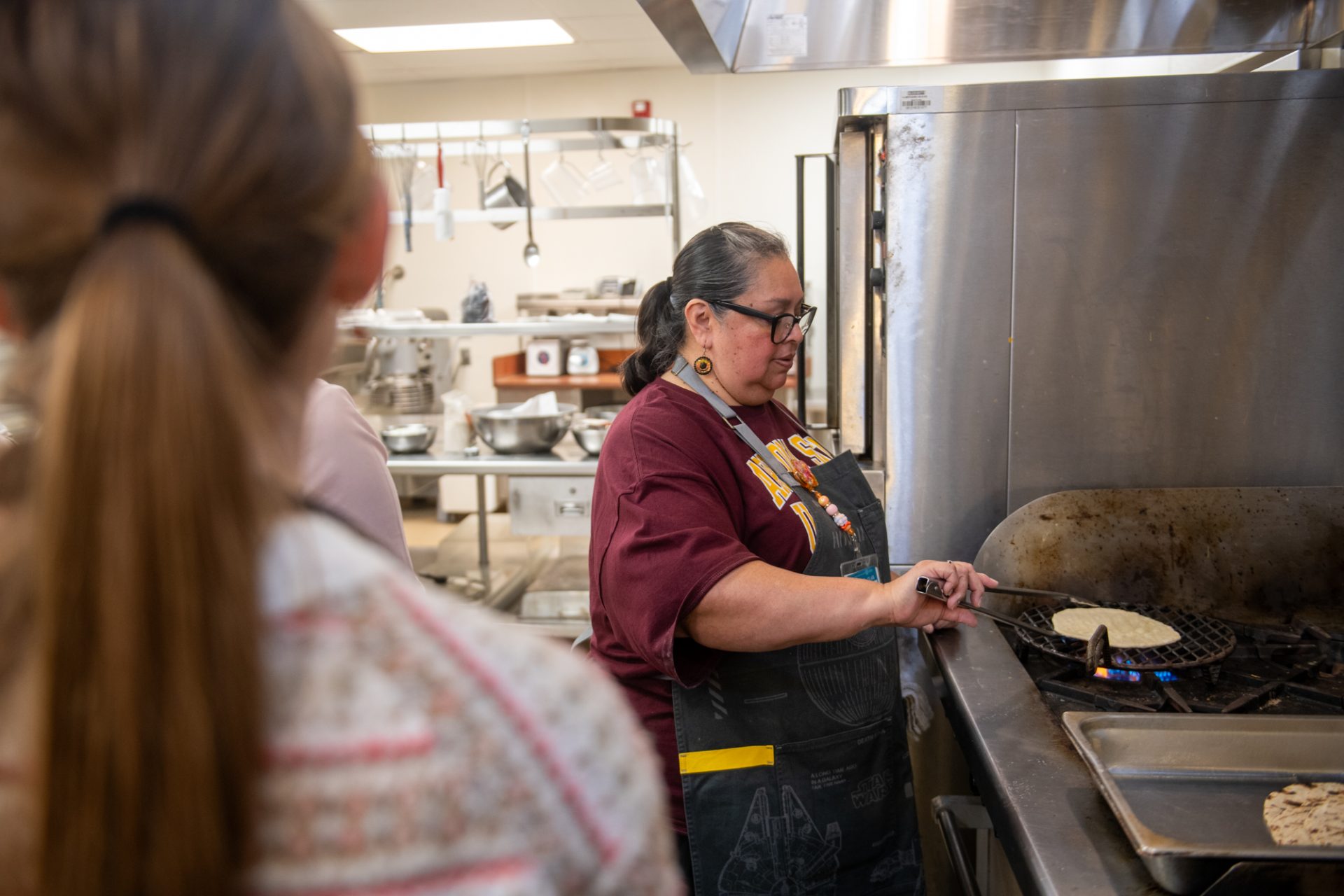
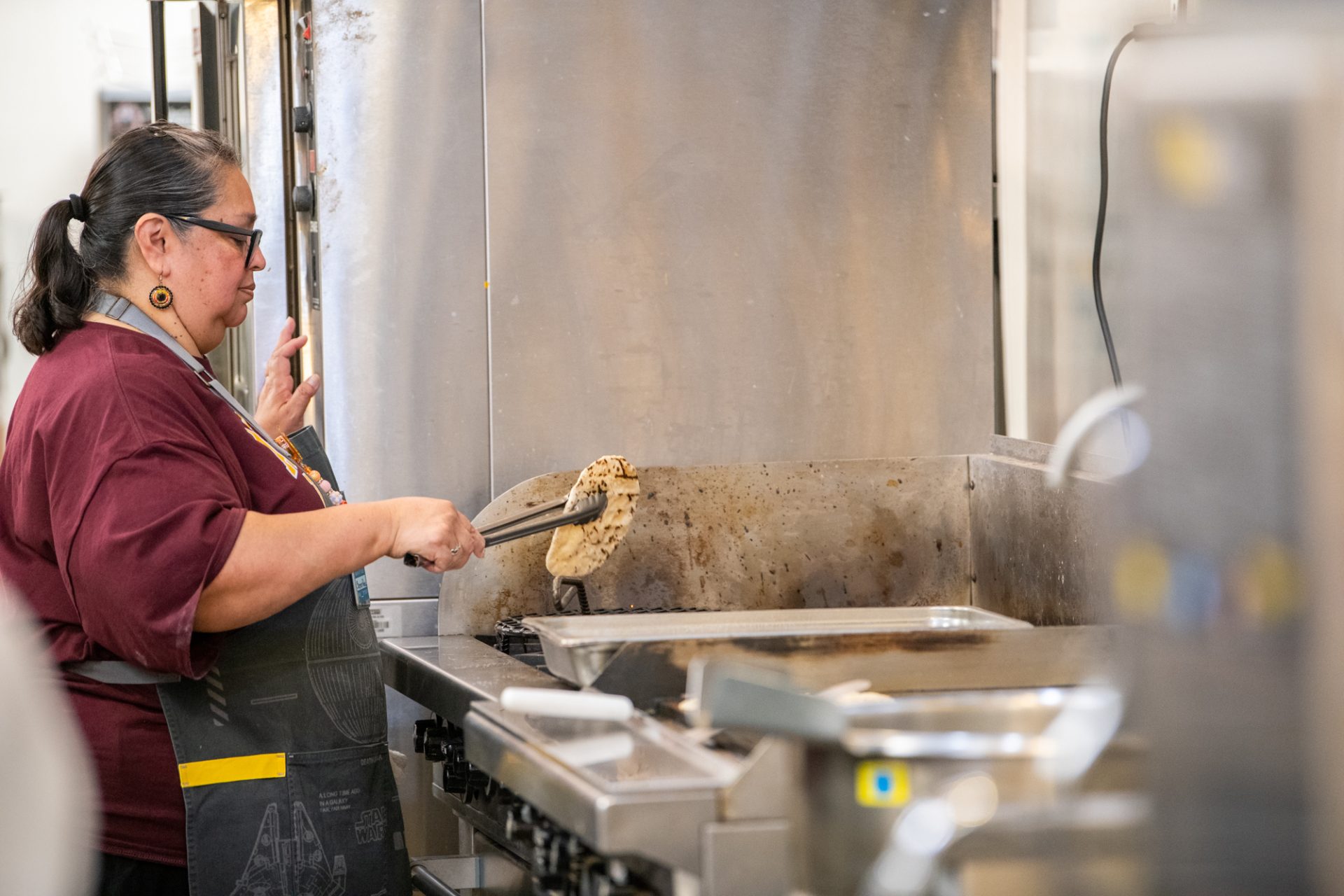
The class clapped along gleefully with Reina, or “Chef Shannon,” as the students addressed her, pretending to knead frybread dough with their hands. Reina improvised how to cook a white Sonoran wheat tortilla on a plank over a grill as a nod to how her husband’s White Mountain Apache family makes it, directly over the coals.
“That is the beauty of Native culture. We work with what we have,” Reina shared with the class.
“We are very resilient.”
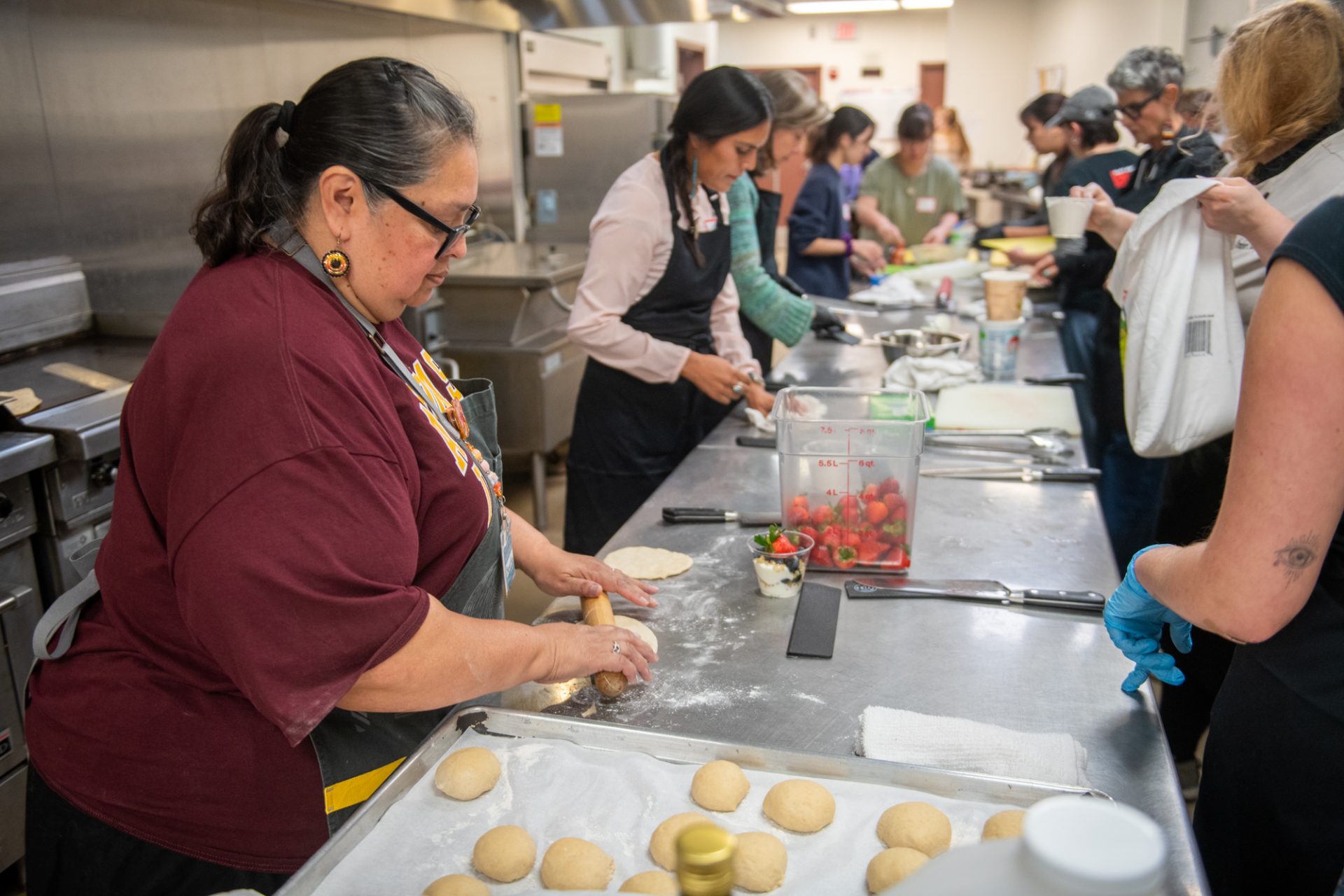
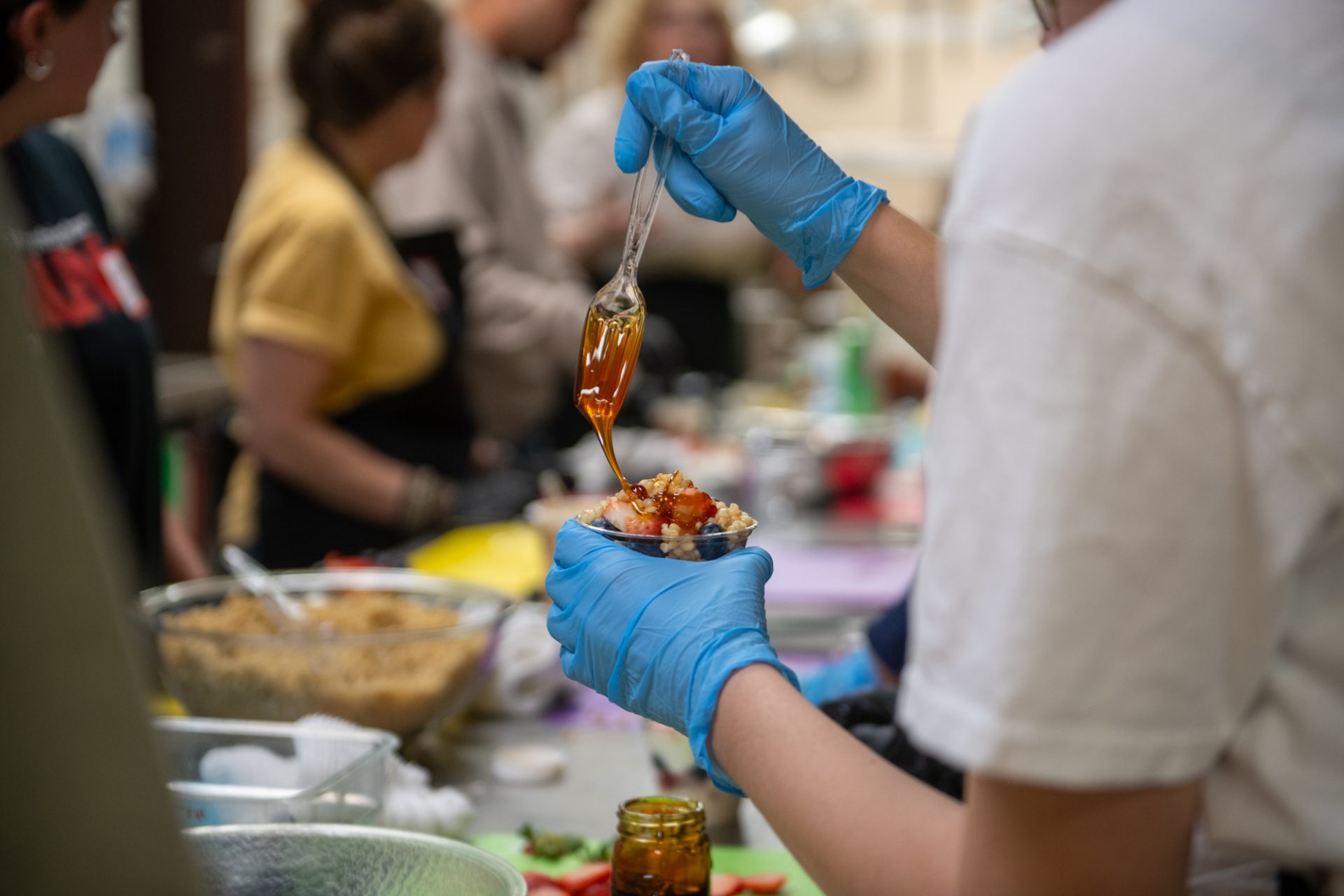
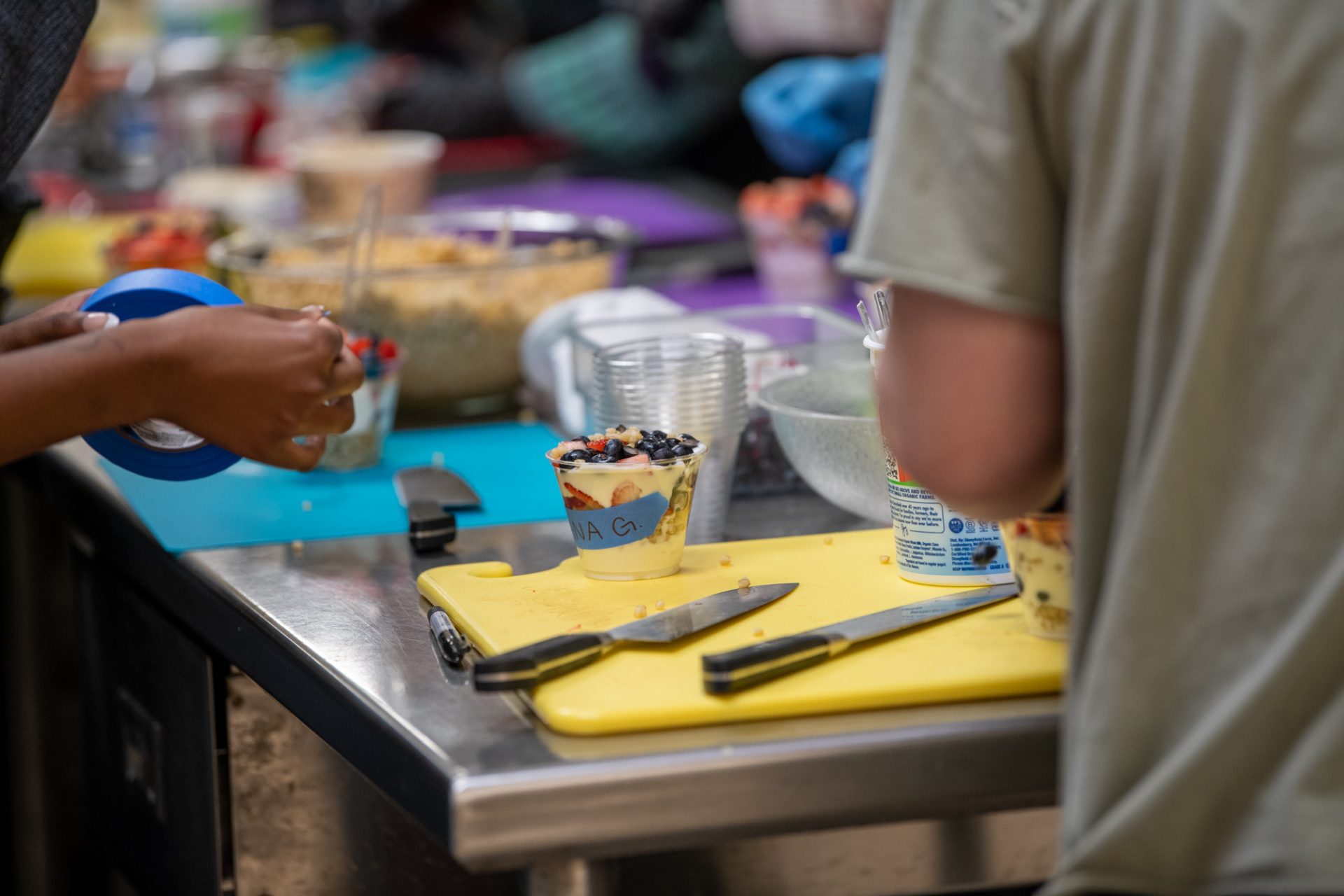
She also demonstrated the O’odham version of a burrito bowl, the s’oam bavi bowl. S’oam means brown in O’odham and bavi means tepary bean. This recipe comes in handy for the students during extracurricular activities, according to Reina. Other traditional foods demonstrated were Hammas Ko’okol lol, which means fried chili, and an ‘olas pilkañ (wheat berry) parfait.
The students’ visit was part of their Humanities Lab. In their Growing Biodiverse Cultures course, they spent a semester learning about how the unique plant biodiversity of a region informs Indigenous food culture, according to Audrey Bunnell, student worker at the Swette Center for Sustainable Food Systems at Arizona State University. Bunnell and Sampson were instrumental in organizing the visit.
“My project partners and I felt that a cooking class led by an Indigenous chef would be a joyful, hands-on vehicle for people to learn about local Indigenous foods and feel empowered to cook and consume the unique, desert-adapted foods that hail from the place in which they live, and that’s really how the concept for this project was born,” said Bunnell.
Bunnell said her class has studied communities in Italy fighting to preserve ancient fruit trees, the vast significance of chiles to communities across Mexico, and communities in Puerto Rico trying to reclaim their food sovereignty after centuries of colonial exploitation and recent natural disasters.
“We are very resilient.”
“However,” Bunnell said, “through my recent experience with Slow Food Phoenix, I’ve learned that this is not at all a faraway movement. This work to restore, protect and preserve Indigenous foodways is happening right here at home by people like chef Shannon Reina, and I wanted to create a space for people to learn about how valuable (and, frankly, delicious) our local Indigenous foodways are.”
Bunnell and Sampson are on the board of directors of Slow Food Phoenix, a grassroots organization that works to protect local food traditions, support sustainable farming and help people understand where their food comes from and why it matters.
Sampson said that in her decade of experience in the food industry she has noticed a gap in the food system regarding how food is produced and the knowledge behind that.
In working with Reina for the demonstration menu, Sampson described the sensory elements of the demonstration with the students while Reina presented the food.
“In breaking it back to those foundations, that’s how people retain traditional knowledge,” said Sampson.
“When I talk to Shannon as an anthropologist and I interview her, I often ask her, ‘How did you learn this?’ and ‘Who taught you this?’ For a lot of people, there are nonverbal sensory skills that they learn in the kitchen. For example, I knew that the tortillas were ready because I could smell them, because I could see the crisping edges, because I could feel with my fingers that they no longer feel like dough. That is a sensory skill that people learn in traditional cooking that is kind of lost as people are removed from their food systems.”
Sampson’s undergraduate professor was Dr. Juliann Vitullo, who teaches at the ASU School of International Letters and Cultures and co-directs the Humanities Lab at ASU. Vitullo, who also attended the demonstration, instructs the Growing Biodiverse Cultures lab with Dr. Maria Cruz-Torres.
“My experience with Chef Shannon is just wonderful. I love the way she blended embodied learning with her storytelling,” said Vitullo.
“[It is wonderful] just knowing that there are people like Chef Shannon who are so focused on passing down traditional knowledge about traditional food products from her own culture, but also on the health and well-being of the future generations of her community.”
At the end of the demonstration, the students lined up to serve and eat the freshly cooked s’oam bavi bowls out in the ALA cafeteria.
Stay tuned for an upcoming OAN Podcast interview with Reina about cooking for the future of the Community and what she is serving hot off the stove next.
This story has been updated