VIEWS: 435
January 9, 2026National Pearl Harbor Remembrance Day at USS Arizona Memorial Gardens at Salt River
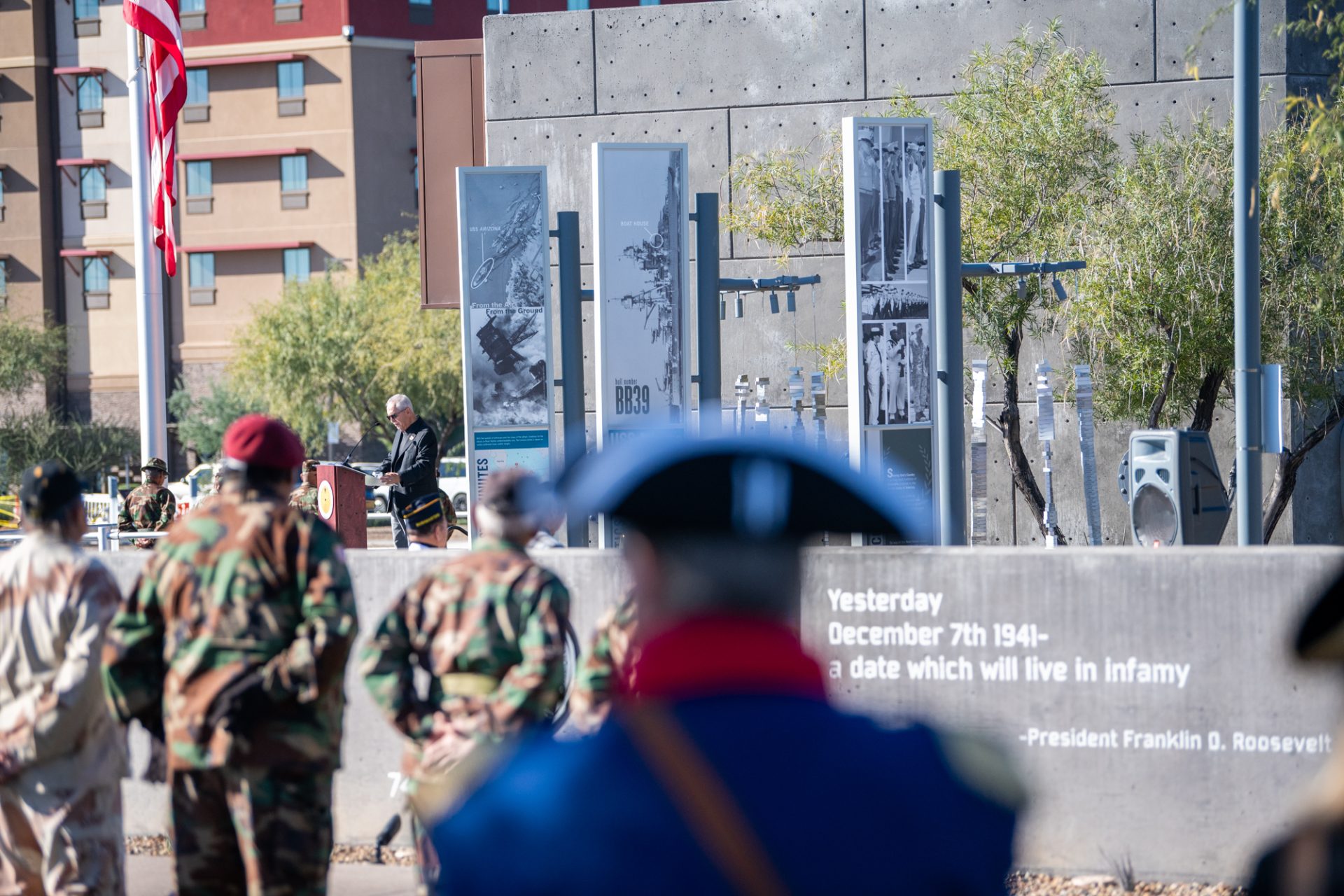
Visitors lined up along the edge of the parking lot at the USS Arizona Memorial Gardens at Salt River on Dec. 7 for the annual National Pearl Harbor Remembrance Day Commemoration hosted by the Salt River Pima-Maricopa Indian Community.
“Today, we gather to reflect on the events of Dec. 7, 1941, when the attack on Pearl Harbor forever changed the course of our nation’s history,” began Pacer Reina, SRPMIC member and veteran of the U.S. Army 82nd Airborne Division (operations Desert Shield and Desert Storm).
“On that fateful morning, 353 Imperial Japanese aircraft launched from six aircraft carriers carried out a devastating surprise attack on the U.S. Navy base at Pearl Harbor. In a matter of minutes, 188 American aircraft were destroyed and all eight battleships and ports sustained damage.”
The attack cost the lives of 2,403 service members and civilians, wounding 1,178 more.
One of the Navy ships docked at Pearl Harbor on that Sunday morning was the USS Arizona BB-39, which was named in honor of the state. Only 334 crew members aboard the ship survived the morning attack, which left 1,177 dead. The last living survivor of the attack on the USS Arizona, Lou Conter, died in 2024 at the age of 102.
3 Takeaways:
2025 marks the 84th year since the attack on Pearl Harbor on Dec. 7, 1941.
SRPMIC hosted the annual National Pearl Harbor Remembrance Day to honor the service members and civilians who died at Pearl Harbor.
Learn from “Taps” performer Jenny Bement about the meaning behind the antiphonal “Taps” performance she was a part of during the program.
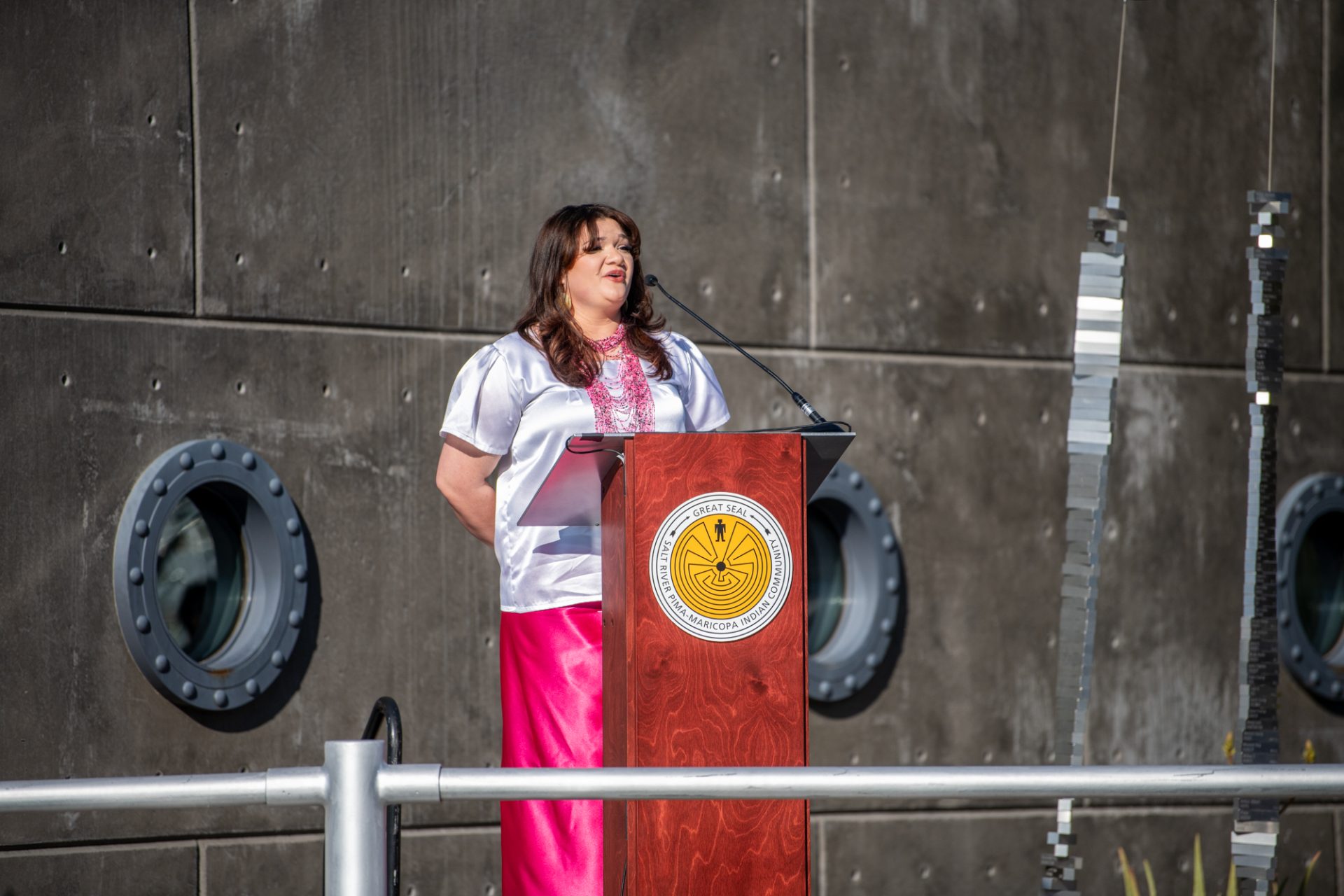
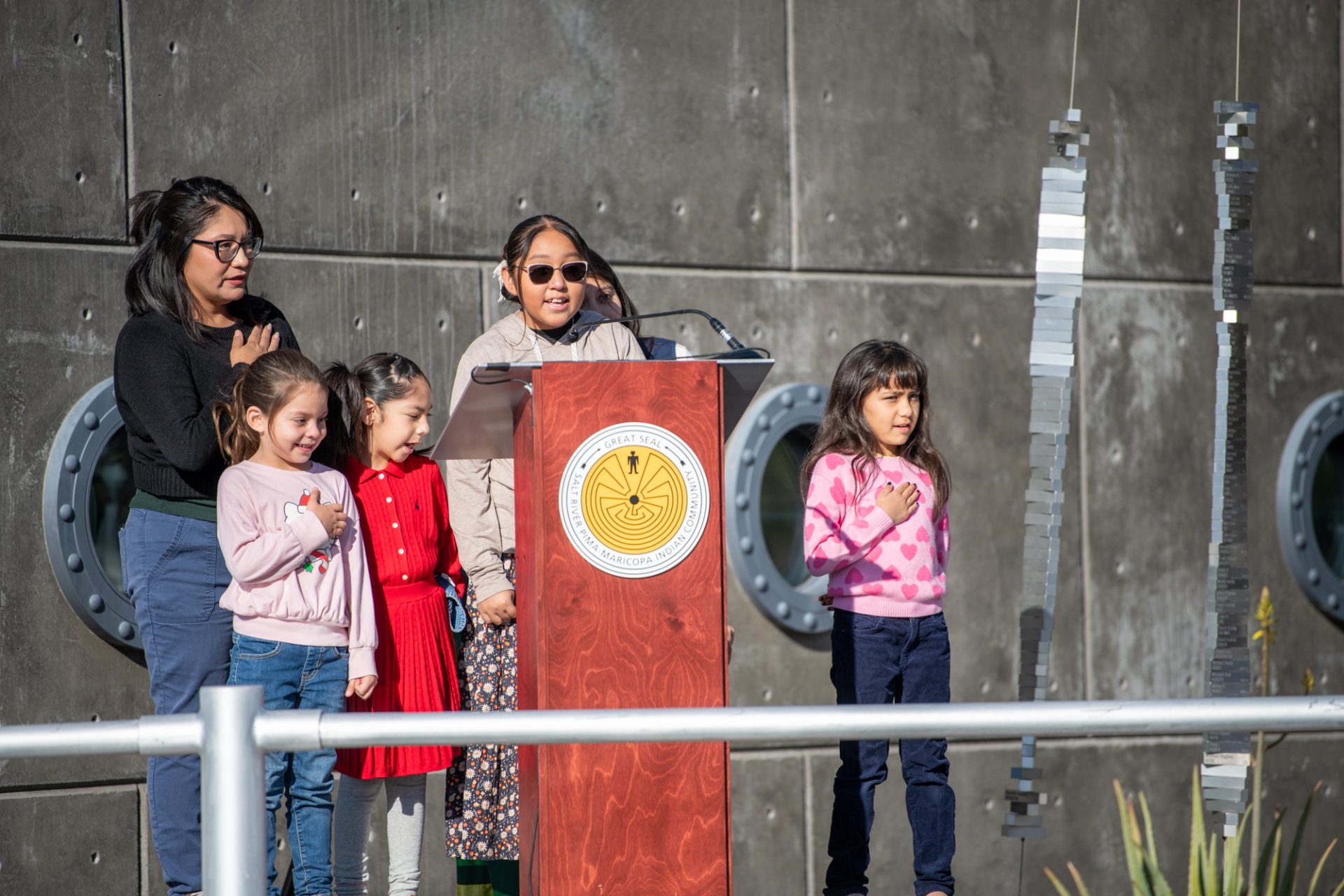

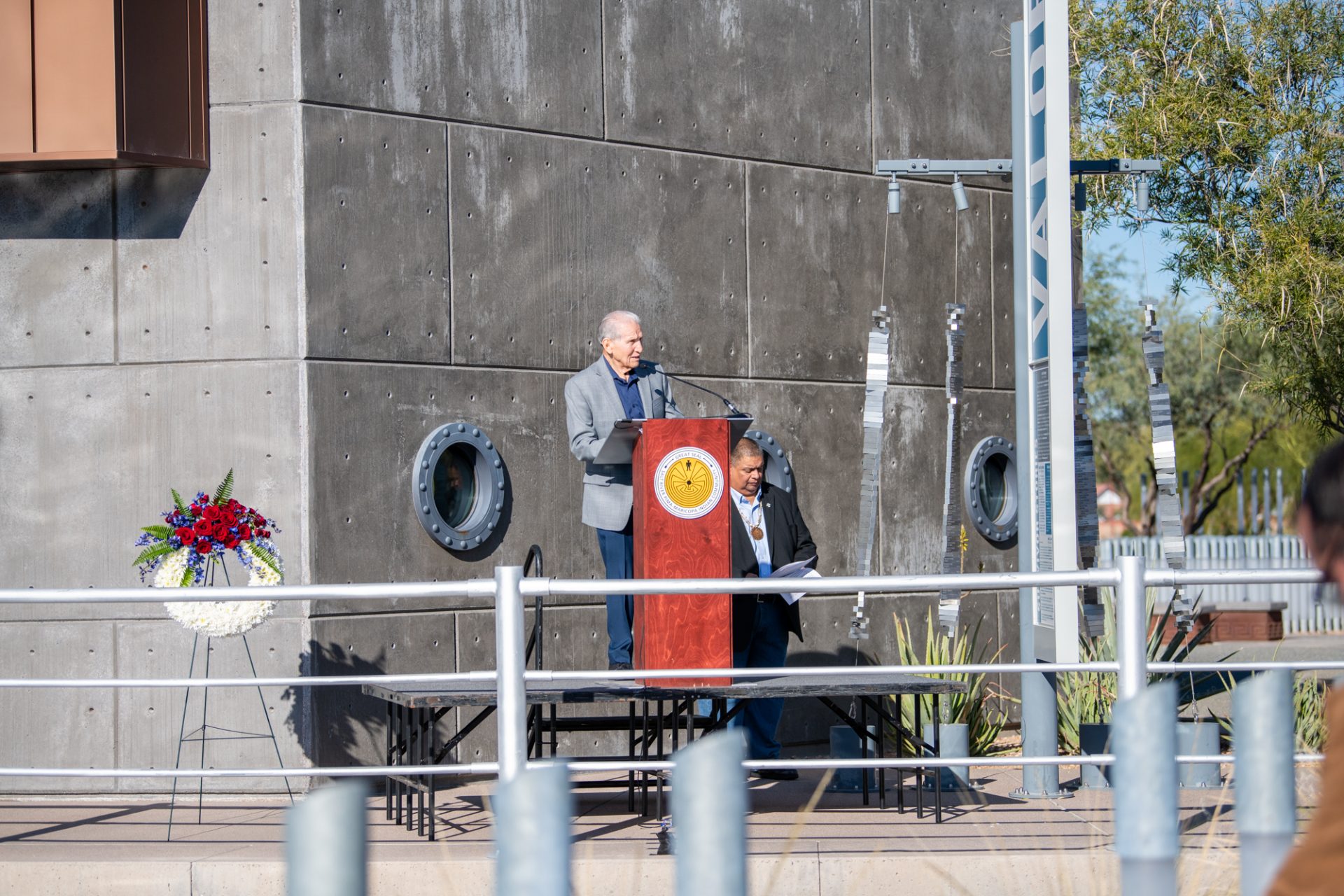
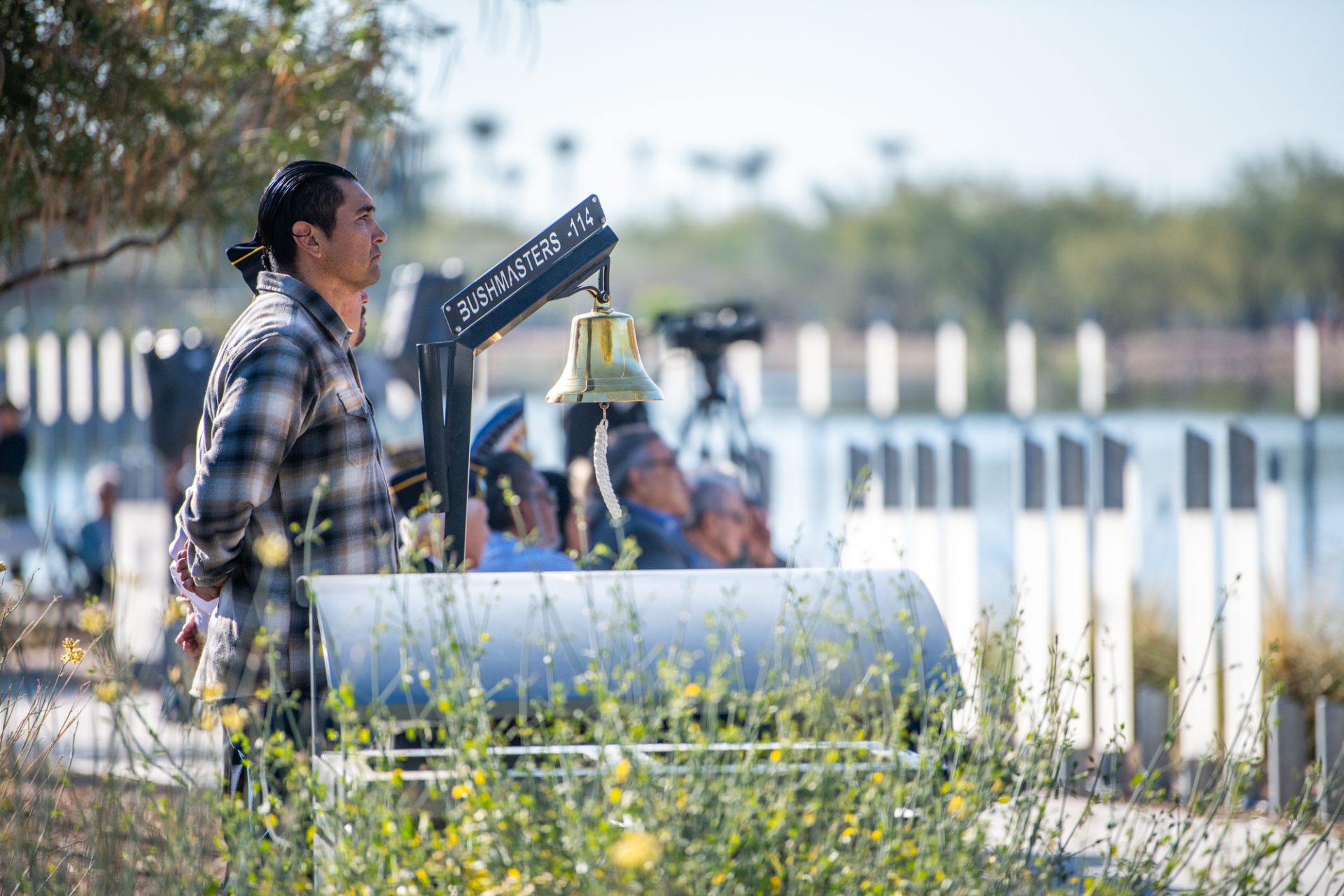
The Memorial Gardens are built around a boathouse relic, which is a large piece of the USS Arizona. The relic was originally promised to a veteran’s group in Honolulu, Hawai’i, by the U.S. Navy; however, the group agreed to part ways with it and the boathouse was gifted to the SRPMIC in 2018, thanks to efforts from a group that included SRPMIC Vice-President Ricardo Leonard and Ric Hartman, retired Army captain and former vice-president of corporate relations at Casino Arizona and Talking Stick Resort.
The Community paid for the cost of crating the estimated 4,800-pound relic from Hawai’i to the SRPMIC.
“When [the relic] left Hawai’i, from my understanding, it was followed out by a battleship halfway, and they gave full honors,” said Leonard on the first episode of the USS Arizona Podcast. “Once it got to the mainland, the Seabees took over. They brought it and started to ship over. All military protocol was followed.”
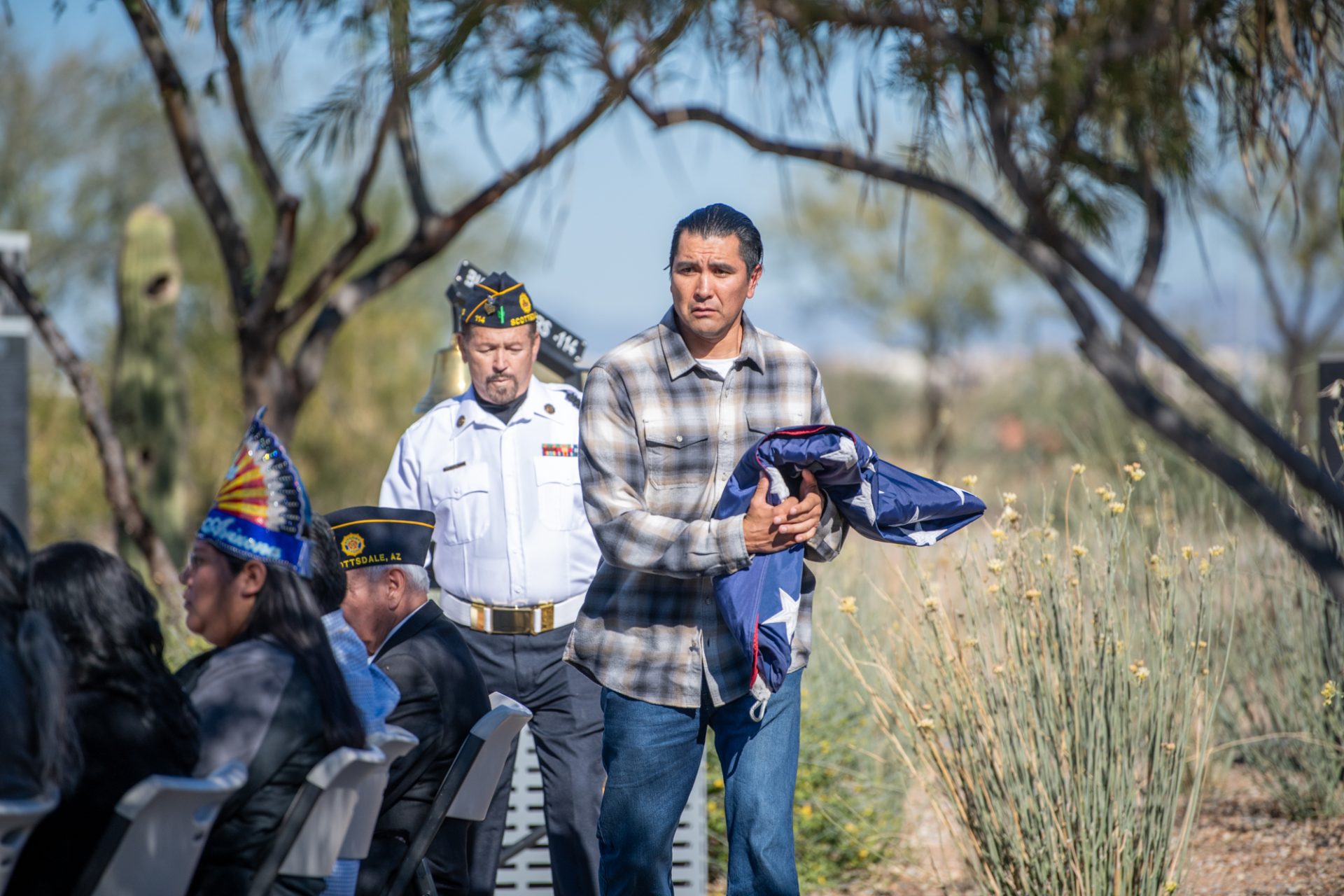
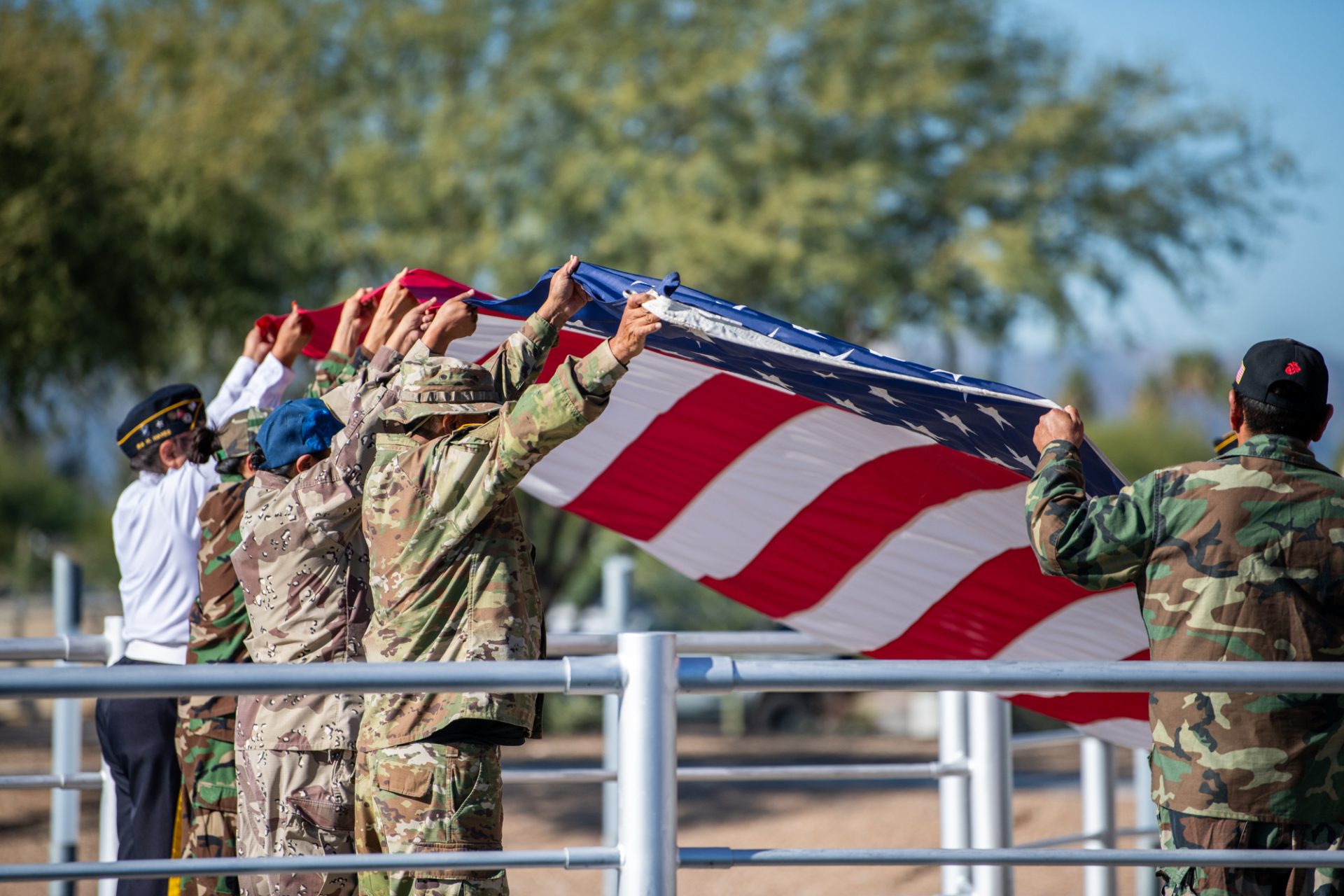
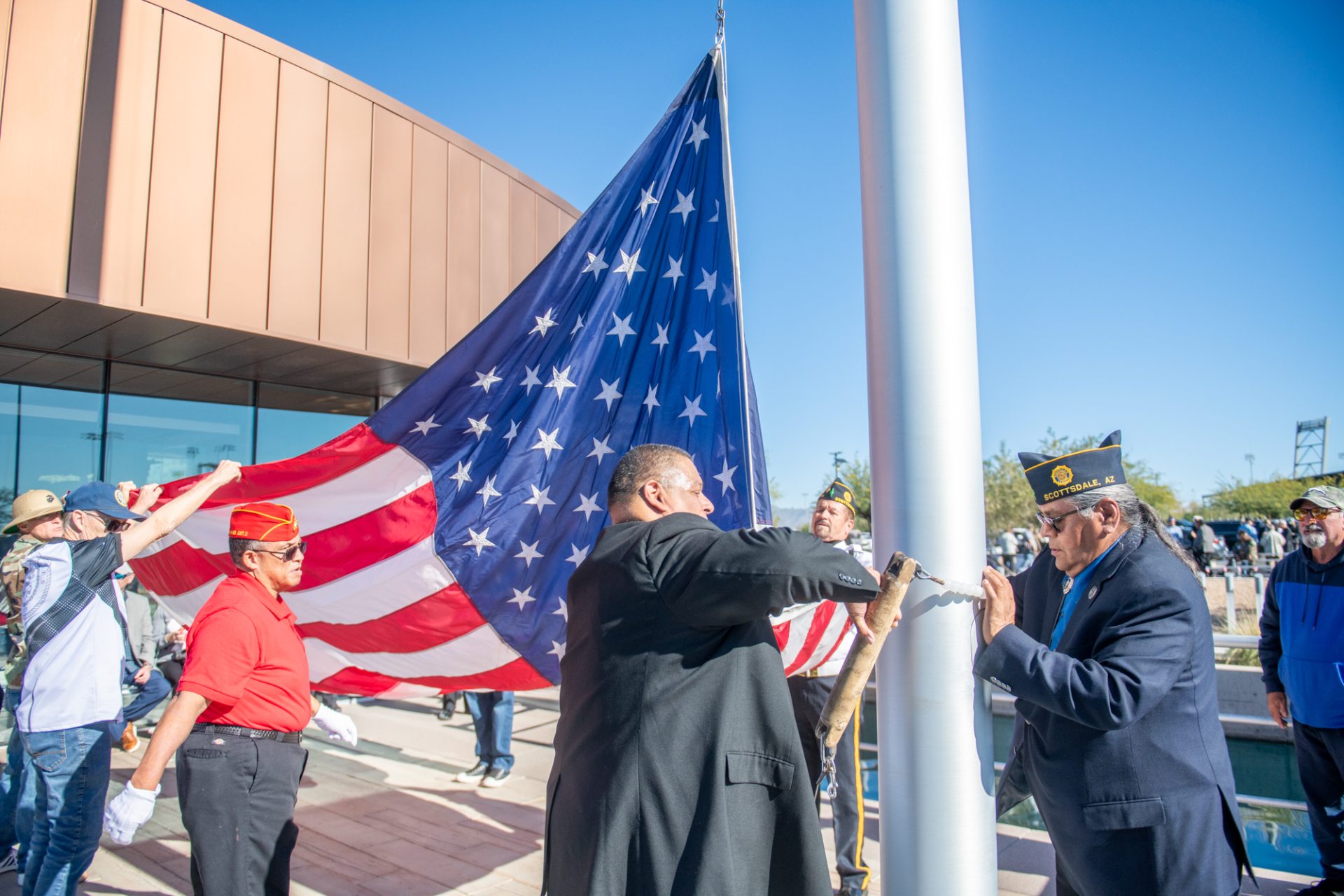
This year’s commemoration began at 10 a.m. and was followed by the annual breathing of the flag ceremony, which has been conducted on each Dec. 7 since 2007, when the Community, in partnership with American Legion Post 114 (Bushmasters), was granted ownership of a flag from the USS Arizona.
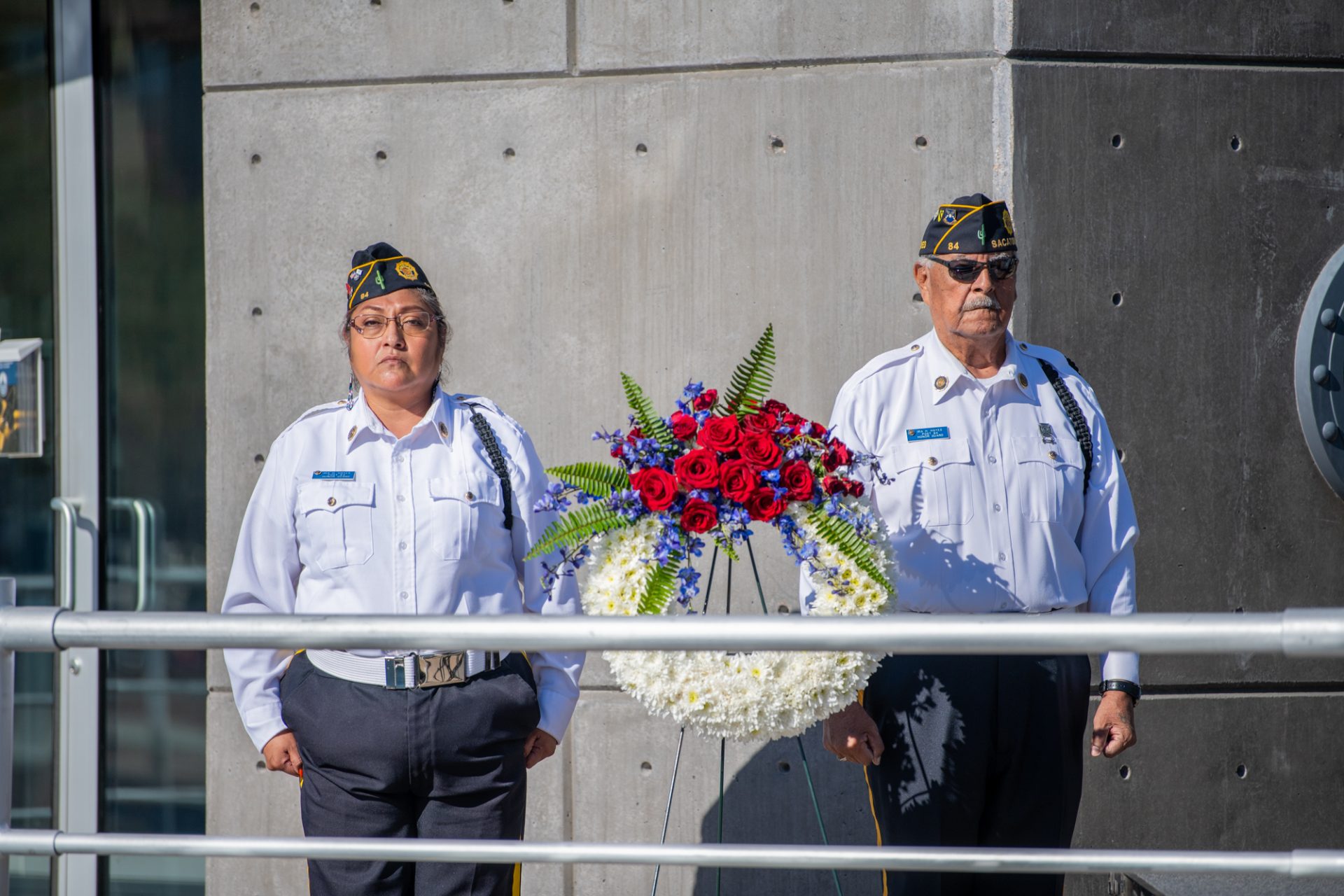
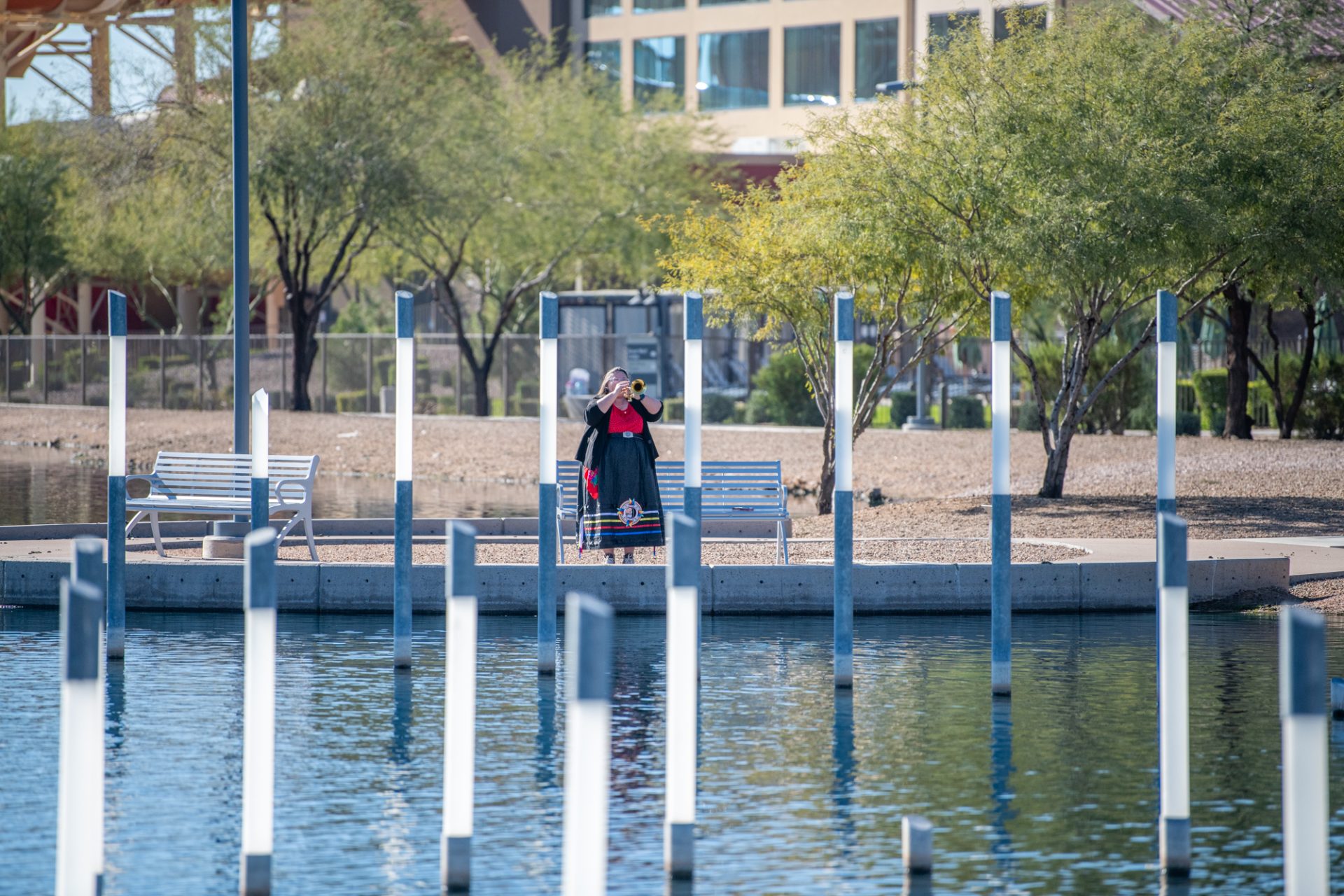
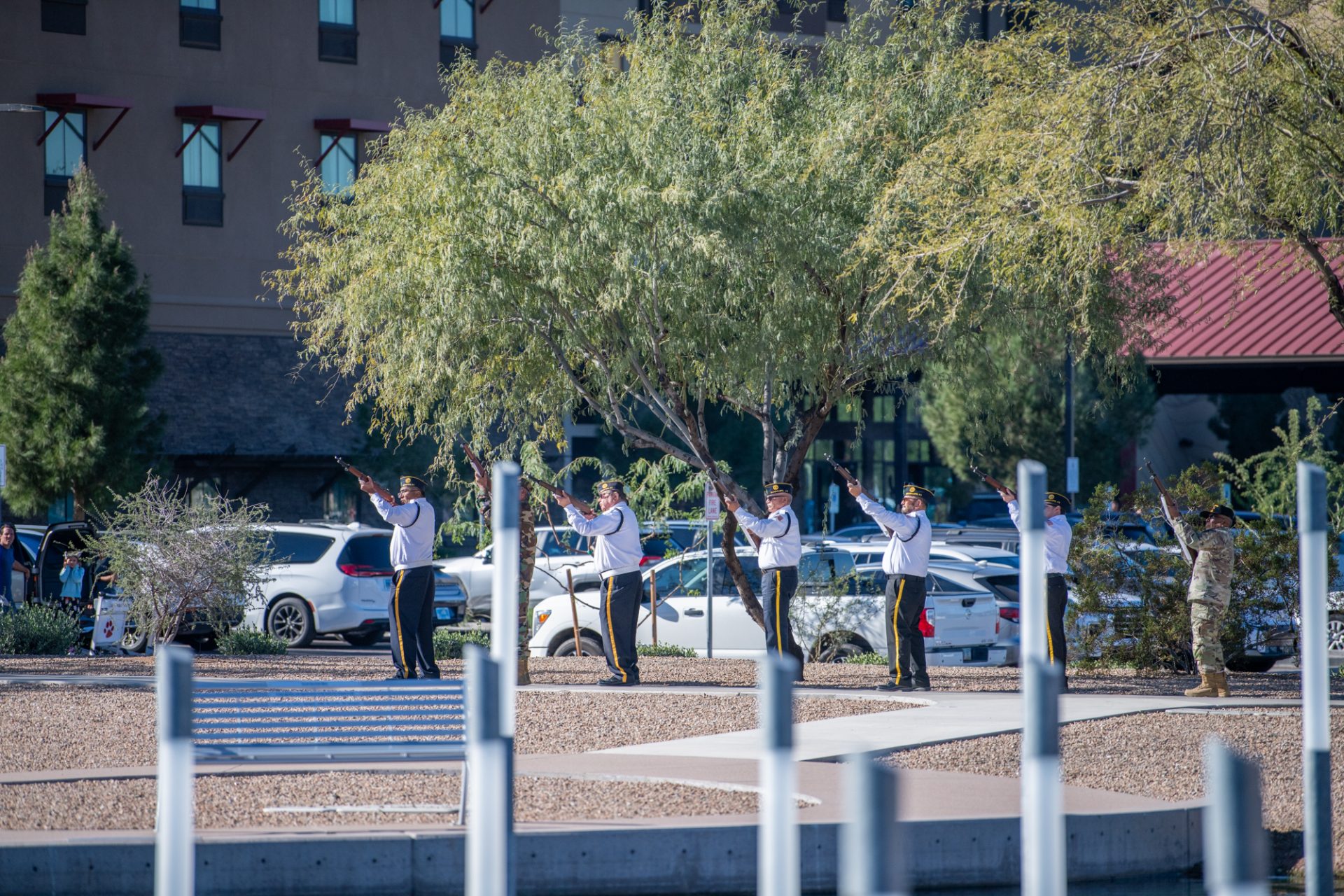
Following the flag breathing was an “echo” or “antiphonal” version of “Taps,” a custom of sounding the call with two buglers standing at a distance from each other to create an “echo” sound. This was followed by a 21-gun salute and the laying of a wreath.
Jenny Bement (White Earth Nation) was one of the antiphonal “Taps” performers. She is a high school marching band teacher and tours with the 16-piece Julia Keefe Indigenous Big Band on trumpet.
“My grandfather was in the Navy, so today was really important for me to come and honor him,” said Bement, who has now been invited by Discover Salt River tourism to perform at this annual event twice.
Bement was stationed across the water from the other “Taps” player along the edge of the commemorative columns that outline the actual perimeter of the original ship.
“Antiphonal ‘Taps’ is important for call and response. It’s like a hollow echo of people passing,” explained Bement.
“The first player is honoring the person who died, in my artistic viewpoint. The second player, like myself, playing the antiphonal part so far away, is like whispers of the past coming forward. They’re still here, they’re still breathing, they’re still with us—not in the physical realm, but spiritually, and that spirituality coming back as a second player.”
Kevin Riding-In, who served in the U.S. Marine Corps as an 0311 rifleman and corporal (E-4), was the Officer of the Day. He announced the dignitaries and guests as they arrived to be seated for the program.
“It’s an amazing thing to have the USS Arizona Memorial on tribal land, because there have been so many Native Americans that served in our armed forces,” said Riding-In, who regularly contributes his time to the annual event. “The SRPMIC always has done a great job honoring our veterans.”
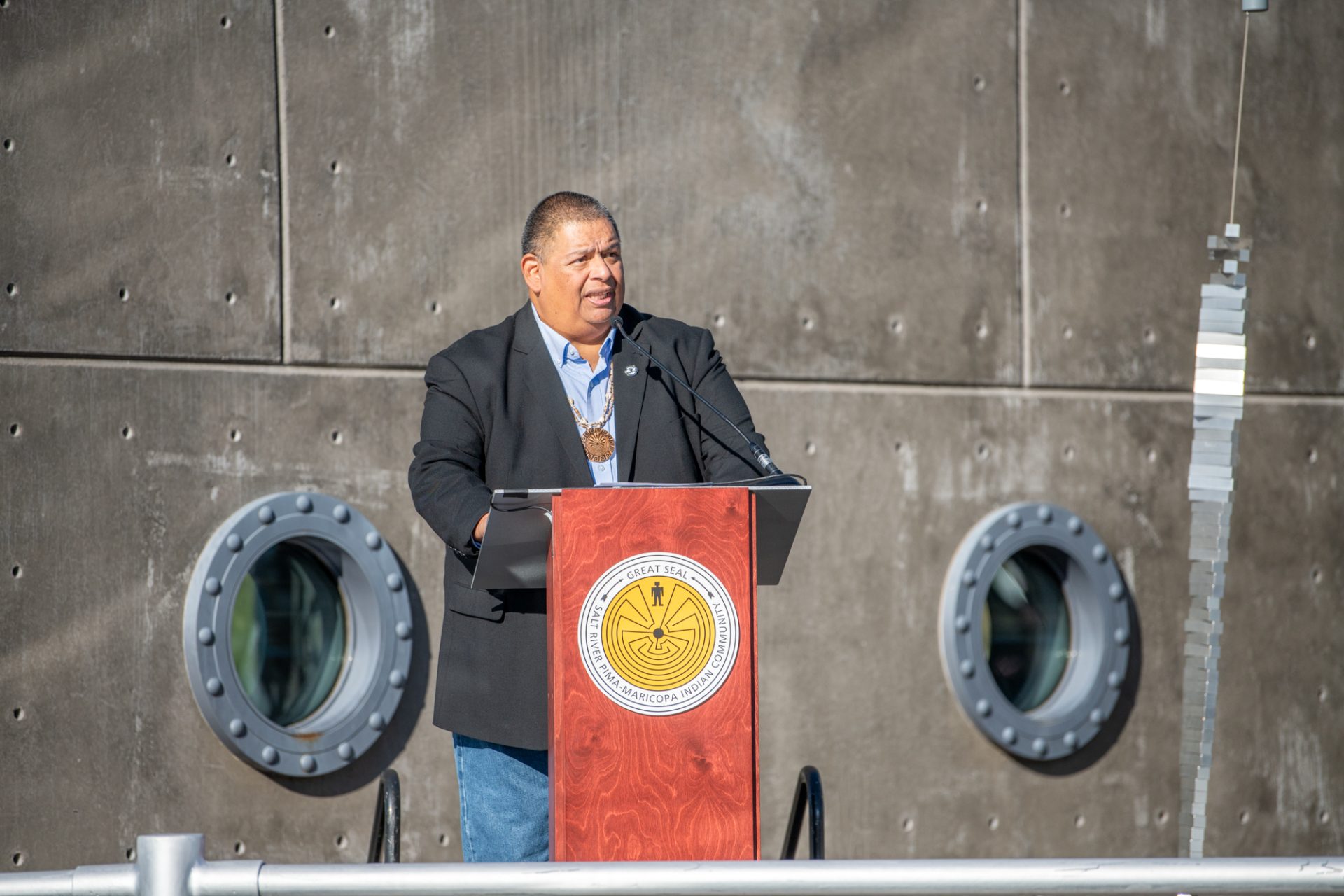
SRPMIC member Isabella Dockerty sang the national anthem in the O’odham language. Former SRPMIC Council member Tom Largo gave the invocation. Major Jon Corey, Ph.D. was a guest speaker during the program. Former SRPMIC Museum Curator Thomas Jackson spoke at the lectern about the history of the USS Arizona.
“The USS Arizona was the biggest ship that was ever built [back in] 1917,” said Jackson. “She was the biggest warship in the world. She was also [fuel-based]. So, every bit of her was state of the art. It was christened with two champagne bottles. Because of Prohibition, the governor decided to take water from one of our lakes and have it christened with those bottles.”
Jackson also shared knowledge about the design of the Memorial Gardens.
“If you see the design, it is the actual size of the USS Arizona itself. We found the original blueprint and laid it down, and this is how wide and big the USS Arizona actually is.”
The blueprint can be seen inside the relic room. After the program, from 11 a.m. to 4 p.m., the relic room was opened to the public.
To close out the commemoration, approximately 30 minutes after sunset at military twilight, the pillars in the water at the Memorial Gardens were illuminated in memory of those who died at Pearl Harbor.