VIEWS: 967
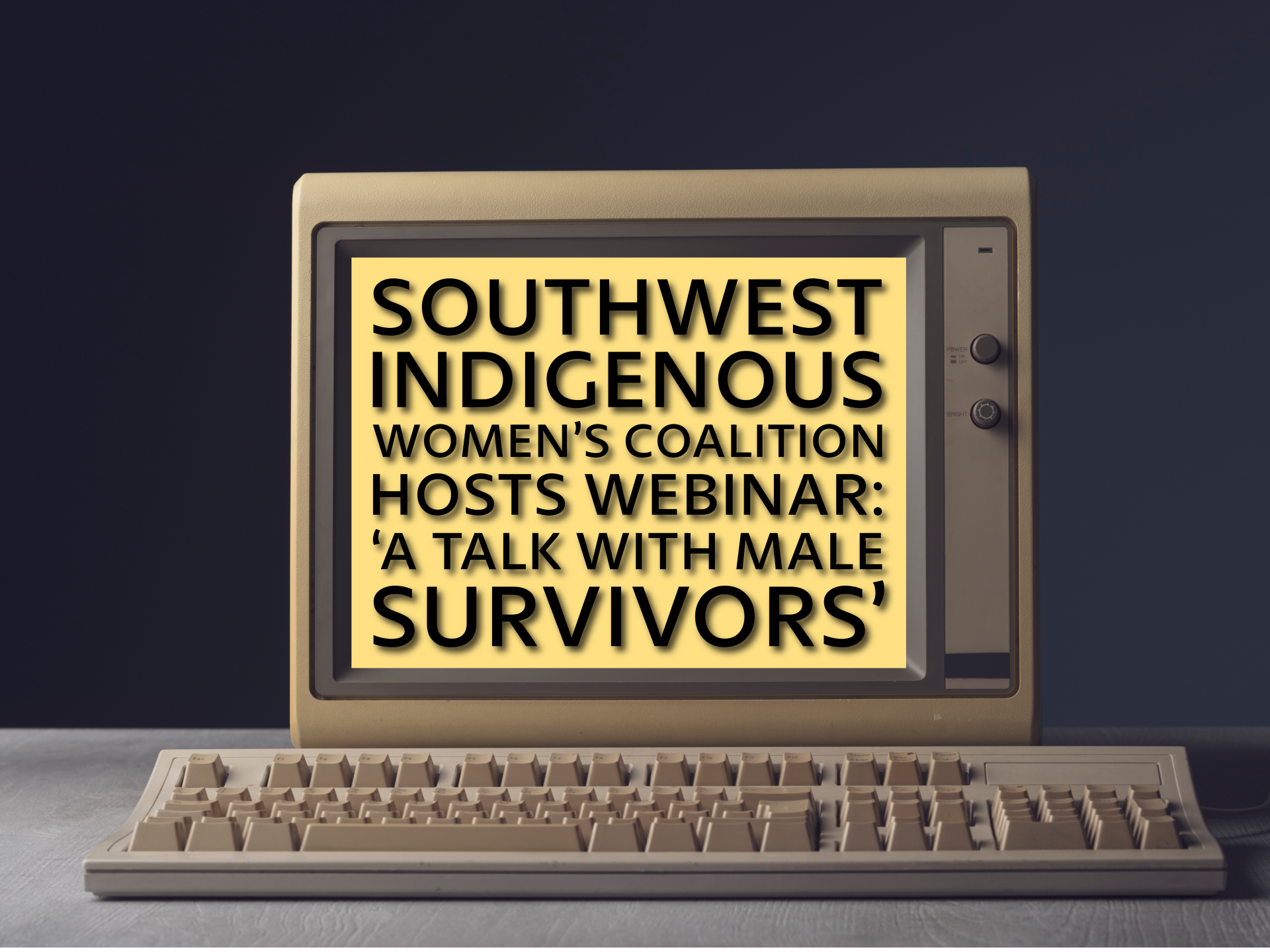
May 29, 2026Southwest Indigenous Women’s Coalition Hosts Webinar: ‘A Talk with Male Survivors’
Editor’s Note: This story contains sensitive subject matter that some readers may find upsetting.
On April 21, six Indigenous men shared their stories as survivors of childhood sexual abuse.
It was an online webinar presentation facilitated by the Southwest Indigenous Women’s Coalition recognizing the month of April being Sexual Assault Awareness Month.
Lenny Hayes, Jeremy Nevilles-Sorell, Whirlwind Bull Yellow Bear, Tim Ruise, Waylon Pahona and Dwight Francisco all openly discussed the various forms of sexual assault they experienced and how they have attempted to overcome the trauma.
Nevilles-Sorell (White Earth Nation/Winnebago) helped facilitate the webinar, asking each panel member to introduce himself to the webinar’s audience, which was composed of nearly 200 individuals. At the introduction of each speaker, Nevilles-Sorrell asked the speaker two questions: “What kept you from speaking up?” and “What made it possible to speak up?”
Lenny Hayes
Lenny Hayes (Sisseton Wahpeton-Oyate) stated that he found himself at a crossroads when his longtime friend of 13 years said they were fed up with Hayes not taking care of himself and not getting help to process and overcome being sexually abused as a child. “After that, I attempted suicide and almost succeeded. My trauma was so heavy, and I did want to die. When my friend said that to me, that’s what got me into therapy. I went through 10 years of extensive therapy,” Hayes said.
Hayes mentioned how masculinity can be viewed incorrectly by society, especially in Indian Country. “When I look at masculinity, I just say, ‘I can carry wood, ’” said Hayes with a chuckle. “In my life, I grew up in a family with so much dysfunction that by the time I was 6 years old, I knew something was wrong. I didn’t have any supportive adults around me to teach me about my identity. Nowadays, I am thankful for all the gifts that I have been given.”
Waylon Pahona
Waylon Pahona (Piipaash/Hopi/Tewa) is a yoga and fitness instructor with nearly two decades of experience. During their presentation, they detailed how exercise provided them relief and a way to overcome their childhood traumas.
“Being from the reservation, I thought I was at fault. Assimilation and colonization teach us that our traditional ceremonies are witchcraft; I had to unlearn that,” began Pahona. “I was sexually abused from 6 to 9 years old by a female. I was raped by a male friend [at] around 12 years old. It took me to a place where I attempted to take my own life and ended up in the hospital. In 2007, I officially expressed myself at PIMC (Phoenix Indian Medical Center). When I shared, I went through counseling, and I saw a psychologist. That’s when I started.
“I didn’t question if I was gay; I went the opposite [way]. I treated women badly, sexually,” he admitted.
He continued, “Now, I’m opening up and sharing more because my mom recently passed away. Back then [when she was alive], I was too ashamed to share an in-depth feeling of what I went through, because I didn’t want others to talk badly about her. I didn’t want people to ask, ‘Why didn’t she help her son?’”
Pahona added, “Being a trainer and understanding the body, I teach people that it’s our mind that gets us out the front door to be able to handle life’s challenges. From there, I relate to openly helping people get through their traumas and then helping them exercise.”
Jeremy Nevilles-Sorell
When it was time for Jeremy Nevilles-Sorell to share his story, he started off by saying, “When I was younger, my mom was nearly murdered four times, so I felt my own traumas were minimal in comparison,” he said.
Moments later, he added, “This is why it’s important to not compare traumas, ever.”
Comparing traumas minimizes the individual experience, invalidates emotional pain and hinders healing. When a person listens to another sharing their traumas and the listener then begins talking about themselves and their own traumas, that often leads to the sharer feeling shame, isolation and reluctance to seek additional help.
Simply put, trauma is not and should never be viewed as a competition. If someone shares their traumas with you, listen to them and help them receive support and services from trauma-informed medical professionals.
Dwight Francisco
Dwight Francisco (Tohono O’odham) has been sober for 11 years and has been living in Phoenix for a decade.
“Why didn’t I speak up? It happened when I was a boy, up to age 5 years old. It happened when I was living with my great-grandmother and grandmother,” said Francisco. “I felt a lot of shame; I didn’t want to shame my family. I didn’t want people to talk bad about my family in the community. The fear is what keeps us sick for a long time.”
He added, “Someone with unhealed trauma handed down the trauma to me. But because I got help, I am not passing down the trauma to others. When I switched from victim to survivor mode, I was comfortable enough accepting the truth that it wasn’t my fault. Then I was able to share my healing with others. That abused boy [I used to be]? I’m saving him. He doesn’t have to live hurting in the past.”
Whirlwind Bull Yellow Bear and Tim Ruise
Whirlwind Bull Yellow Bear (Mandan, Hidatsa and Arikara Nation) and Tim Ruise (Cahuilla Band of Indians) echoed similar remarks.
“Silence doesn’t help anybody. I don’t blame myself for not speaking up,” admitted Yellow Bear. “When I speak with a men’s group, we usually minimize our own traumas. I minimized mine; I assumed I was okay. I only told a few people about what happened. But today, I feel strong enough to share with the people here. We have to encourage our children to speak up.”
Ruise spoke about how family and school life can contribute to a survivor not wanting to speak out.
“Like in my family on my dad’s side, who is a strong cultural Indigenous person, we didn’t talk about it. Then at school, the kids bullied me, and the teachers don’t have enough training to help me in that way,” he shared. “I’m thankful I walked the hard life that I have today because it taught me a lot. The only person I trusted as a male in my family was my grandfather. I didn’t trust my uncles, cousins or any of them. We need to educate our men.”
Sexual Assault Resources
National Domestic Violence Hotline, (800) 799-7233
StrongHearts Native Helpline, (844) 762-8483
National Sexual Assault Hotline, (800) 656-4673