VIEWS: 62
October 12, 2026National Preparedness Month Training
Did you know that free monthly training for Salt River Pima-Maricopa Indian Community Risk Reduction staff is open to all Community members and employees?
The trainings are hosted by the Community Risk Reduction Division of the Salt River Fire Department each month at Two Waters Building A, Room 109.
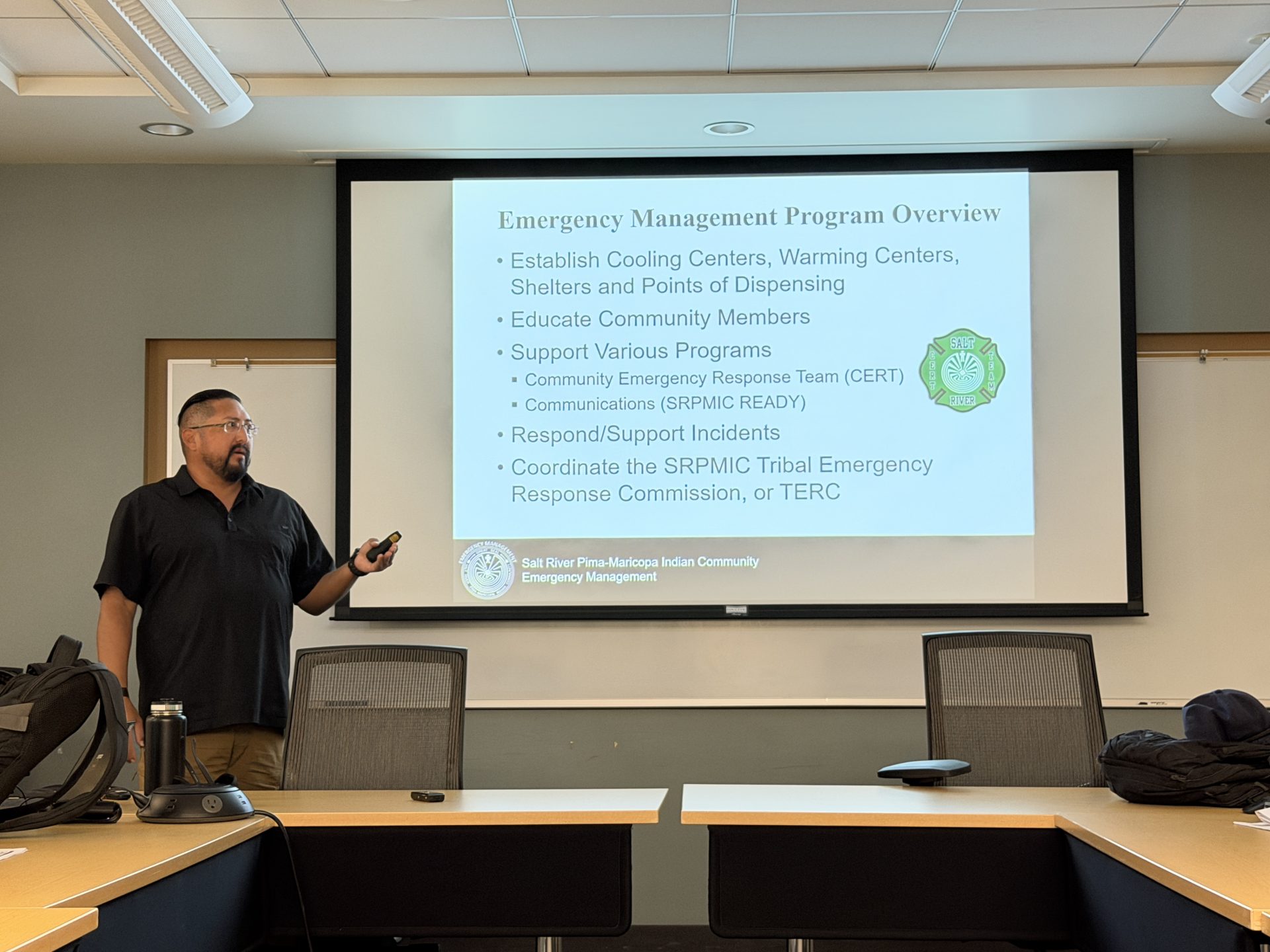
On Sept. 8, for National Preparedness Month, the training by Salt River Emergency Management focused on personal, home and Community preparedness.
This year’s theme for National Preparedness Month is “Americans Stand Ready” and focuses on resourcefulness, self-reliance, resilience and community unity before disasters strike.
The presentation provided an overview of hazards and disasters that impact the SRPMIC, as well as what residents can do to prepare for them.
Emergency Management Coordinator Terry Nelson gave participants these core steps to take at home before an emergency strikes.
Know your risk
Understand the types of emergencies most common in your area, such as extreme heat, floods or severe weather, and sign up for local alerts.
Make a plan
Create an emergency communication and evacuation plan with your family, accounting for children, seniors, pets and anyone with mobility or functional needs.
Build a kit
Gather essential supplies including non-perishable food, water (at least a three-day supply for each person), medications and flashlights.
Get involved
Take classes like CPR or first aid, and support local community disaster planning.
Hazards identified in the SRPMIC’s Threat and Hazard Identification and Risk Assessment (THIRA) and other Community-based risk assessments include dam inundation, drought, extreme heat, fissures, flood, levee failure, severe wind, subsidence and wildfires.
Nelson also talked in-depth about how the Community is prepared to prevent and respond to human-caused threats, including terrorism. There are terrorism liaison and emergency management liaison officers and “fusion centers” where law enforcement agencies share information with each other.
Emergency Management Coordinator Joseph Urrea and SRFD Capt. Robert K. Scabby also contributed to the training.
For more information about Community risk reduction, contact Fireprevention@srpmic-nsn.gov or call (480) 362-SRFD.