VIEWS: 601
August 6, 2026Community Summer Speaker Series Returns
3 Takeaways:
- The Summer Speaker Series returned with a panel discussion regarding the SRPMIC’s recent repatriation efforts in Scotland.
- The event was held on June 30 at the Council Chambers.
- The next Summer Speaker Series event will happen on Aug. 25.
The gentle murmur of conversations wafted within the walls of the Salt River Pima-Maricopa Indian Community’s Council Chambers on June 30.
It was the return of the Summer Speaker Series, featuring a panel discussion regarding the Community’s recent repatriation efforts in Scotland. The series started last summer.
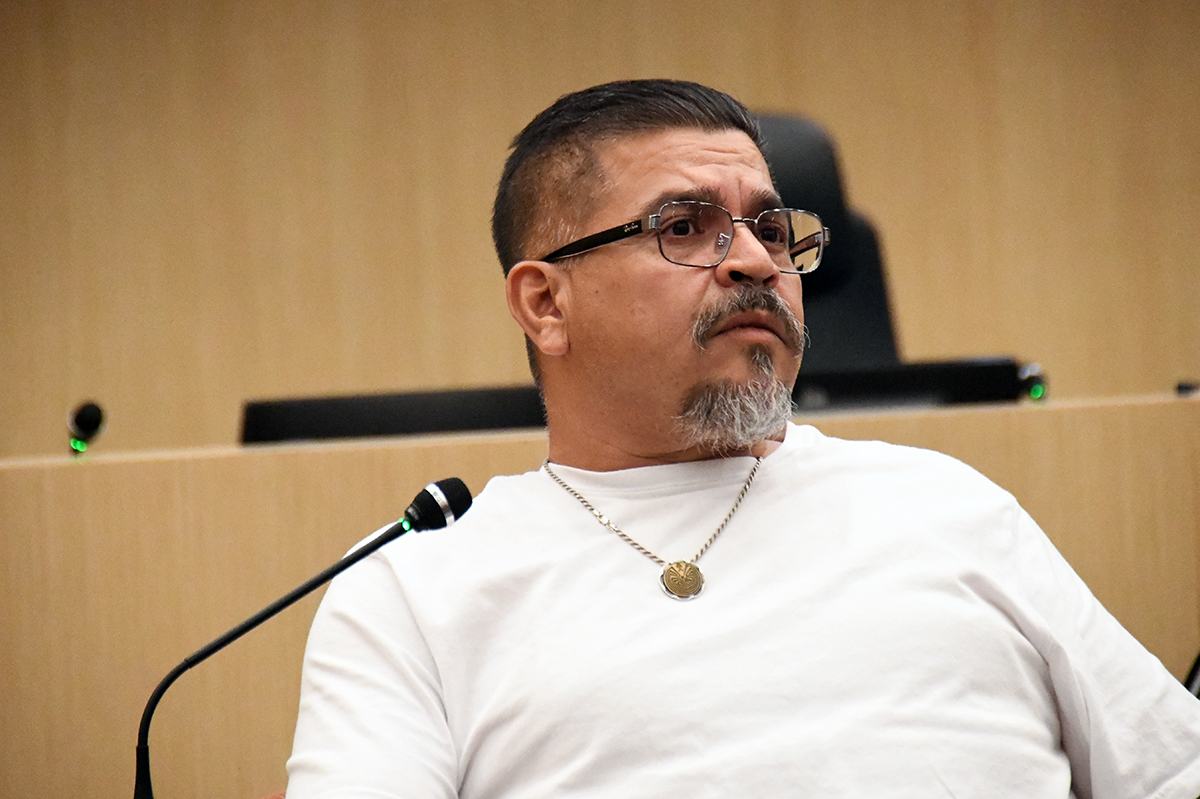
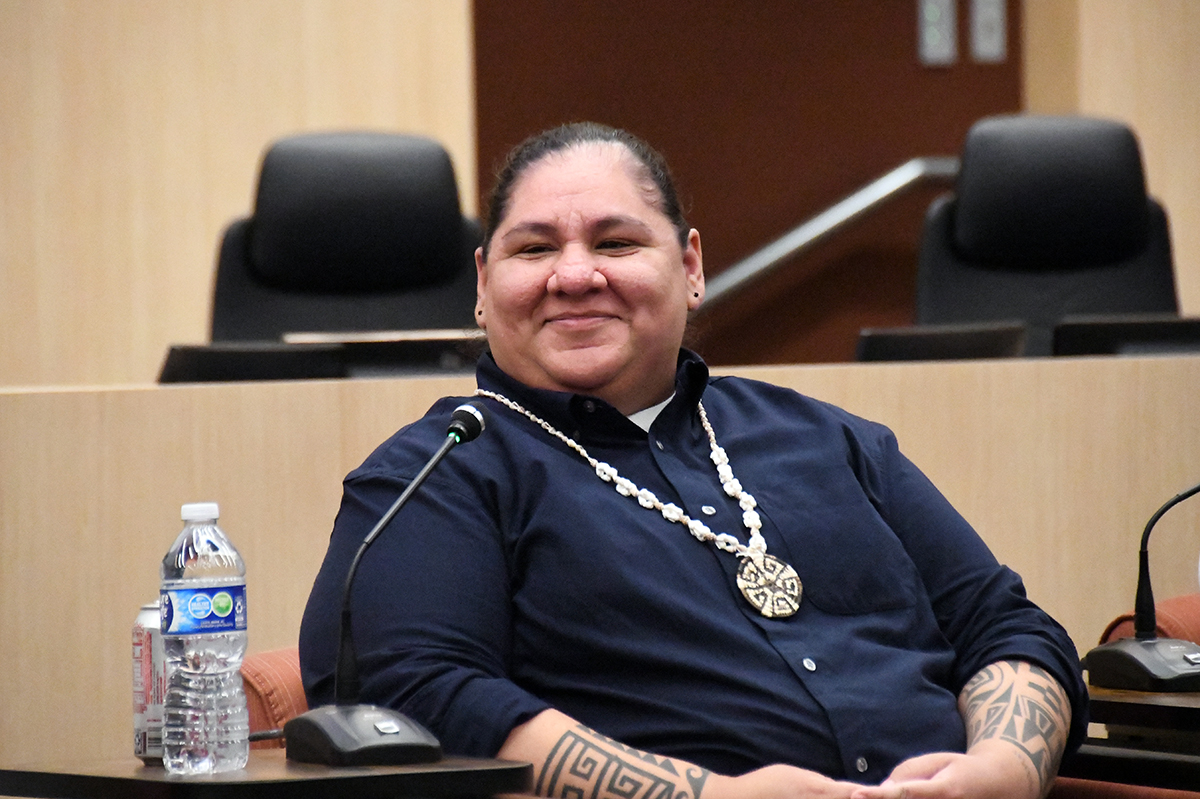
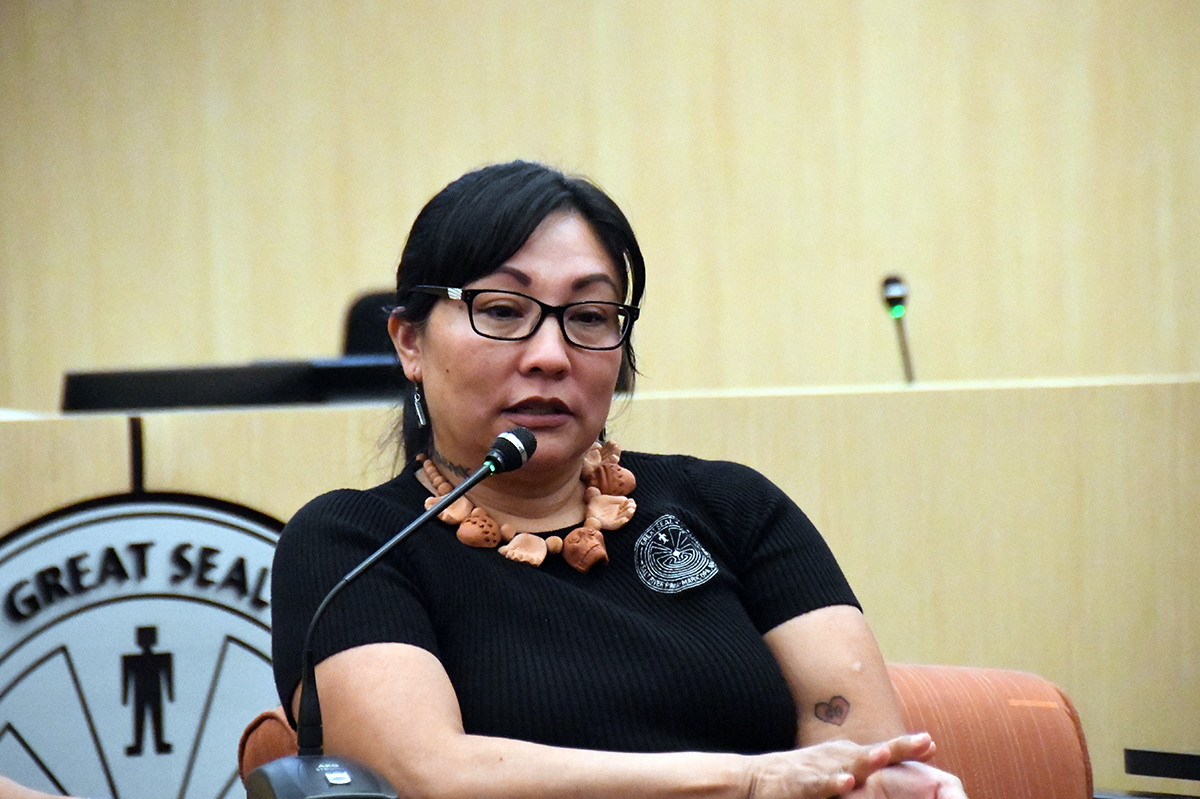
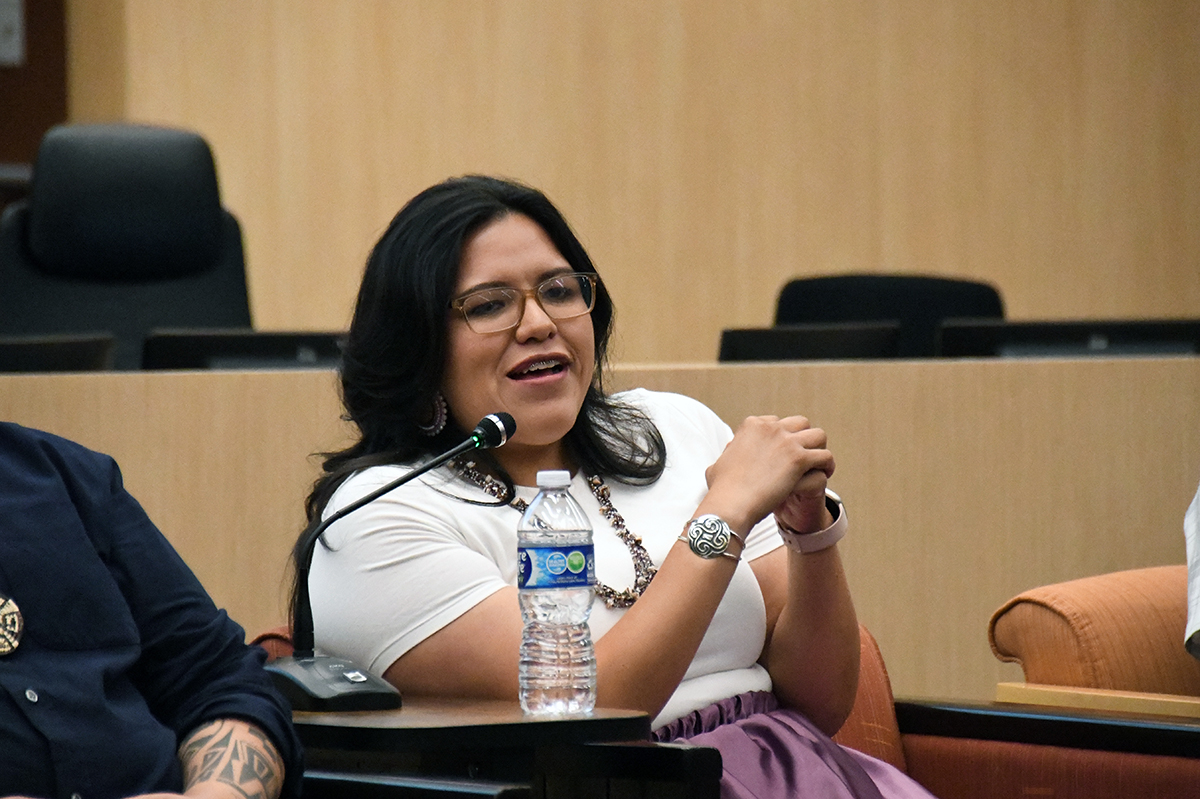
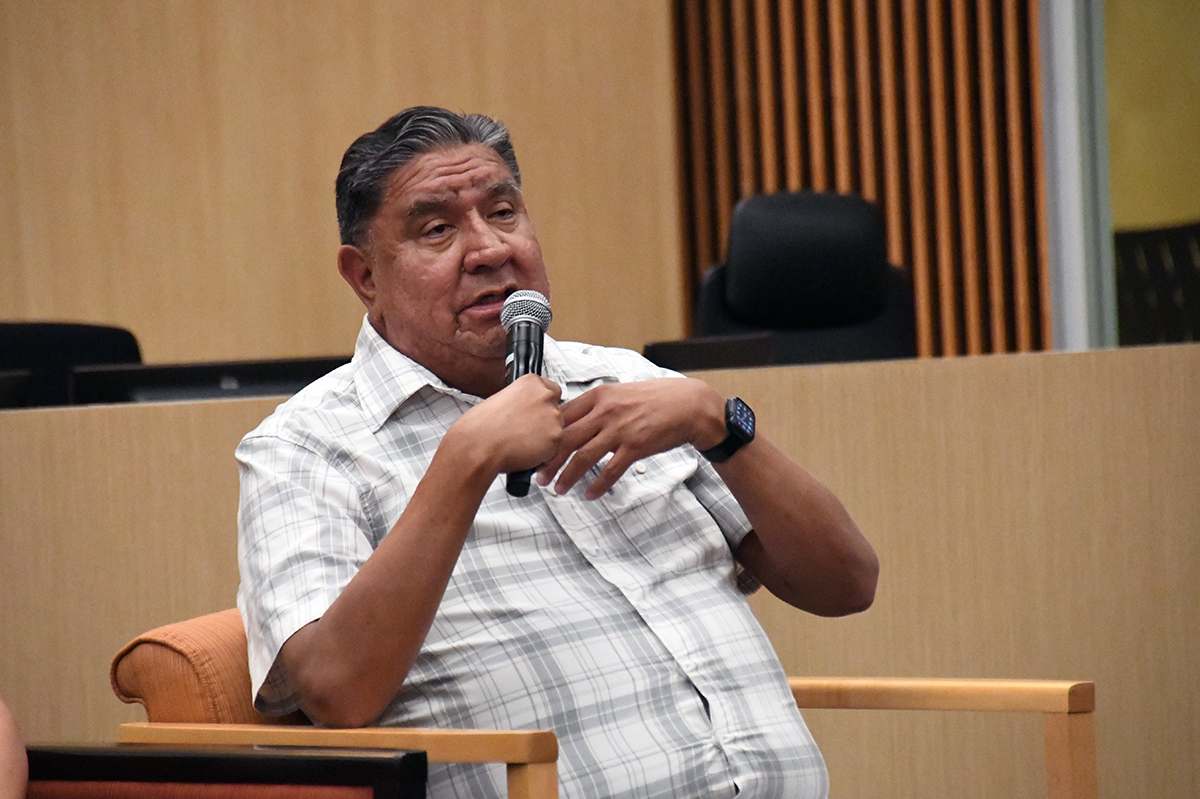
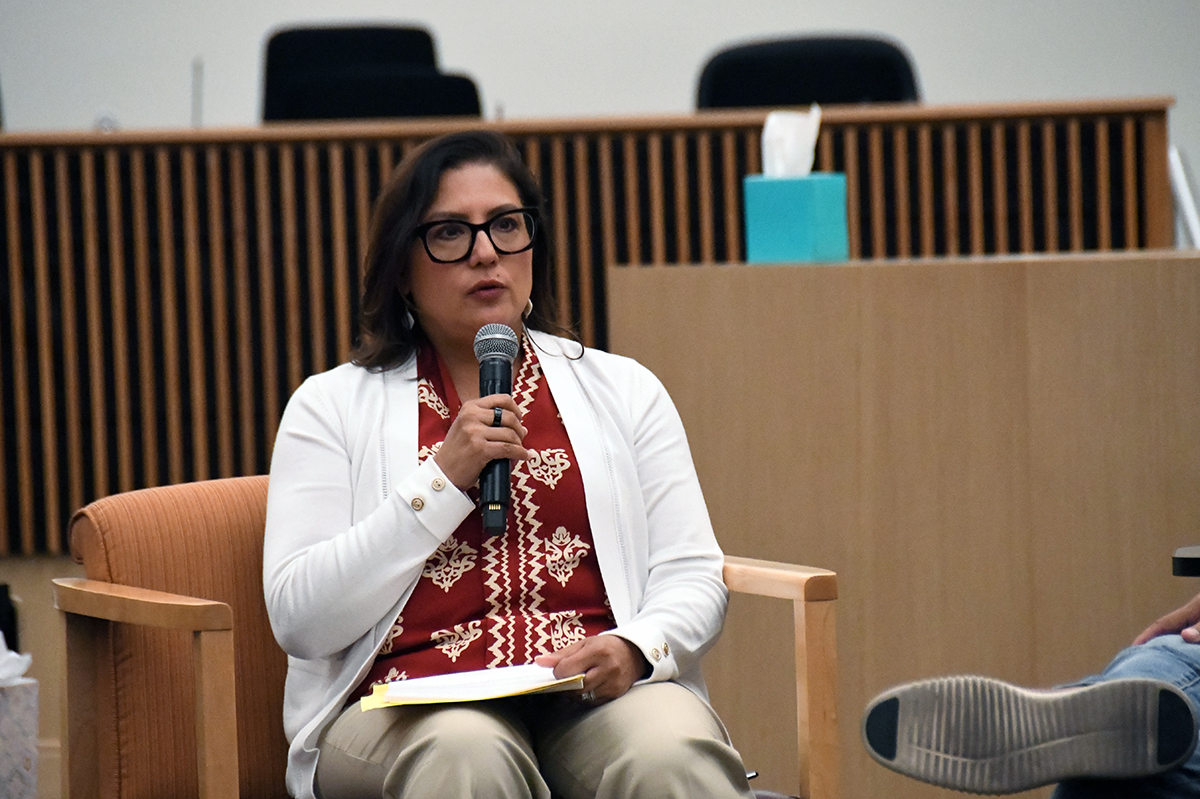
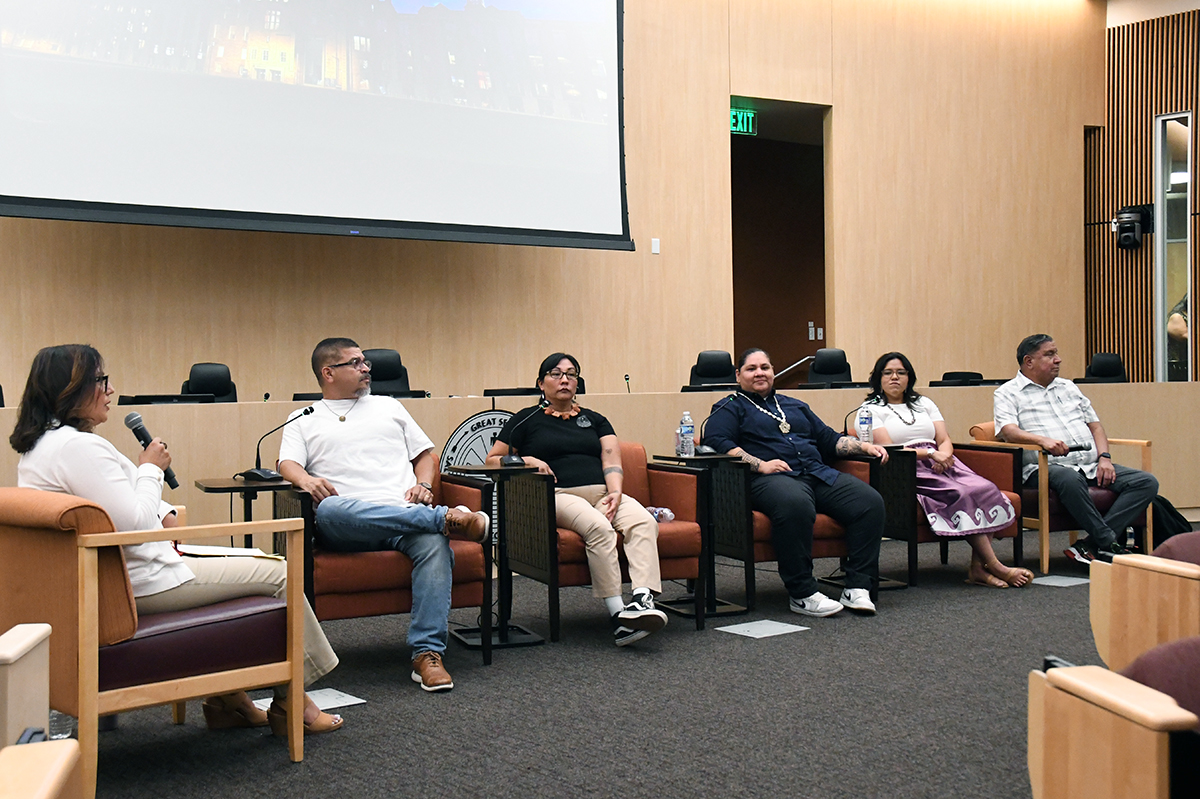
Cultural Resources Department staff members Martha Martinez and Shane Anton and Council members Jacob Butler, Mikah Carlos and Su:k Fulwilder served on the panel, while Assistant Community Manager Lena Jackson-Eckert served as the host.
This past April, representatives from the SRPMIC traveled to Edinburgh, Scotland, for a repatriation ceremony to retrieve items of cultural significance that had been housed in a museum there for many years, namely the remains of several ancestors. Individuals from the Gila River Indian Community joined SRPMIC representatives on the trip for the same reason.
“Thank you all for joining us for our second annual Summer Speakers Series event,” began Jackson-Eckert. “Some of you might be wondering, like I was, What is repatriation? It is the process of bringing back or returning remains to their place of origin, meaning back to a Community like ours.”
“For us, in our Community, we’ve never had the opportunity before to do an international repatriation,” said Carlos.
They shared with the group that having a “nation-to-nation” connection with Scotland helped bridge the two together.
Anton reminded the attendees of the origin of the word “repatriation.”
“Repatriation is actually a term that was more prevalent [during wartime] with other countries,” he began. “We would take prisoners, they would take prisoners, and there was usually some sort of political issue going back and forth in this.”
He continued, “[During those times], they would repatriate the individuals back to their country. So even though [our ancestors], they’re deceased, we still see them as people and individuals. That’s why it’s important that we repatriate those individuals back to the Community with the respect, dignity and honor that they would deserve [as] a living individual here within the United States.”
Antone discussed the Native American Graves Protection and Repatriation Act (NAGPRA), a federal law that provides for the protection and return of Native American human remains, funerary objects, sacred objects and objects of cultural patrimony.
NAGPRA only applies federally, not internationally. Foreign countries are not bound under NAGPRA to return culturally significant items to their tribes of origin, although institutions in some countries, like Scotland, will do this because it’s the ethical thing to do.
The panel explained their use of specific words and terms, such as “roster” instead of inventory, “escorted” instead of moved, “housed” instead of stored, and others.
“When someone visits you, you don’t ‘store’ them, you ‘house’ them,” said Anton.
Members of the panel discussed how the Scotland trip impacted them both professionally and personally. Fulwilder said she spoke with her father, Meldon, about the repatriation process before boarding the flight to Scotland. She said that her father worked on repatriation efforts many years ago.
“I feel like it was a historical event; it’s something that’s going to bring healing to our Community,” said Fulwilder. “I felt that it was important that we were there. I’m grateful to be a part of that.”
After Fulwilder’s words, Martinez provided some insight into how the trip came about.
“The Association on American Indian Affairs [searches] throughout the U.S. and internationally [for auctions that may contain items of Native American origin]. We get notifications [from them], and AAIA has conferences that Shane and I attend as well. They’re the ones that notified us [about the items in Scotland], because they had done all the work for that,” she said.
The University of Edinburgh’s Anatomical Museum and AAIA began repatriation discussions. “The university let AAIA know that they would be willing to repatriate. In Scotland, it works differently. It’s not just the university [we were working with], it’s under the government,” Martinez added.
The seats inside the Council Chambers were filled with guests who displayed heavy hearts and watery eyes as the panel continued to provide insight regarding the Scotland trip.
“We’re dealing with death,” said Carlos. “That’s taboo for us. You have to be in the right mind space to do this. For myself, I have to make sure I’m equipped and ready to support those who are escorting [the remains]. This is a very heavy thing. It’s something that happened, but we’re getting to do a good thing by getting [the ancestors] back in a good way and giving them the respect they deserve.”
Battling the time-zone difference in Scotland, Carlos mentioned that the group routinely called back home and used Facetime to speak with their family and loved ones.
“One ancestor was escorted to Gila River, and the others came home to Salt River,” Butler said. “Being away from our families was hard. The time differences were so long. But that’s what helped a lot, knowing we left in a good way and knowing this work was for a bigger reason. I think that’s what helped me.”
Butler said he was asked to prepare the remains to be housed for escorting. “It was hard for me … to know these people were taken from their place, when they never should’ve been disturbed, and [moved] thousands of miles from their home to be left on the shelf and essentially forgotten. Some of those remains could’ve been remains of young adults or children. I couldn’t help but think, What if this was my daughter?” he said.
He added, “That’s what’s important. To humanize the remains of our ancestors to the people who only treat them as items in a collection.”
Fulwilder echoed similar remarks. “I had to prepare myself and put myself in a better mindset. Although death is sad, it also is healing for our Community to bring our relatives home.”
She added that the university team joked with the group upon their arrival. “They told us we brought the sun with us,” said Fulwilder with a grin. “We flew in at about 6 a.m. and it was really beautiful; the sun was shining. They told us Scotland is usually cold, dark and cloudy.”
As the presentation neared its conclusion, the group provided their closing remarks. “I’m glad we were there to do that work but also very frustrated [that the remains were] there in the first place,” said Carlos. “Also, [it was difficult] seeing [the museum’s] collection [of items] from many cultures around the world and knowing it has been probably hundreds of years since they’ve been visited by their own people. It was a lot.”
Martinez said, “It is a heavy thing to deal with. Having the camaraderie between all of us made the trip easier. We looked out for one another. Even though it’s hard and heavy, we’re doing this work for the Community. I won’t be here in 100 years, but hopefully the work we do sets the standard. Because if something were to happen to me, I hope someone has the inclination to bring me home. I don’t want to be in another country, especially one that’s so cold. I want to be home. I love my desert.”
The event concluded with a question-and-answer session featuring questions from in-person guests and online spectators watching the livestream feed.
On Aug. 25 at 5 p.m., the Summer Speaker Series returns with “The Science of Happiness & Habits,” again held at the Council Chambers. Another presentation had been scheduled for late July, but that event was canceled.
To submit questions to speaker panels or inquire about upcoming sessions, please email summerspeakerseries@srpmic-nsn.gov.