VIEWS: 49
October 13, 2026Alaska Games Demonstrated at Ske:g Himdag Ki:
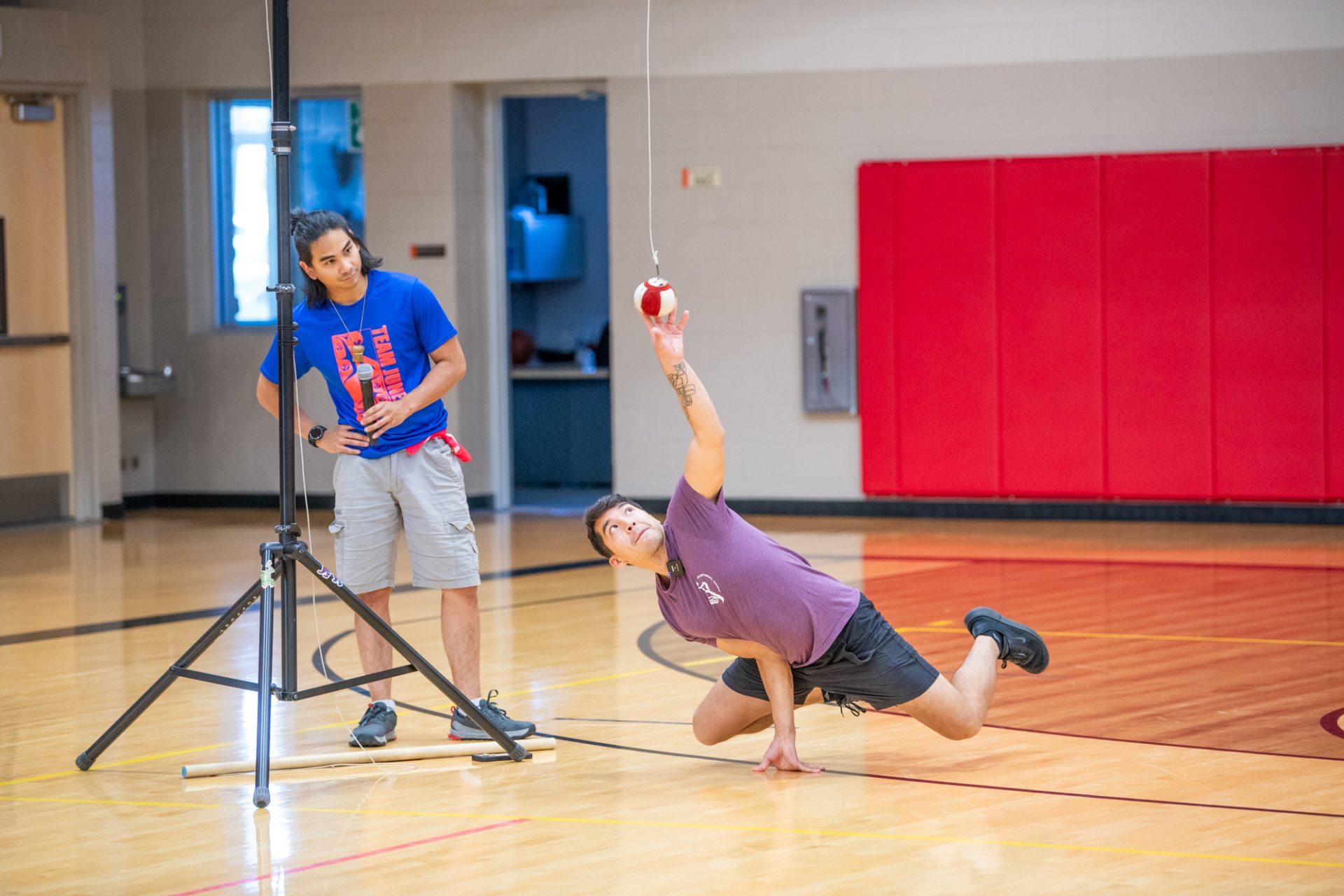
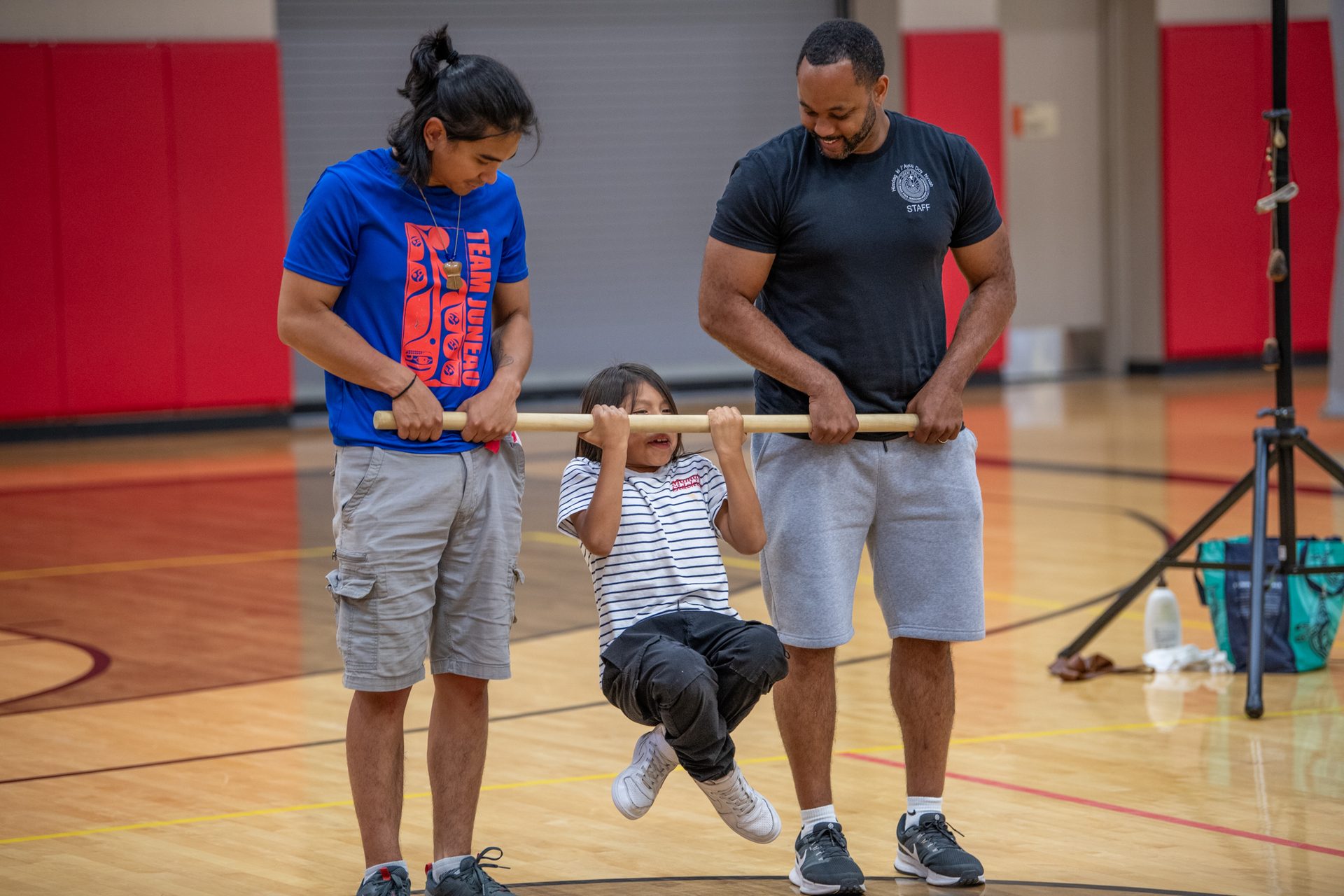
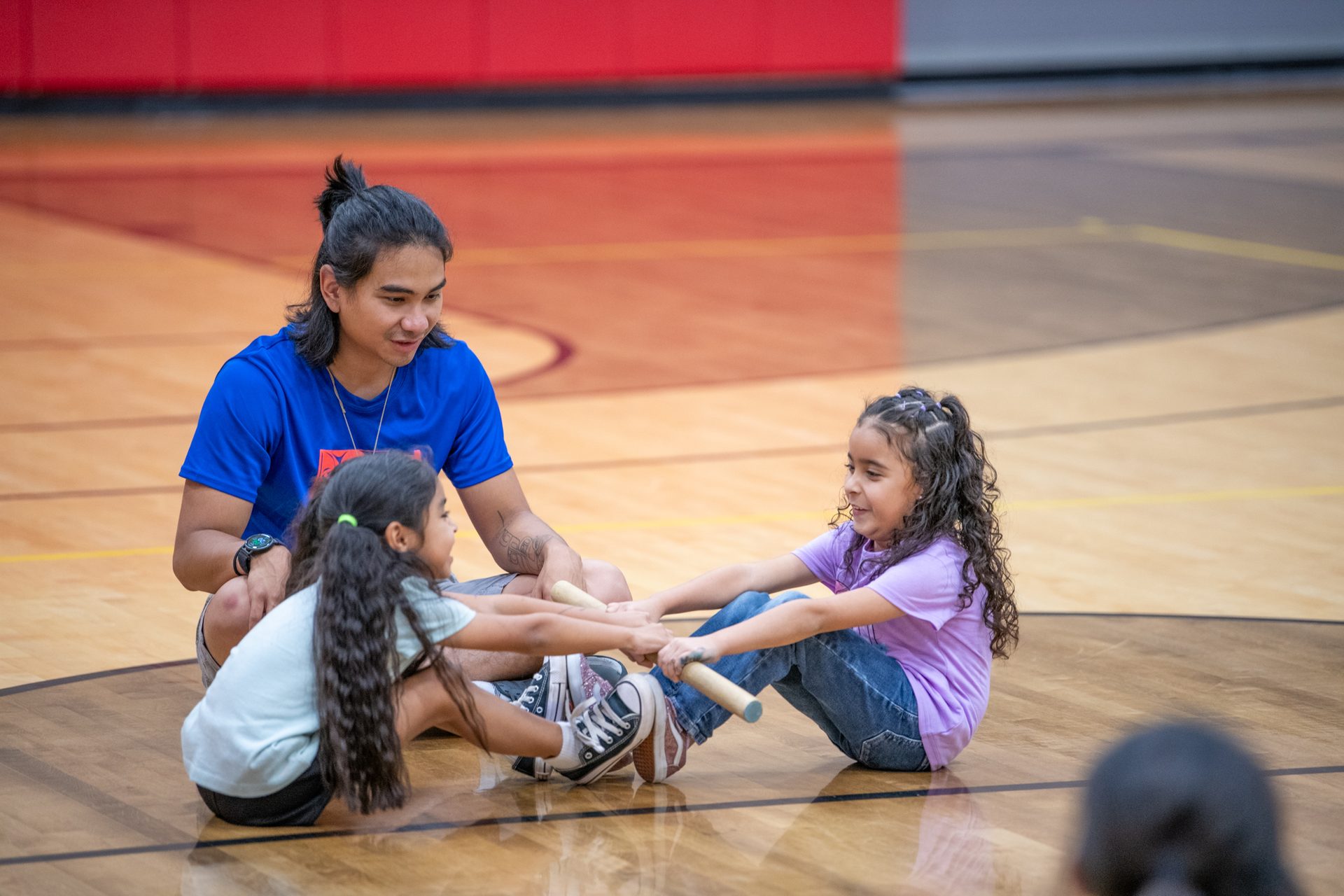
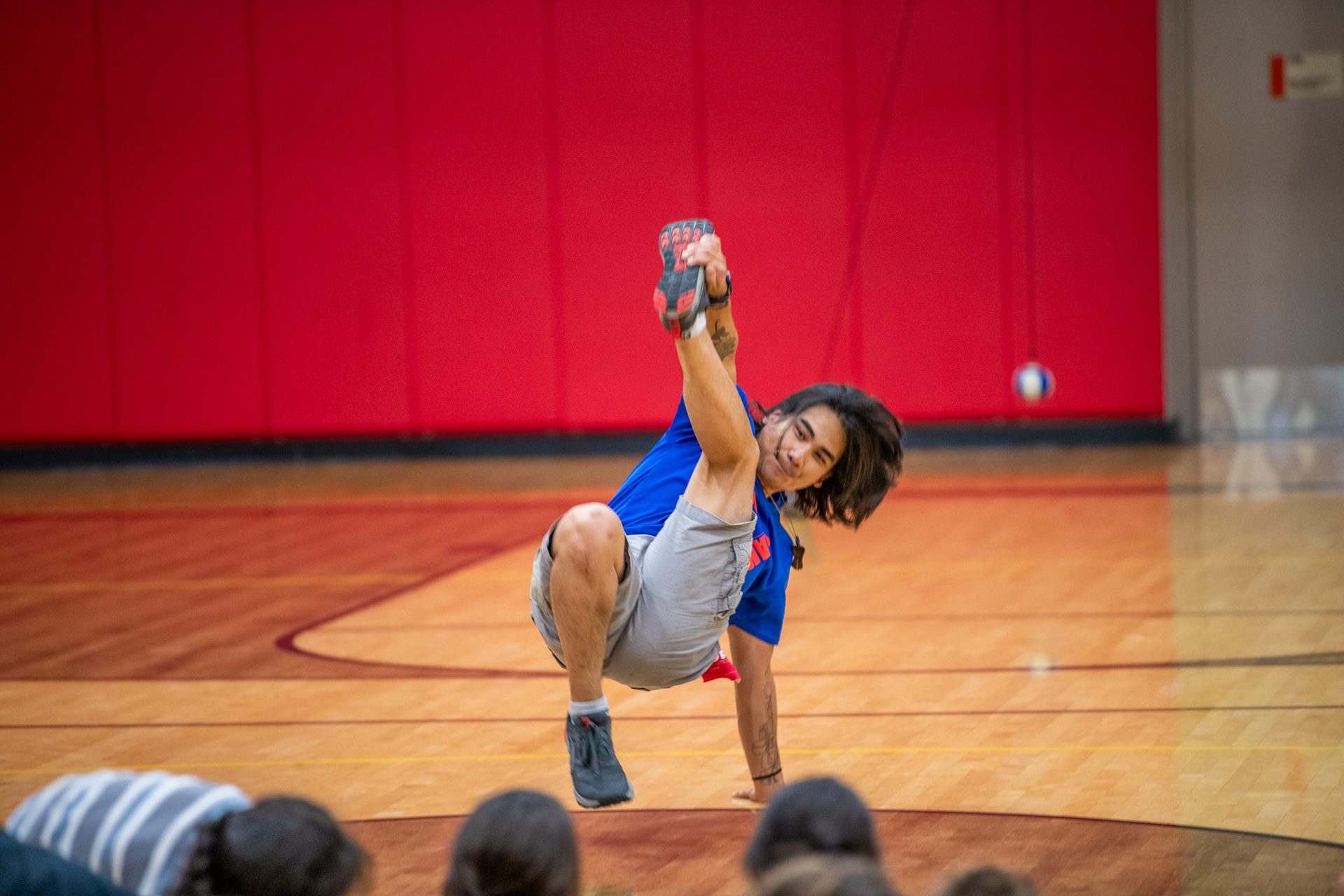
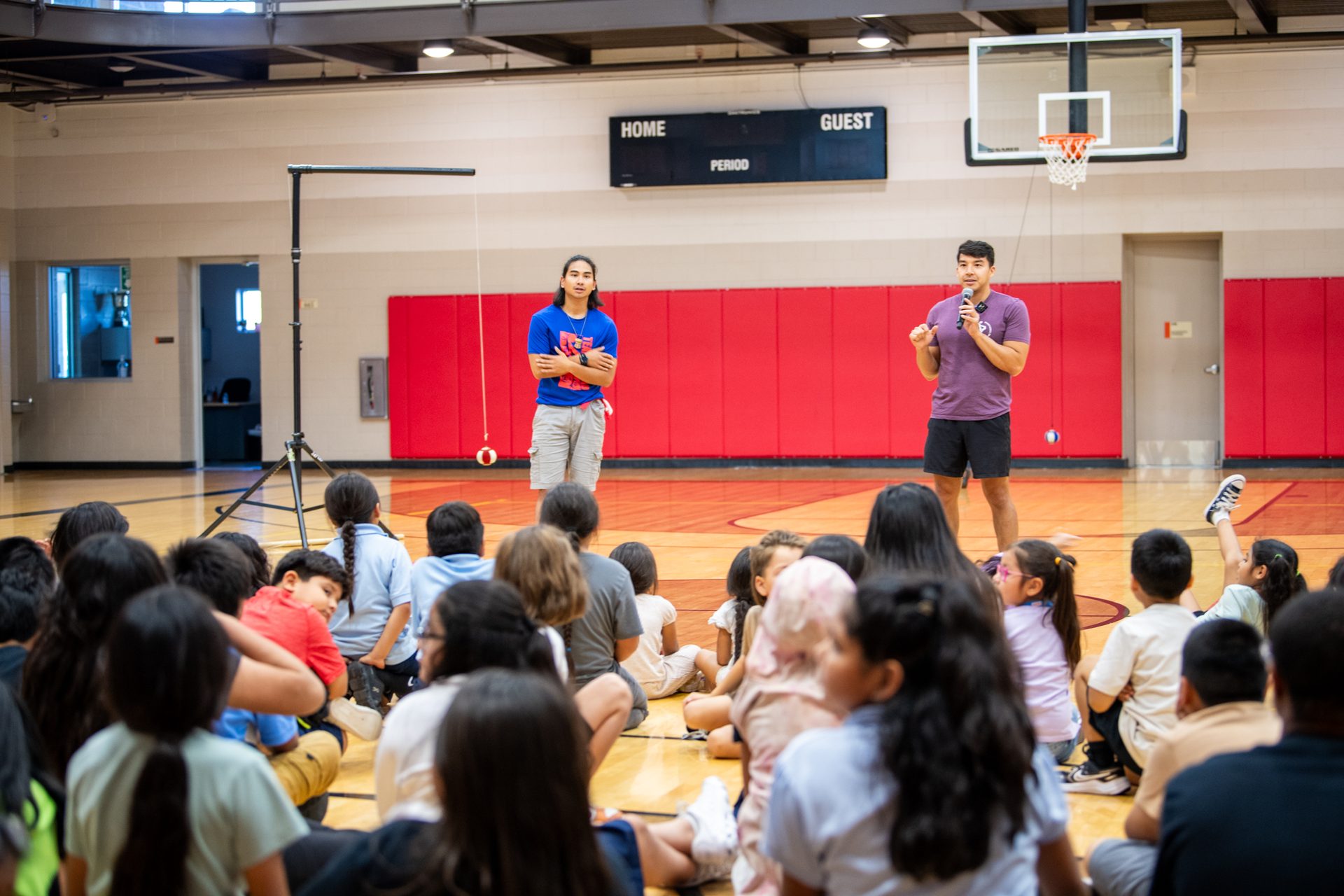
Athletes visiting from the Central Council of the Tlingit & Haida Indian Tribes of Alaska demonstrated and taught Alaska Native games to kids from programs housed at Ske:g Himdag Ki: on Aug. 31.
The athletes were in the Valley because they were invited by the Heard Museum in Phoenix for the closing day of the “Molly of Denali Experience,” a special adventure exhibition designed especially for kids at the museum throughout the summer. One of the episodes of the experience is about Native youth traditional games, said Kyle Ḵaayák’w Worl, a wellness administrator for the Tlingit & Haida Indian Tribes of Alaska. Worl and fellow athlete Matthew Quinto shared demonstrations and workshops at the museum before heading to Salt River.
“I always like adding an extra day to my travel to visit the local community,” said Worl, who connected with Athletics Program Manager David Willis at Salt River Recreation “out of the blue” for the stop.
3 Takeaways:
- Kyle Ḵaayák’w Worl and Matthew Quinto shared traditional Alaska Native games with kids at Ske:g Himdag Ki:.
- They were in the area to demonstrate at the Heard Museum in Phoenix and reached out to Salt River for a visit.
- The traditional games teach helpful skills needed for survival in the cold winter months in Alaska.
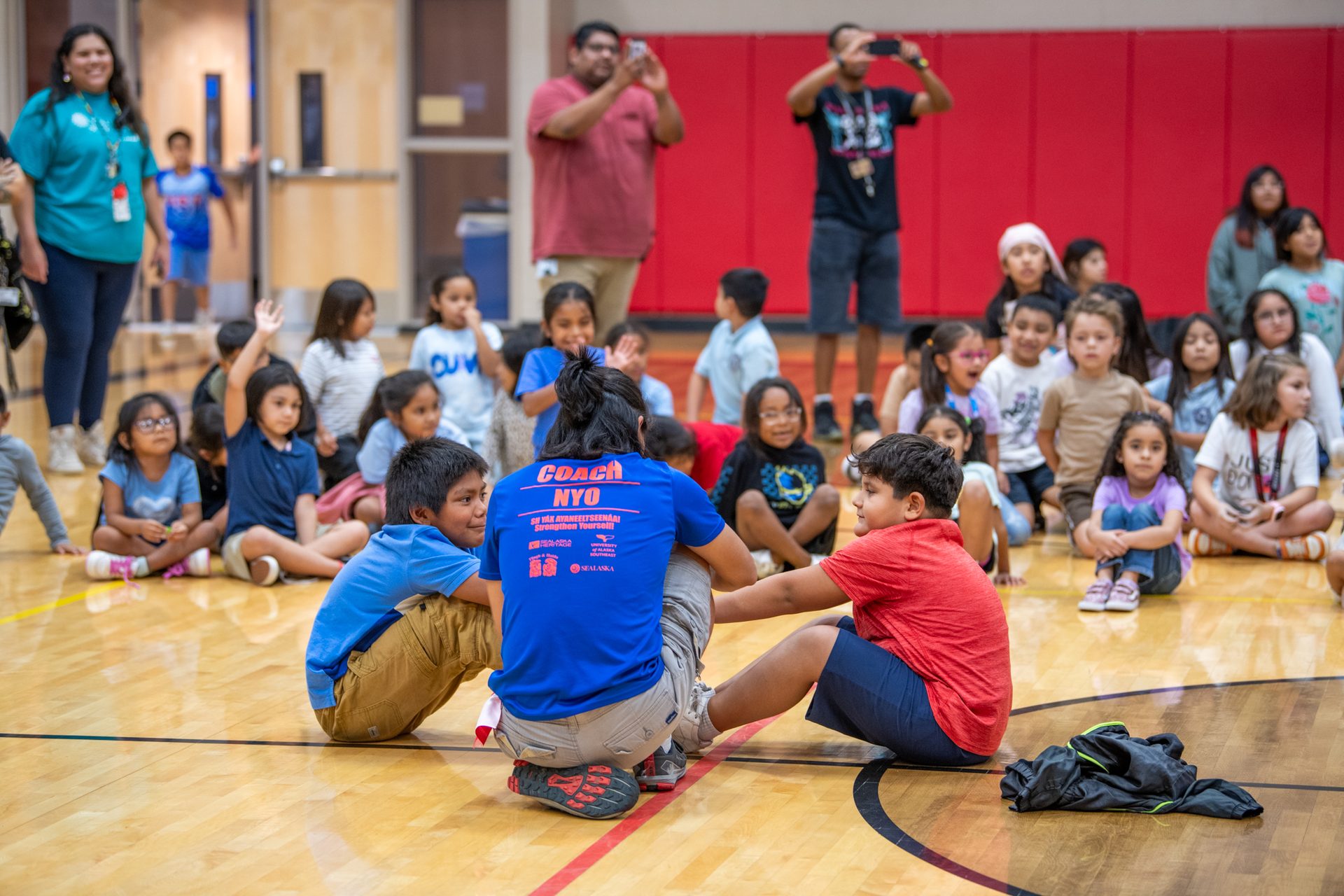
As a group of excited kids entered the basketball court at Ske:g Himdag Ki:, two large tripods stood tall on the court, each with a long string and a ball hanging from it. This is what Worl and Quinto used to demonstrate their traditional games to the youth.
According to Worl, Alaska Native games are traditional games that have been passed down for hundreds of years. They were originally played by hunters to build strength and agility, characteristics that were needed for survival on traditional lands. Each game correlates to physical fitness or necessary skills.
Worl talked with O’odham Action News about some of these games.
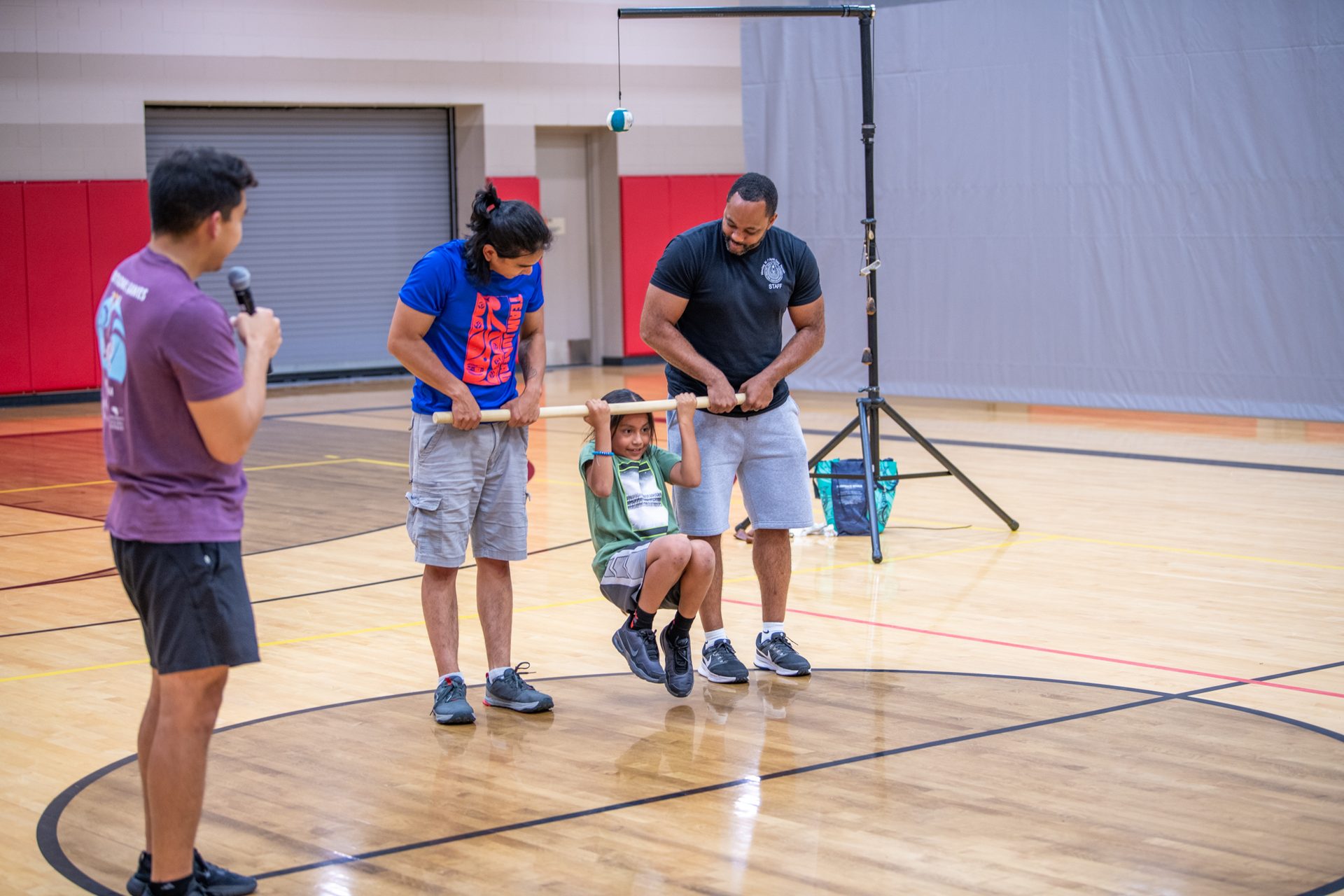
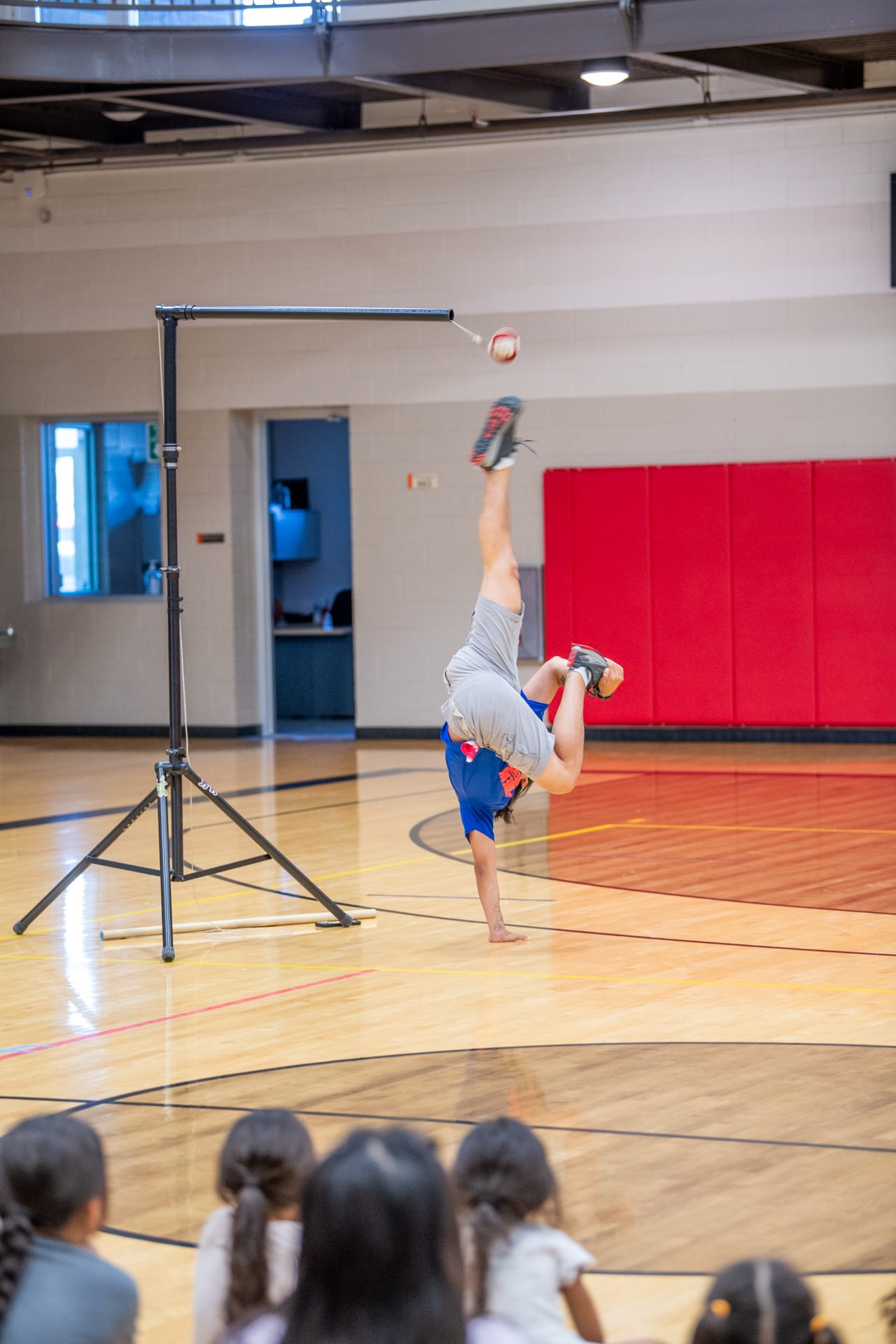
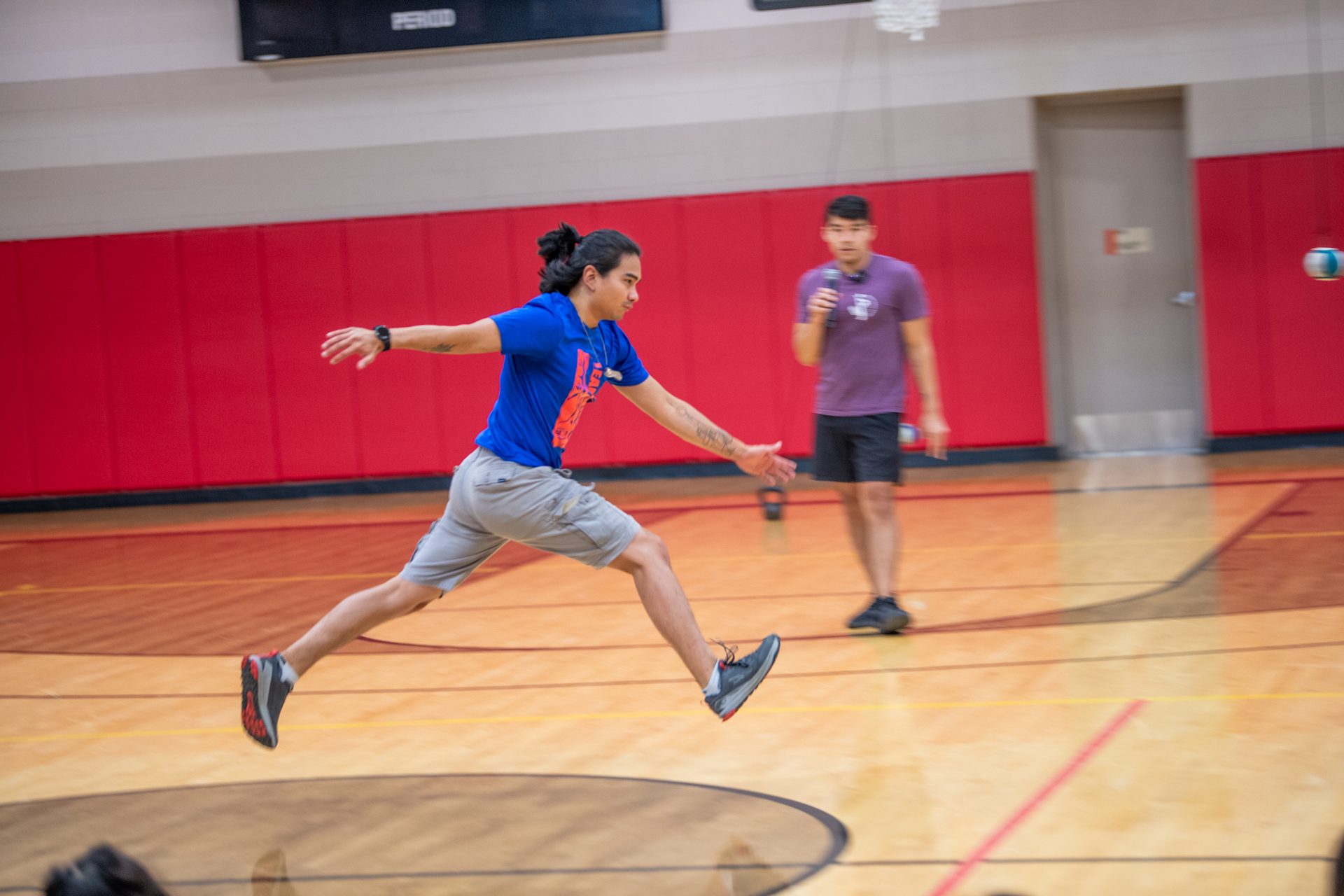
“We have the scissor broad jump, which is based on ice hopping, and this was necessary for [hunters traveling] in search of seals. We have the high kicks that practice agility and balance and explosive strength, but they also had a practical purpose of signaling a successful hunt,” said Worl.
Another game displayed for the kids was the seal hop, a hunting technique game where participants mimic the motion of a seal hopping on ice.
“This is how they approached or snuck up to the seal,” said Worl.
The Inuit stick pull represents using a harpoon to pull a seal from the water onto the ice. Other games included the one-hand reach and the Alaskan high kick, which are winter games played indoors to keep your body active during the coldest months. There were many other games demonstrated for the kids.
“Every game held its importance in daily life in terms of what we needed to be able to survive, to hunt, to move,” said Worl.
Worl was not only thankful to Ske:g Himdag Ki: staff for the opportunity to come out to the Community and showcase traditional games, but he was happy to try out a new sport himself.
Willis made sure the visitors experienced an elder chair volleyball game earlier in the day.
“I think that’s an awesome collaboration [showing] that, from tribe to tribe, we’re willing to share and support each other,” said Worl. “I’m grateful for that connection with David Willis and the Salt River tribe here.”
Related coverage: