VIEWS: 352
March 12, 2026Salt River Hosts Webinar on Teen Dating Boundaries
As part of the continuing efforts to improve the well-being of parents/guardians and children in the Salt River Pima-Maricopa Indian Community, Community Health Educator Vurlene Notsinneh-Bowekaty facilitated a webinar on teen dating boundaries.
3 Takeaways:
- Boundaries are acts of self-care, not selfishness.
- Implementing and refining boundaries can help teens improve their time management, develop empathy and more.
- Not all teenagers are the same; it’s important for parents/guardians to listen and learn what their teens’ likes and dislikes are.
How do you raise a teenager? One day at a time.
Boundaries are defined as personal limits that define acceptable behaviors. They help protect an individual’s physical, emotional, mental and overall well-being. These guidelines can be implemented at any time and benefit children, teenagers, adults and elders.
It’s important to understand that boundaries are acts of self-care, not selfishness.
On Feb. 2, the Salt River Pima-Maricopa Indian Community’s Health and Human Services Department facilitated a webinar on how parents/guardians can help their teenagers implement boundaries as they continue their personal journeys toward adulthood.
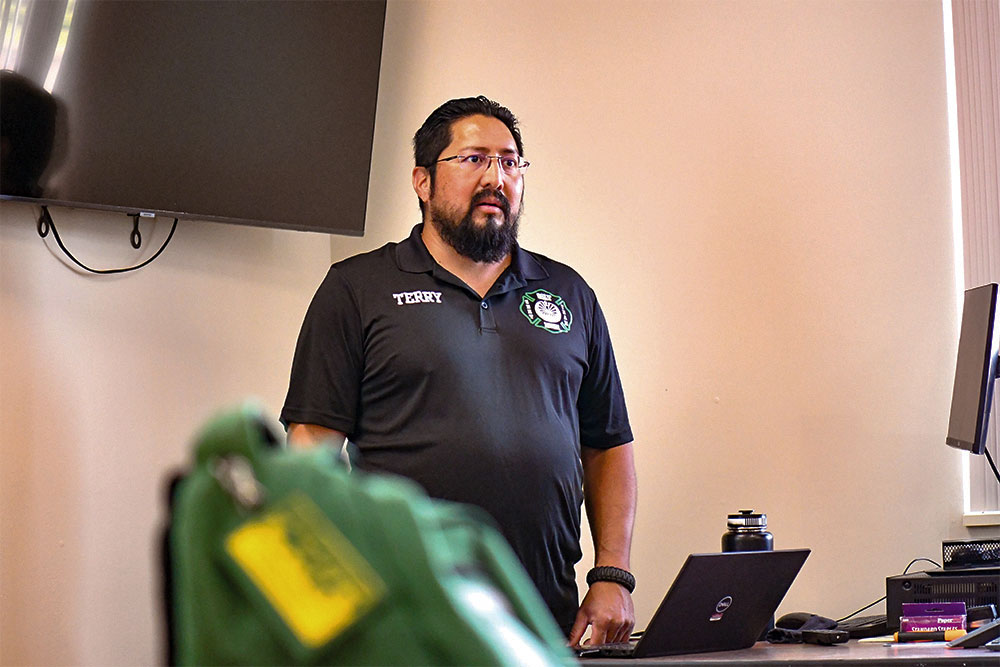
SRPMIC Community Health Educator Vurlene Notsinneh-Bowekaty presented the webinar to over 100 individuals, an audience comprising Community members and staff.
“We need to make sure we teach our children [about] what boundaries are. It shows how much we care about them as parents and grandparents. We want to also make sure they’re safe,” shared Notsinneh-Bowekaty.
The four types of boundaries are physical, time, emotional and social. These help teens understand the consequences of their actions, develop empathy and build independence.
Discussing how fast time can pass by, Notsinneh-Bowekaty shared that helping and supporting teenagers as they grow up can arrive quickly for some, including herself. “I have three teen granddaughters. I can’t believe it; they were just babies and now they’re growing up.”
Boundaries are crucial for teenagers because they help them be independent and establish a sense of self-worth. Also, boundaries can help teens manage their time better while becoming more responsible.
A person with no personal boundaries can be easily targeted and manipulated by others. They potentially may develop a victim complex, which is a learned negative psychological mindset in which an individual consistently views themselves as a helpless victim of circumstances while denying their own experiences and decisions.
When it comes to teen dating, one example of a healthy boundary is when a teen opts for a fist bump instead of a hug. “When I see the teens I work with, they’ll put out their fist to me [for a fist bump]. I respect their boundaries by doing a fist bump with them. If a teen [creates] this boundary, that is a good thing,” shared Notsinneh-Bowekaty.
Of course, there can be challenges in establishing and maintaining boundaries, especially for those who did not grow up with a supportive family circle.
When children are raised by two adults who co-parent in different homes, that can be potentially challenging for teens who try to implement their personal boundaries in different homes with separate rules.
“The teen might tell their mom, ‘But dad lets me do this all the time, why can’t you?’ and that causes a disconnect,” said Notsinneh-Bowekaty.
Children are not born knowing how to navigate life. Rules and boundaries must be set, learned, adhered to and improved upon. When a parent/guardian doesn’t help their teen with boundaries and says, “Well, nobody taught me how to set boundaries,” that adds to a family’s generational trauma.
Additionally, comparing a teen to siblings/relatives can also cause a disconnect and could result in the teen giving up on establishing their own personal boundaries.
Notsinneh-Bowekaty added, “Avoid saying, ‘If I were you…’ or ‘Why can’t you be like your siblings?’’ because we are all different and teens need to learn how to solve their own problems.”
It is also imperative that parents/guardians model the behavior they want their children to showcase. If parents/guardians are unsure how to do that or where to start, learning together side-by-side with their teen as a united family can be extremely rewarding with many positive results.
One attendee commented, “Be their parent, not their friend.”
Another piece of advice that came in was “Don’t fall through on promises.”
If a parent/guardian voices to their teen that they would do anything for them, but their actions fail to match their words, that can confuse the teen, who could possibly develop additional troubles and personal conflicts with boundaries and communication later in life.
Therefore, it’s imperative that parents/guardians continue to get to know their teens as they grow up, even if it seems like they were newborns in diapers just yesterday.
The webinar neared its end as Notsinneh-Bowekaty allowed the group to reflect and openly discuss healthy coping skills they implement at home. Many opted to share their wisdom and helpful tips on how they’ve managed to stay connected with their teens in today’s ever-changing society.