VIEWS: 791
January 21, 2026Getting to Know the Child Find Program
The program operates under the SRPMIC Education Division and offers free developmental screenings for children up to 5 years old.
3 Takeaways:
- 90% of a child’s brain development occurs by the age of 5.
- The Child Find program offers a Measuring Milestones screening, which helps identify any possible delays in a child’s development.
- The program is available for all Native children up to age 5 years.
Early childhood is a formative time that shapes how children develop as they grow into toddlers, tweens, teenagers and adults.
Here in the Salt River Pima-Maricopa Indian Community, future generations of children now have even more resources and services available to them, helping to ensure their successes as they grow older.
Starting now, the Child Find program, a grant-funded program, is available to Community students and Native American children from birth to 5 years old. This is a critical period, as studies show that by the time a child reaches age 5, the brain is nearly 90% developed.
The program operates under the Community’s Education Division and offers free screenings for children to determine if there are any developmental delays in hearing, vision, speech and motor skills.
It’s important to identify and treat developmental delays early. According to a study conducted by Brigham Young University, once parents receive specialized training, they can help their children with autism improve their social and communication skills. The study enrolled parents who received 90 minutes of intervention training every week. The results were published in the Journal of Autism and Developmental Disorders in 2022.
Meet the Team
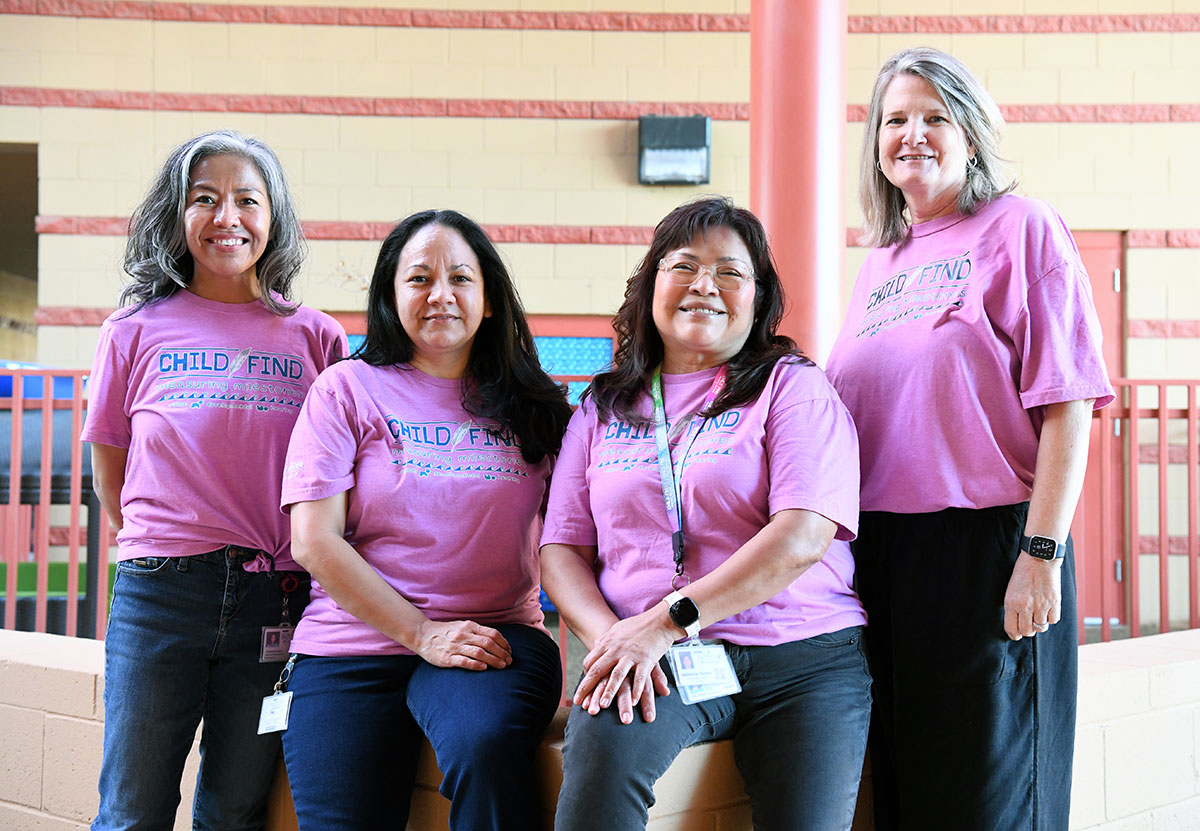
The Community’s Child Find program has four staff members: Cameron Kizziah, program coordinator; Cassandra and Valencia Yazzie, parent educators; and Maria Chappy, program clerk.
“We conduct approximately 250 screenings per year, with about half of those being first-time screenings and half being interval screenings for children that routinely get screened every few months to make sure they are meeting their expected developmental milestones,” shared Kizziah.
She continued, “Approximately 10% of all children screened are deemed eligible for services through the Arizona Early Intervention Program for ages birth to 3, or developmental preschool for ages 3 to 5.”
According to Kizziah, the program’s Measuring Milestones screening process allows for parent input and provides a child-friendly environment that creates a safe space for children to showcase their abilities and any developmental delays they might be experiencing.
Once a screening has been completed, Child Find staff review the data. If any delays are identified, the team will connect the families/guardians with the appropriate early intervention services.
Screenings can be conducted at the Child Find office, which is located at the Early Childhood Education Center, next to the cafetorium. Screenings also take place at the River People Health Center pediatric clinic.
“We also can conduct screenings in your home, or in an alternate Community setting,” shared Kizziah.
Upcoming Appearances
On March 19, the Child Find team will be in person at the ECEC Gathering Place for a presentation that will detail the program’s protocols in addition to facilitating an information session titled, “What is Autism”. The event starts at 5:30 p.m. and ends at 7:30 p.m.; dinner and childcare will be provided.
Locally, the team will continue to appear in the Community at various events, such as the upcoming International Day of Acceptance Walk. They encourage families/guardians to reach out to them with any questions they might have.
“We want to get as many children screened as we can,” said Kizziah.
Contact the Child Find program office at (480) 362-2257 or stop by Monday through Friday, 8 a.m. to 5 p.m., to schedule an appointment. The office is at 4836 N. Center St., Scottsdale, AZ 85256, on the ECEC campus.
The River People Health Center pediatric clinic is located at 10901 E. McDowell Road.
This article has been updated from its original print edition.