VIEWS: 1193
January 12, 2026Community Garden Awarded Recycling Grant, and Other Updates
The Arizona Department of Environmental Quality (ADEQ) awarded the Salt River Pima-Maricopa Indian Community a $62,000 grant for fiscal year 2026. The funding is part of the ADEQ Recycling Grant program, which supports public education to encourage participation in recycling and source reduction and to learn about proper solid waste disposal.
Monies for the recycling grant program are derived from landfill disposal fees and fund the following grants: Waste Reduction Assistance, Waste Reduction Initiative Through Education, and Recycling Research & Development. According to the ADEQ, the program provides funding to Arizona’s political subdivisions (cities, counties), private enterprises, nonprofit organizations and tribal governments.
The awarded grant funds will go toward the SRPMIC’s Community Garden Composting System project, under the guidance of the Cultural Resources Department (CRD).
“We’re very thankful for the ADEQ, who supplied this grant. This is going to really help build soils here in the Community,” said CRD Community Garden Supervisor Jeffrey Wilson (Choctaw Nation of Oklahoma). “The compost that we generate will go to the Community Garden, but also some of it will go to individuals and families who want it, at no cost, to help them with their gardens at home so they can grow food themselves and be self-reliant again.”
Wilson said that the grant will go toward two composting stations: one in the Community Garden and the other at the Round House Café.
“The one at the Round House Café is going to have a high-tech system where the vegetable waste comes in the top and compost comes out the bottom. It’s incredible. We’re going to reduce food waste in the Community,” said Wilson.
3 Takeaways:
- More than $60,000 was awarded to the SRPMIC Community Garden Composting System project, which promotes new composting initiatives with the Round House Café and Salt River Food Bank.
- The Community is moving closer to its goal of food sovereignty.
- The Community will partner with local and global colleges and universities to sequence of the genome of several different types of devil’s claw for the first time, using a potential USDA grant.
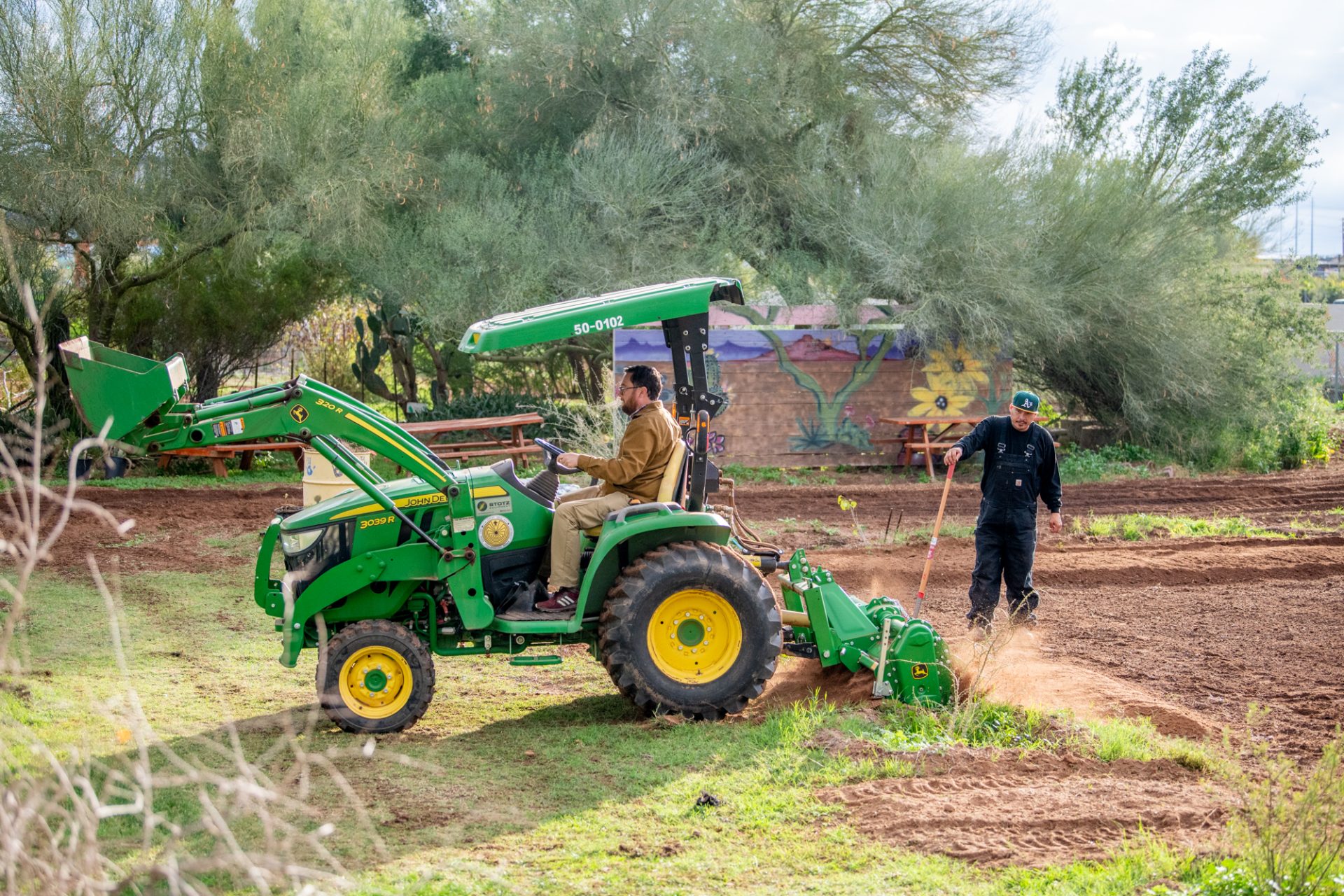
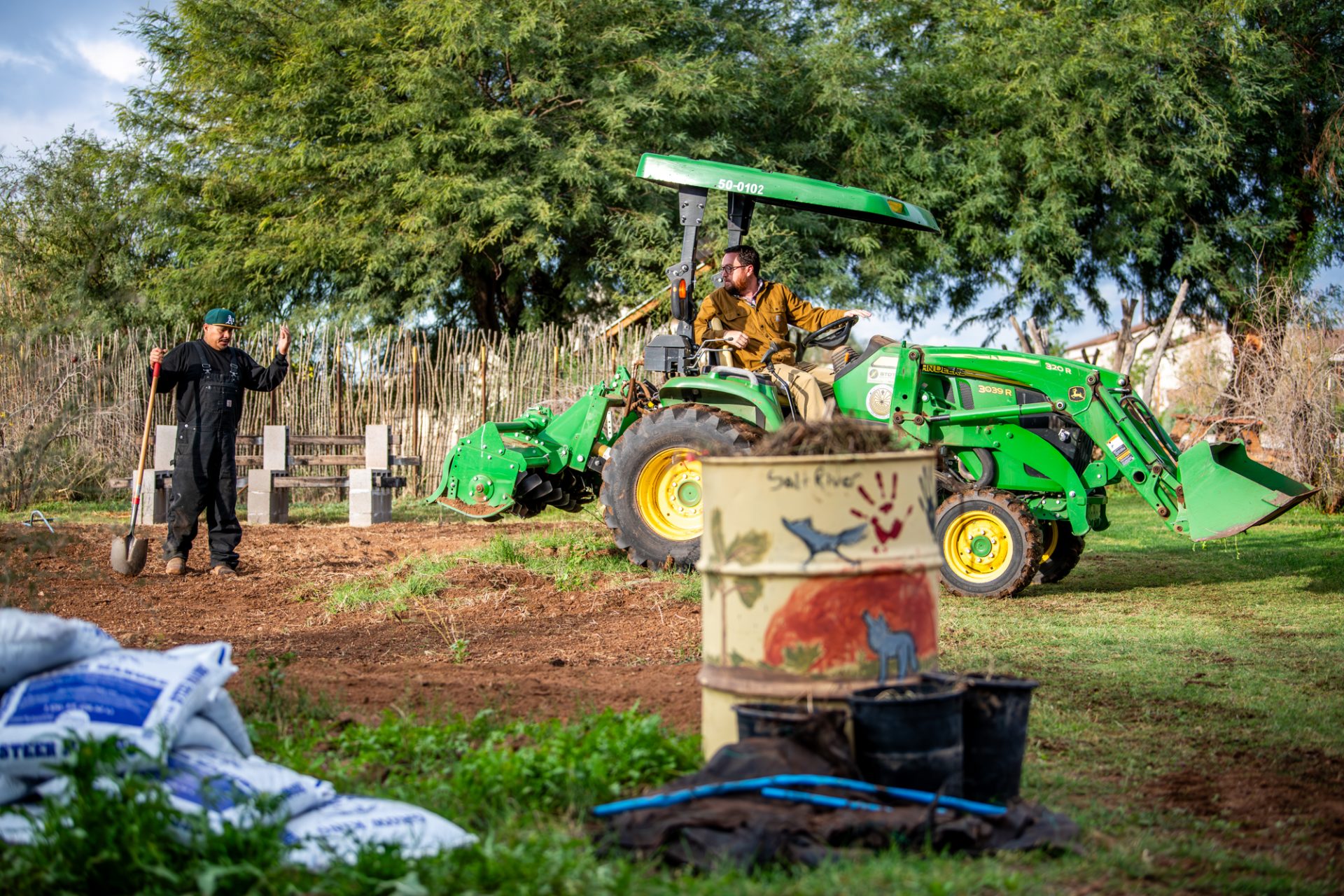
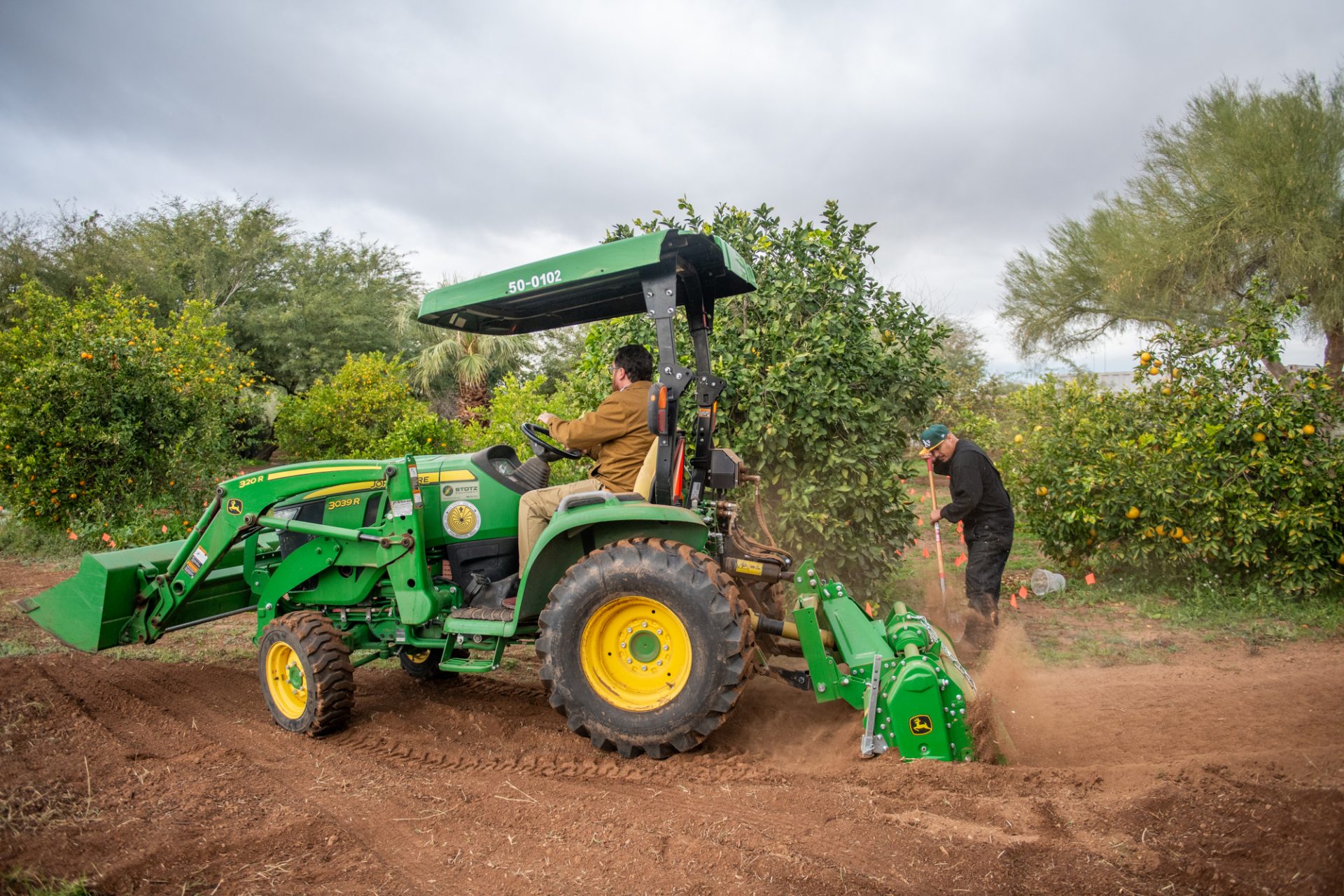
Jeffrey Wilson getting work done, prepping the garden for what’s to come.
“In a very basic sense, everything starts with the soil. That’s where the plant draws its water and nutrients from. So, if you don’t have healthy soil, you won’t have healthy plants. The organic matter or compost that we develop here helps the soil hold water, hold nutrients and release nutrients. Once you’re able to do that with the soil, you’ll be able to successfully grow crops here in this warmer climate that we have year-round.”
The Community Garden will also partner with the SRPMIC Food Bank to collect food waste.
Food Sovereignty a Priority
Wilson grew up in West Texas and earned bachelor’s and master’s degrees in horticulture at Texas Tech University. He also received his Ph.D. in plant breeding at Texas A&M University. His expertise in plants and their relationship to the earth assists the Community as it moves toward the goal of food sovereignty.
“Food sovereignty is not just a buzzword. It’s a real thing, because we’re in a situation in this Community where we have access to land, we have access to water, and those are the two things that have been taken away in the past to subjugate the Community and make it dependent on the [federal] government,” said Wilson.
“We want to improve the soils so that more food can be produced on Community land. And we want to do it here in the garden and we want to do it with the farming strategy team that we have to take [land] out of land lease, and we want individuals to be able to grow their own food because, as we’ve seen recently, [food stamp] benefits can be taken away just like that.”
Wilson continued, “The Community has farmed these lands for thousands of years, and we want to get people involved in farming and growing crops, vegetables and fruits again. It puts the power back in the hands of the Community to determine their own destiny when it comes to what they eat, how they eat and the whole nine yards.”
“Food sovereignty is not just a buzzword. It’s a real thing, because we’re in a situation in this Community where we have access to land, we have access to water, and those are the two things that have been taken away in the past to subjugate the Community and make it dependent on the [federal] government.”
Wilson said that taking away seeds is another way to weaken the sovereignty of Native communities. He noted that plant breeders have been successful over the last hundred years or so increasing the sugar content of vegetables and fruit crops to please consumer palates.
“These crops have been held in the Community for hundreds or thousands of years and are extremely nutritious. They taste great—I can vouch for that,” said Wilson, referring to traditional plants like tepary beans, mesquite and devil’s claw. “If they’re eaten by Community members, it will [improve their] health and reduce diabetes because they’re not full of sugars.”
As a Community member, Community Garden technician Jared Butler said food sovereignty is a must. He said that the Community’s way of life, or himdag, was interrupted.
“I think it’s very imperative that we educate the people and that we grasp onto the teachings that are still lingering here after all these thousands of years,” said Butler.
“The knowledge of our ancestors stays here within the people.”
Devil’s Claw Genome Sequencing
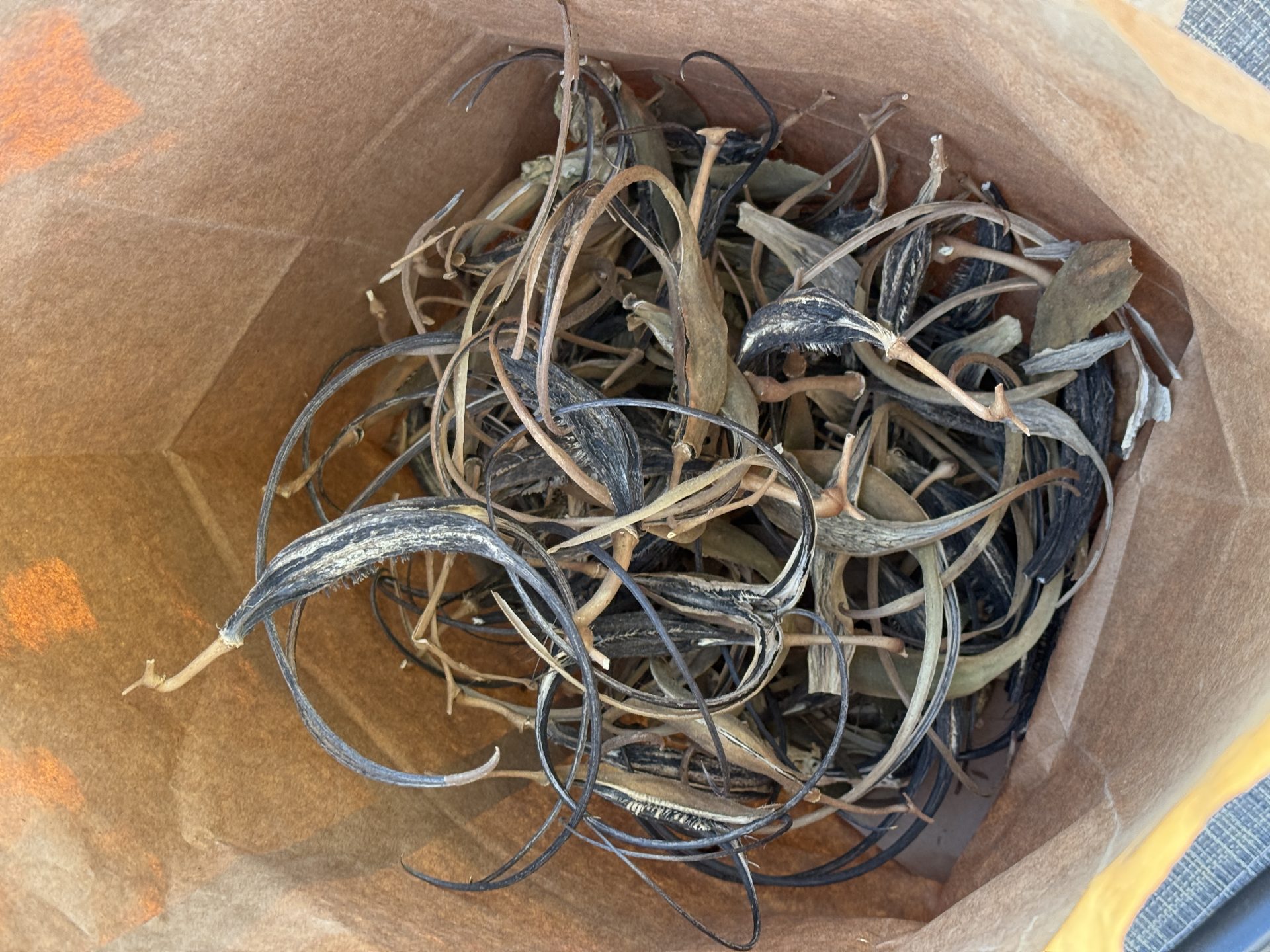
Wilson said the Community hopes to secure USDA funding for research into the devil’s claw, a traditional plant that grows in the wild within the Community. The grant application has been submitted; Wilson said they may not hear anything about the status until May or June.
Traditional uses of devil’s claw include basket weaving and consumption as food.
The Community has partnered with Scottsdale Community College, the University of Arizona and the University of Copenhagen to get the first sequence of the genome of several different types of devil’s claw.
“The devil’s claw has been in this Community for thousands of years. It was domesticated by the O’odham, and we want to keep it in the hands of the Community,” said Wilson. “We feel like there is going to be research done on it in the future because it does have a lot of promise as a commodity, not just for [basket] weaving, but also as food.”
Important characteristics to be studied include the plant’s measurements, claw length and how the weaving characteristics of the claw are inherited. Others are the color and the roughness of the texture of the claw and the composition of the seeds.
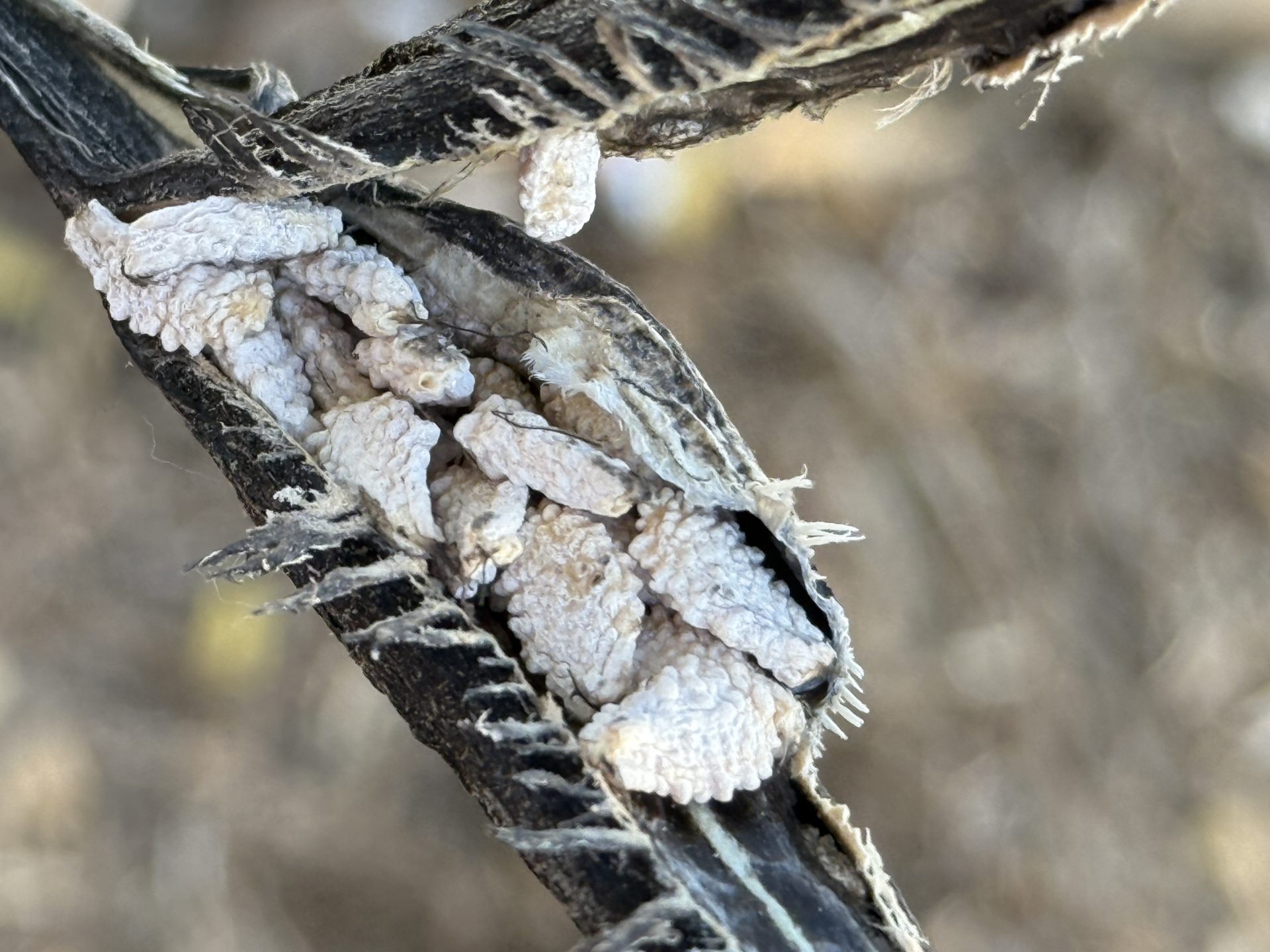
Close-up of devil’s claw seeds from OAN reporter Chris Picciuolo’s garden in Mesa.
“The devil’s claw produces a healthy seed oil with good fatty acids and protein composition that’s heart healthy,” said Wilson.
“We think it’s a great project, and it’s really, to my knowledge, the first Native American or Indigenous-led agricultural research project of its type in the United States.”