VIEWS: 166
November 2, 2026Sibling Tribes Unite at Tohono O’odham Nation Border
T-wem’ o ba’ic e s-ge:wpk.
(“Together we are stronger” in O’odham.)
Four sibling tribes bonded by kinship and reverence for their land since time immemorial stood as one at the southern Tohono O’odham Nation border on Sept. 25 to answer the call for unity at a critical time as the Nation fights against continued cultural desecration.
The call was akin to receiving a distress message from a traditional O’odham runner traveling for miles in the Sonoran Desert, and it was heard loud and clear as far as the Salt River Pima-Maricopa Indian Community, the northernmost of the Four Southern Tribes.
Delegations from the SRPMIC, the Gila River Indian Community and the Ak-Chin Indian Community traveled a familiar path south to strengthen the enduring bond as the Tohono O’odham Nation filed an emergency injunction with the U.S. Circuit Court of Appeals to stop the U.S. Department of Homeland Security from removing thousands of Ha:sañ (saguaros) on Tohono O’odham land for the construction of a controversial border wall.
3 Takeaways:
- The Tohono O’odham Nation continues fight with the federal government over the border wall as sibling tribes answer a call for support.
- The SRPMIC delegation included President Martin Harvier, Council members Deanna Scabby, Mikah Carlos, Su:k Fulwilder and Jacob Butler, and Legislative Affairs Assistant Gary Bohnee.
- “Grandmother” cottonwood tree was toppled by contractors; SRPMIC joins an amicus curiae brief with Ak-Chin Indian Community in support.
Ha:sañ are highly safeguarded and protected on private and state lands; however, the federal government maintains that contractors are legally allowed to remove or destroy them under the REAL ID Act of 2005 within the 60-foot border zone created by President Theodore Roosevelt in 1907 called the Roosevelt Reservation.
To the O’odham, Ha:sañ are literally relatives.
“Trespassing on our land to remove the sacred saguaros is like having masked men break into your house and take away your children,” said Tohono O’odham Nation Chairman Verlon Jose.
“The Ha:sañ are our family, as much a part of us as any blood relative. To destroy them by the thousands carves a wound in our hearts that will not heal. We call on all people for solidarity as we work to protect our culture and our land from this useless, destructive wall.”
Salt River Leaders Travel to Border
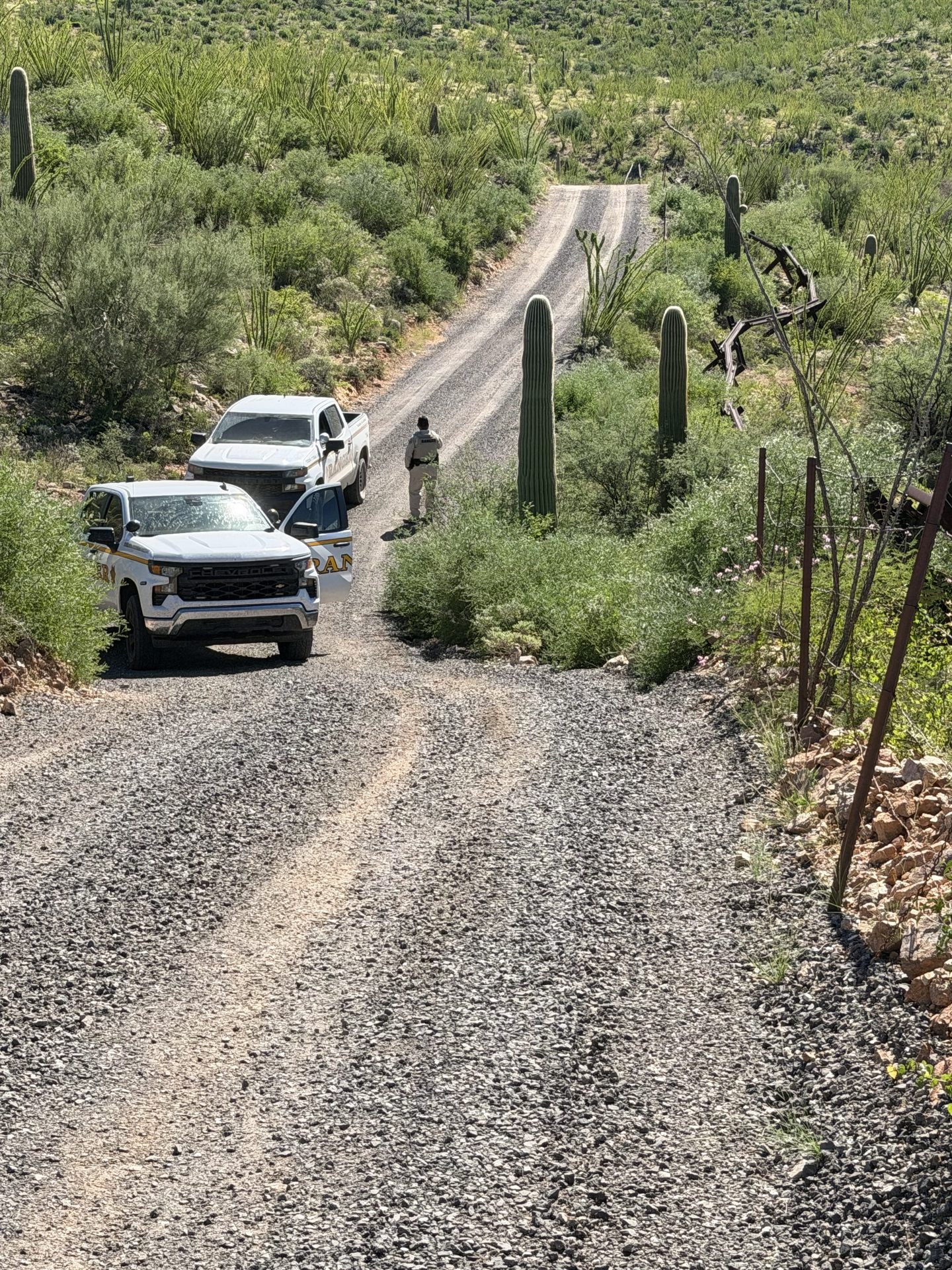
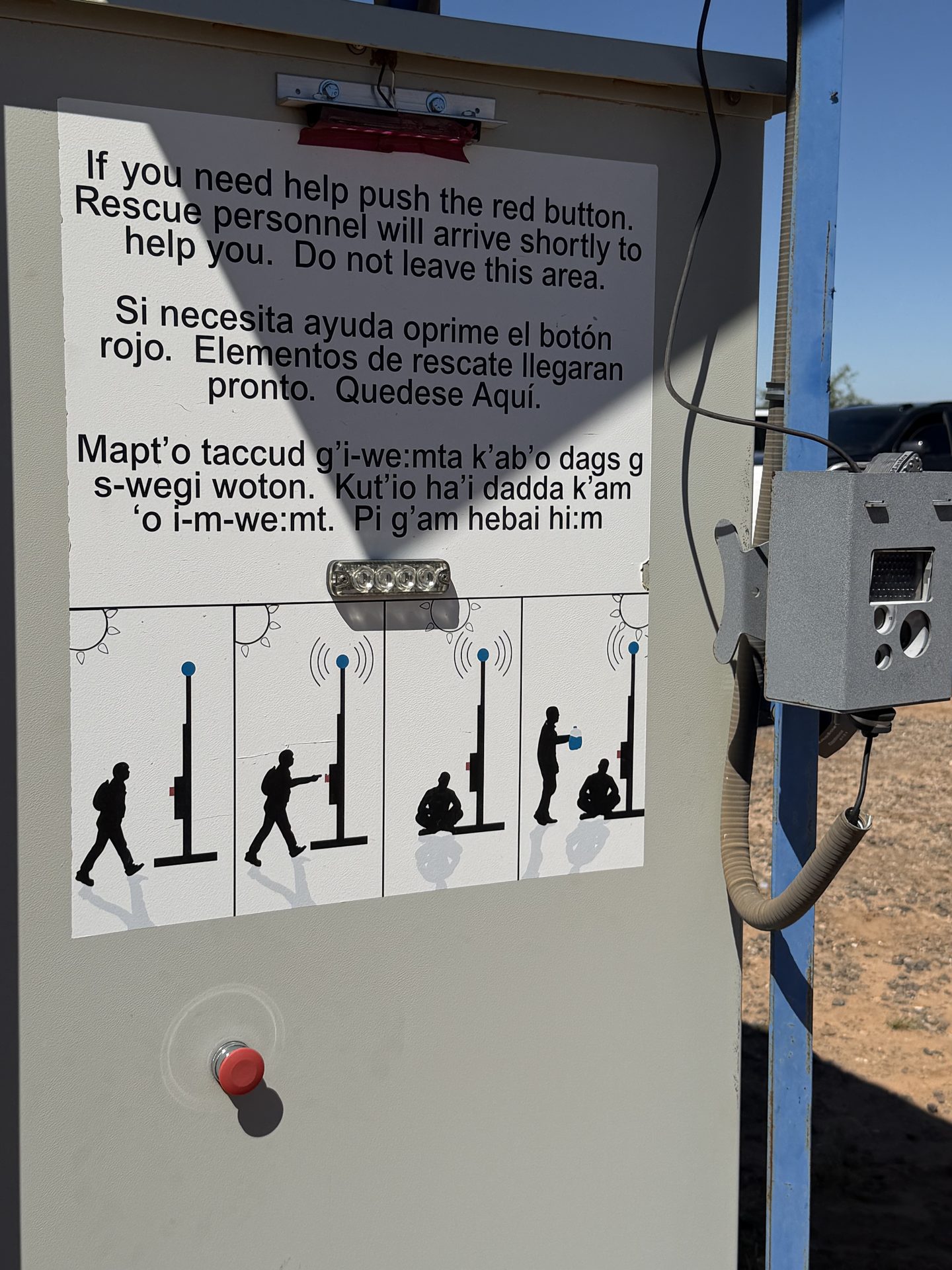
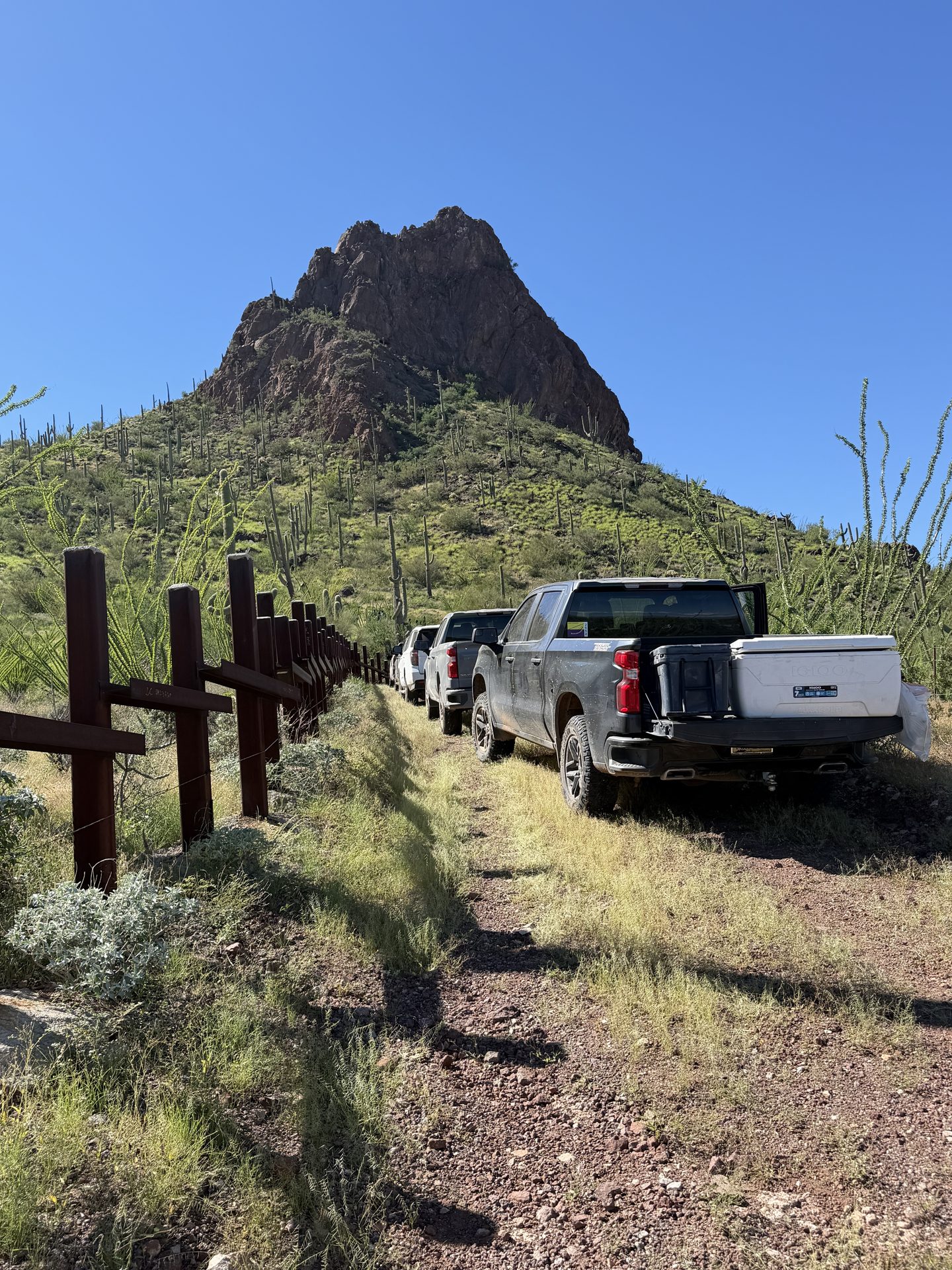
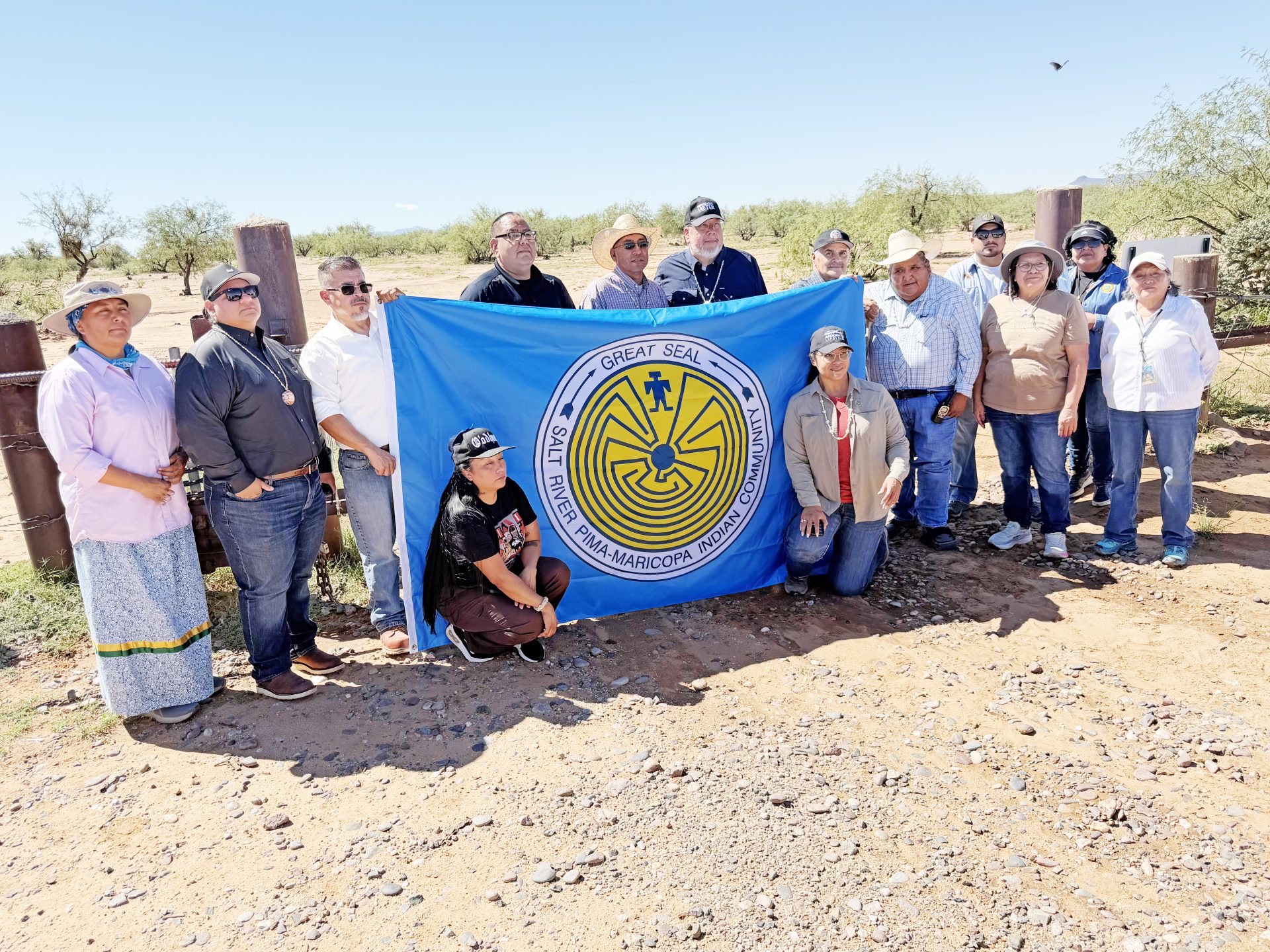
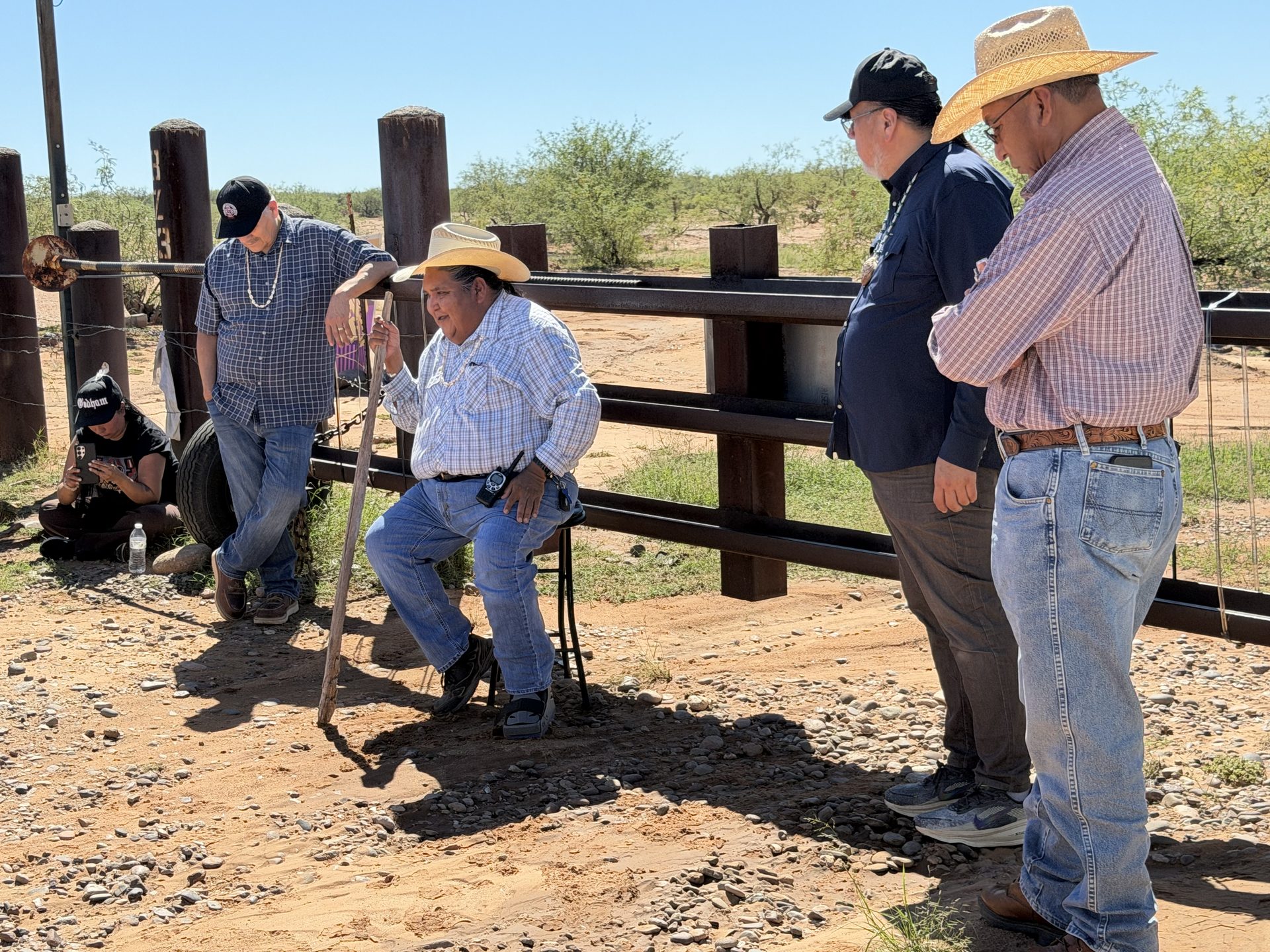
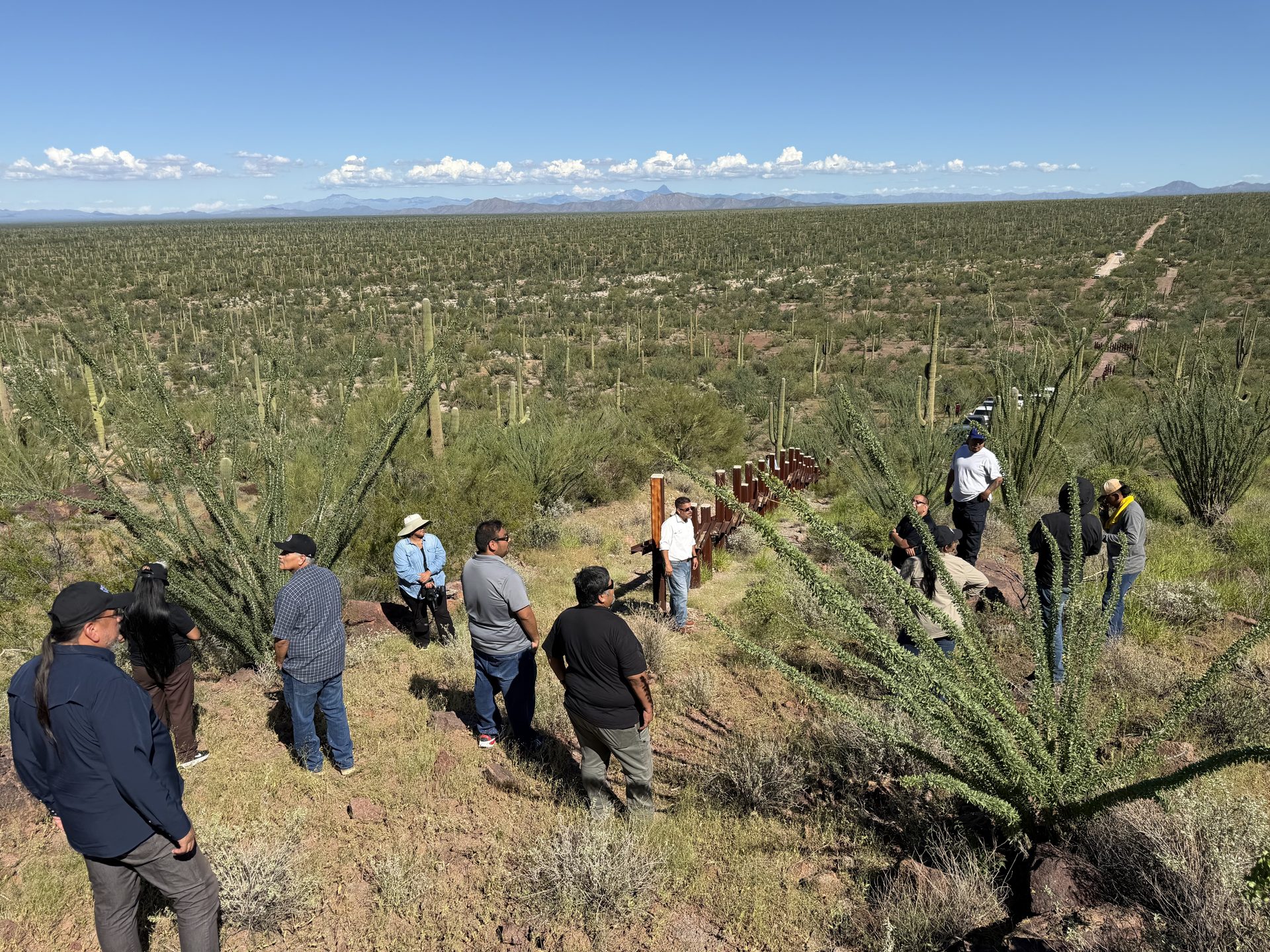
SRPMIC leaders who weathered the rugged, rocky back roads and washes to the meeting site included President Martin Harvier, Council members Deanna Scabby, Mikah Carlos, Su:k Fulwilder and Jacob Butler, and Office of Congressional and Legislative Affairs Assistant Gary Bohnee.
“Being there firsthand to see the potential impacts [of the border wall] was eye-opening and concerning, but we are proud to stand with our O’odham relatives, and we left a Salt River flag along the border as a show of our support,” Harvier said in a statement on Oct. 8.
Carlos said that it was an emotionally heavy visit. While most of her visits to the Nation have been to see family or to celebrate at the fair, this one was different in that the delegation knew they were going into a difficult situation.
“In the four years I’ve been on Council, I’ve had an opportunity to work alongside various members of [the Tohono O’odham Nation] Council, and how this was weighing on them was hard to see,” said Carlos.
“At the same time, I have immense gratitude for them and the work they are doing to fight for their lands and their people. While there were moments of laughter and even a celebration of a birthday, the overall atmosphere was somber.”
Carlos stressed the importance of being vocal with support for the Nation.
“I’ve been saying this is a test case by the federal government to see how far they can erode sovereignty and to see how the tribes will come together to support each other,” she said.
She left with a sense of responsibility to stand with “our hajuñ (family) to the south.”
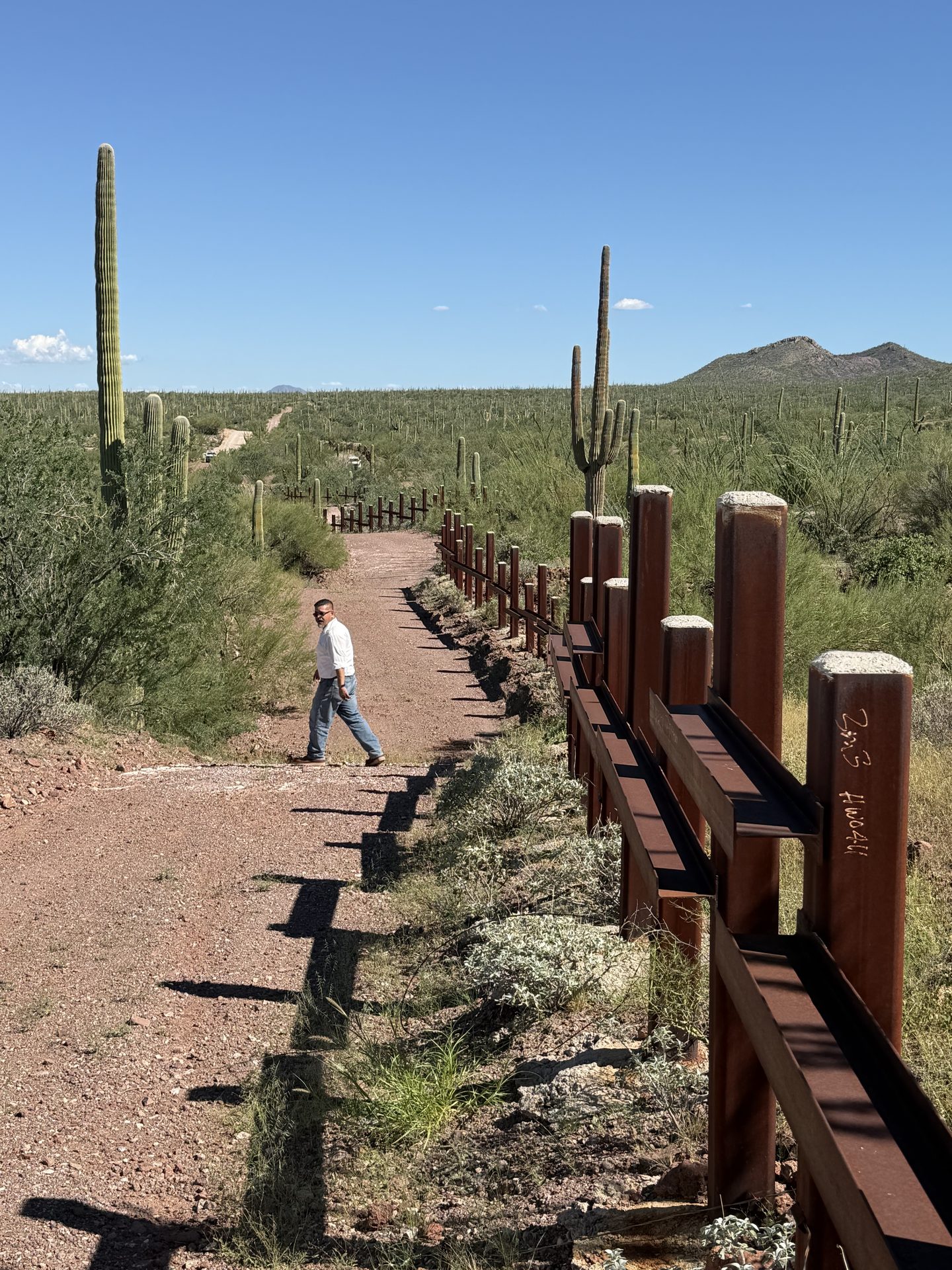
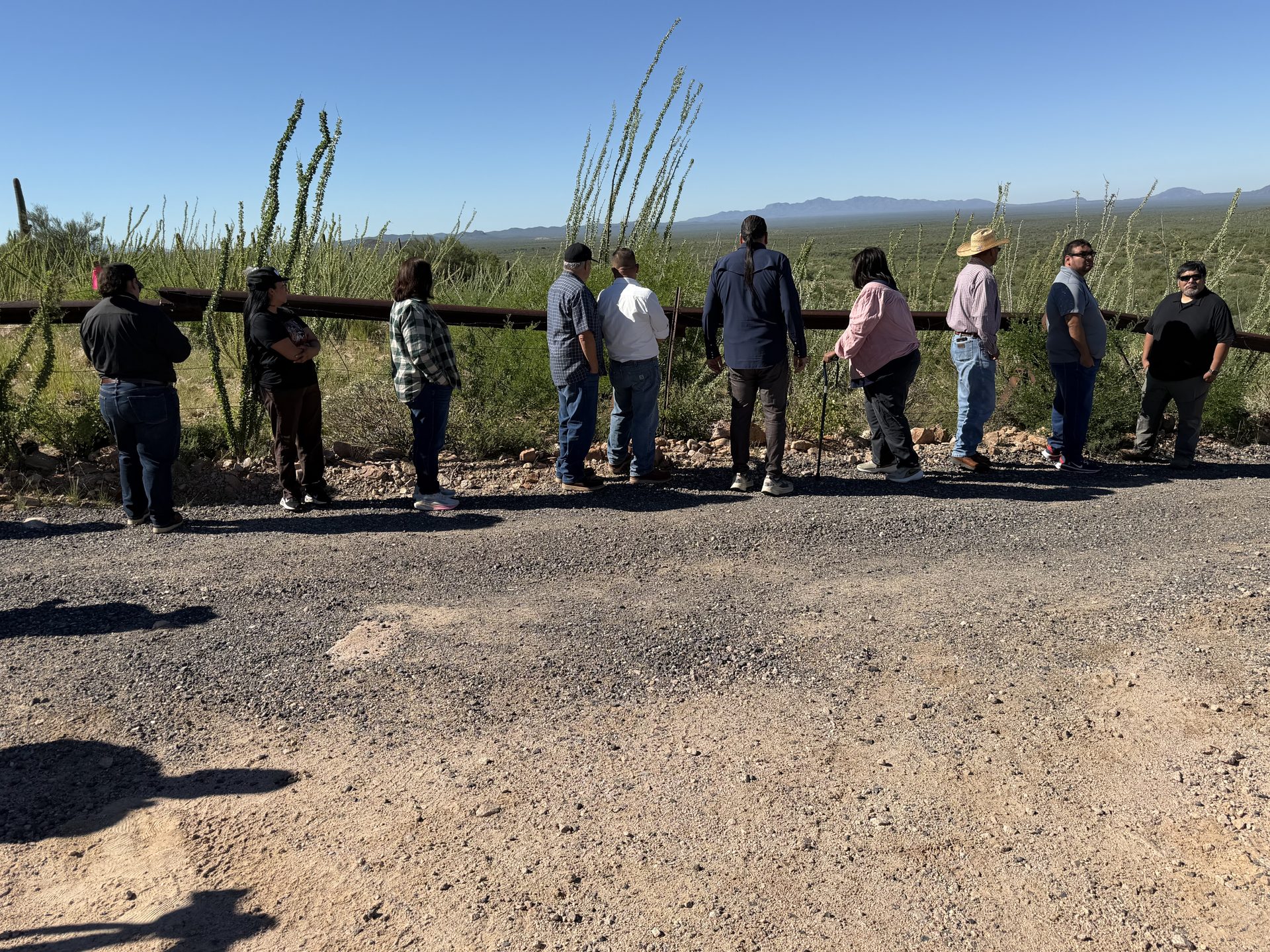
Scabby recalled some of the notable sights as the car drove closer to the border where the Tohono O’odham Nation and Mexico meet. It didn’t dawn on her just how far south the drive was until she began to see what she described as barbed-wire fences that looked like they were from a Normandy Beach battlefield scene in World War II.
“That caught my attention. To me it was kind of harsh,” said Scabby. Amid the wartime setting was a lush desert backdrop.
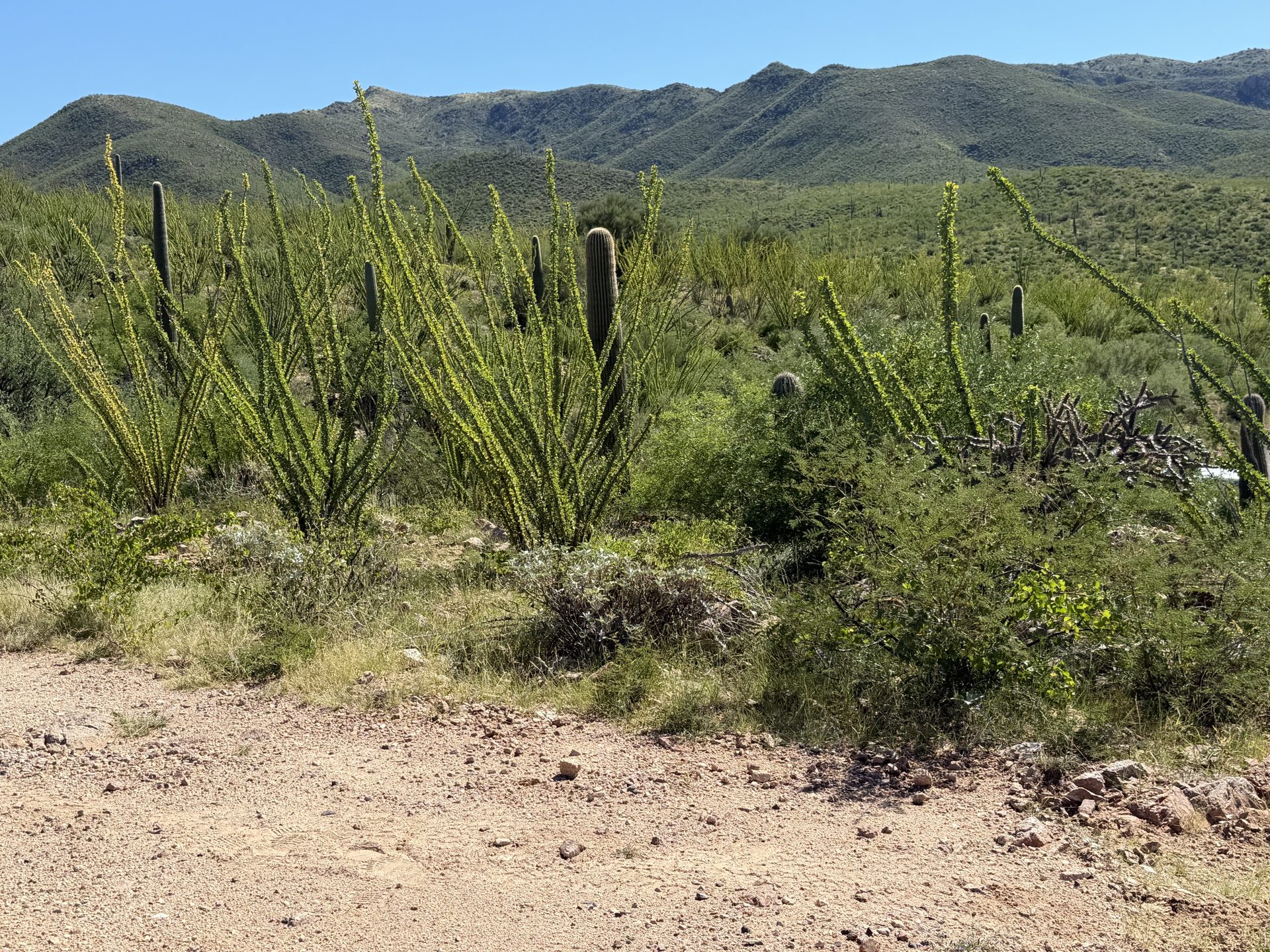
“The trees were full. Everything was green. The saguaros were huge. The ocotillo, I mean, we see them around [the Valley]. You see people build [ocotillo] fences around their homes, but these are just beautiful,” said Scabby.
Although the landscape was something to behold, when Scabby got to the top of the mountainside with other leaders, she had a moment of reflection with her panoramic view. There are plans for contractors to build two walls along the border.
“I said, ‘Okay, this fence is still here. What are they going to do?’ They said they want to blast this. They want to blow up this mountain and put the wall through,” said Scabby.
“I was stunned. I could not believe any kind of a plan or anybody’s logic to blow up Mother Nature to put up a fence. I got angry. I thought, ‘Excuse my words, but this is the stupidest thing I have ever heard that somebody could think to do this. There’s nobody out here,” said Scabby.
She asked Tohono O’odham Nation leaders if there has been a problem in that area with illegal immigration and if it is considered a nuisance. She was told no, that nobody really comes through there.
Grandmother Tree Toppled
Near a prayer camp in Lochiel, Arizona, on Oct. 5, a centuries-old cottonwood tree defended by land protectors called the “grandmother tree” was knocked down by contractors clearing room for the walls. Video from the scene widely shared on social media shows the tree’s booming fall juxtaposed with the sounds of shrieking and mourning from land protectors and Community members.
Amicus Curiae Briefs Filed by SRPMIC, Ak-Chin and Others
In support of the Tohono O’odham Nation’s legal appeal to halt border wall construction, amicus curiae briefs were filed by sibling tribes and allies. An amicus curiae brief is written and submitted by an individual or organization that is not a party to a legal case but may assist by offering information, expertise or insight relevant to the case.
“With federal contractors continuing to conduct unauthorized pre-construction work on our lands, the widespread support for the Nation helps us as we seek an expedited appeal to stop the wall. We are grateful for these distinguished individuals and organizations’ decision to stand with us in favor of tribal sovereignty and common-sense border policy,” Jose said in a statement.
The SRPMIC and the Ak-Chin Indian Community filed a joint amicus curiae brief on Sept. 24 focusing on two interrelated issues: “(1) the irreparable harm that the proposed border wall will inflict upon bothamici’s sister tribe, Appellant Tohono O’odham Nation, and the broader O’odham people whose heritage is shared by amici’s members; and (2) whether the public interest in building the wall outweighs those harms.”
The brief goes into detail describing the historical and cultural importance of the land at the border wall construction sites, including Quitobaquito Springs being a stopping point for O’odham men during the Salt Pilgrimage, and the Ma:lina Pilgrimage starting at Cedagi Vehai.
An oral argument is scheduled for December. Other briefs were filed by Arizona Gov. Katie Hobbs (representing the state of Arizona), the National Congress of American Indians, the Inter Tribal Association of Arizona and the Native American Rights Fund.