VIEWS: 583
April 6, 2026Hekiu Artists Continuum Members Collaborate with Tempe on Bus Shelters
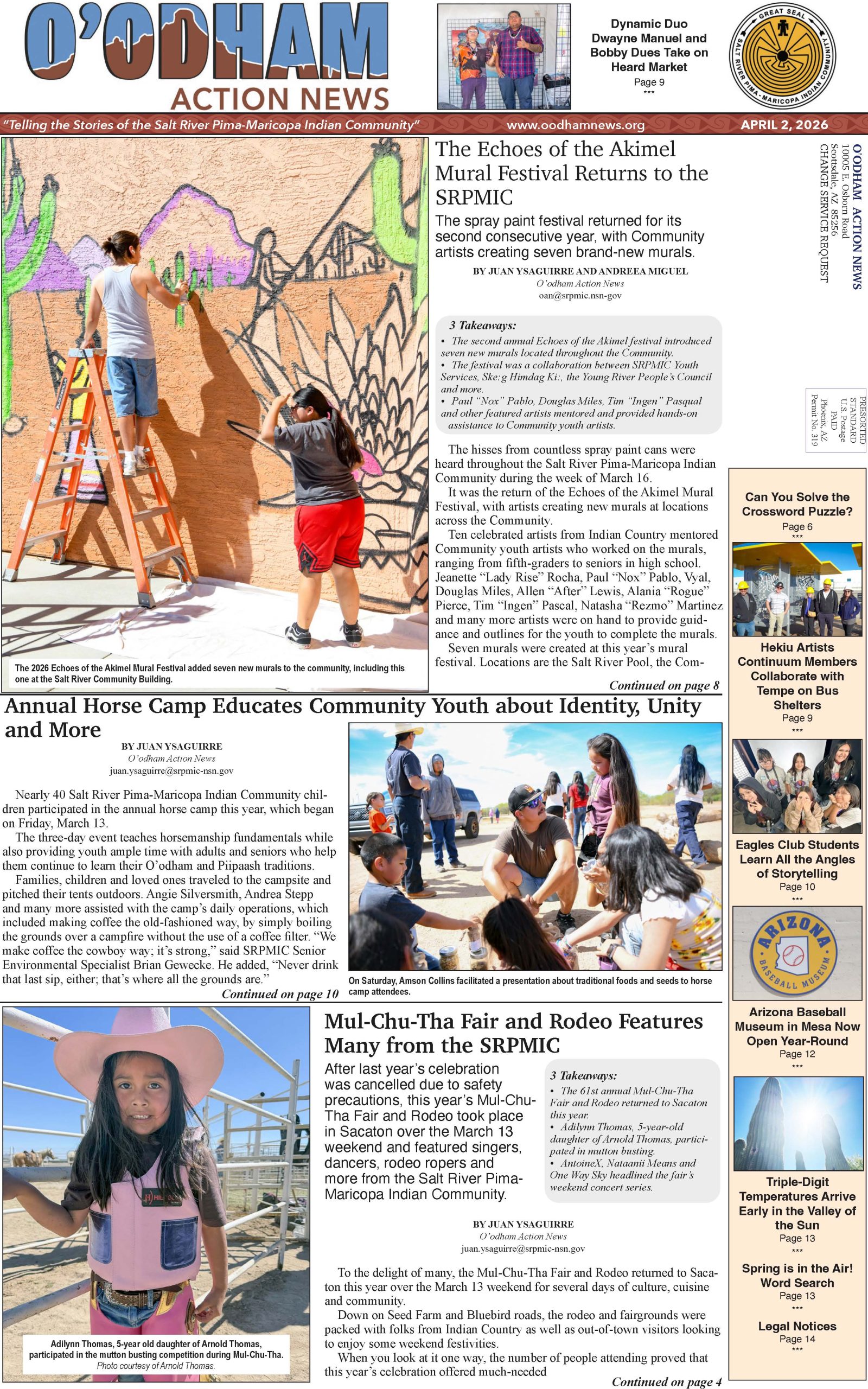
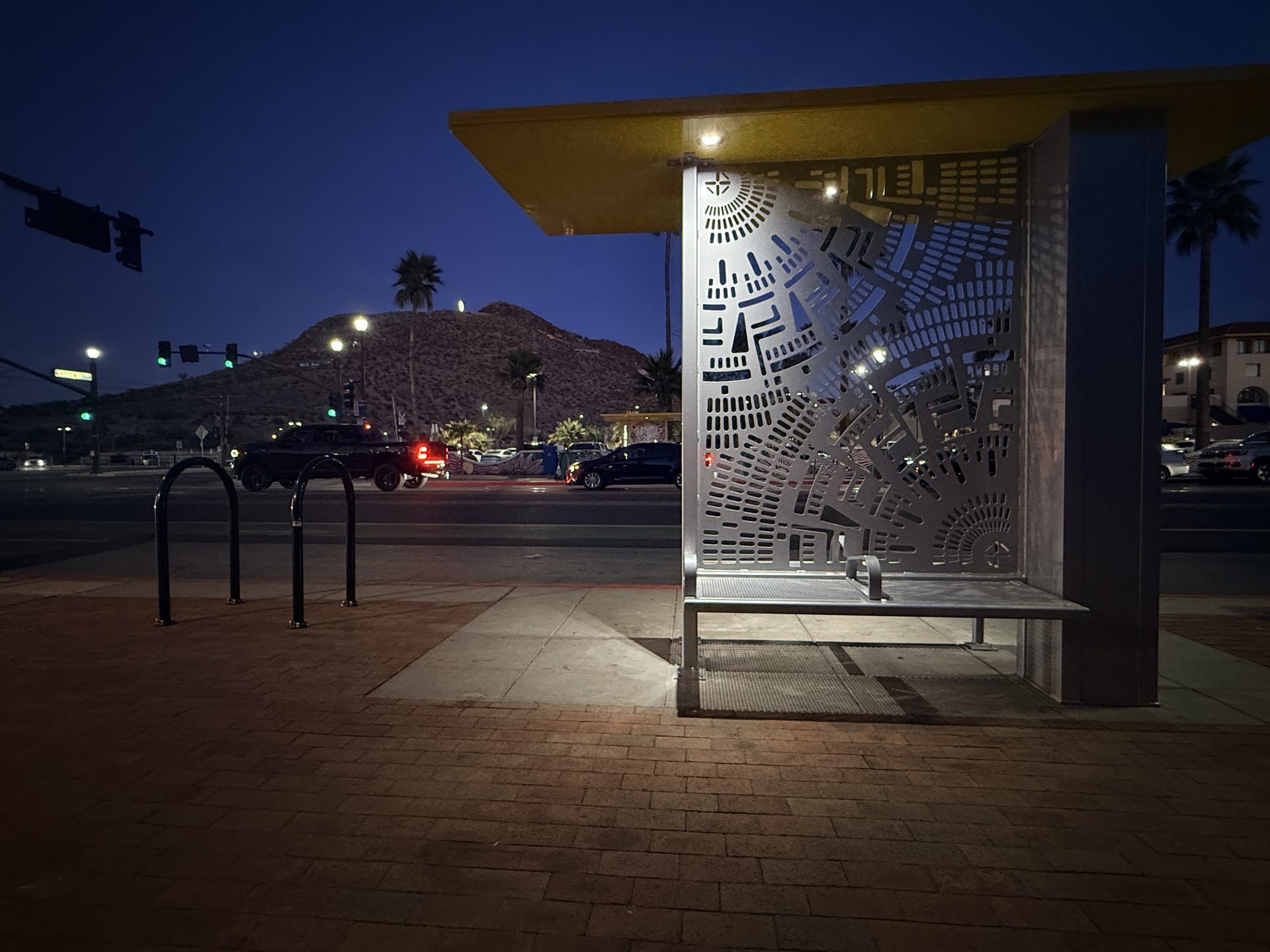
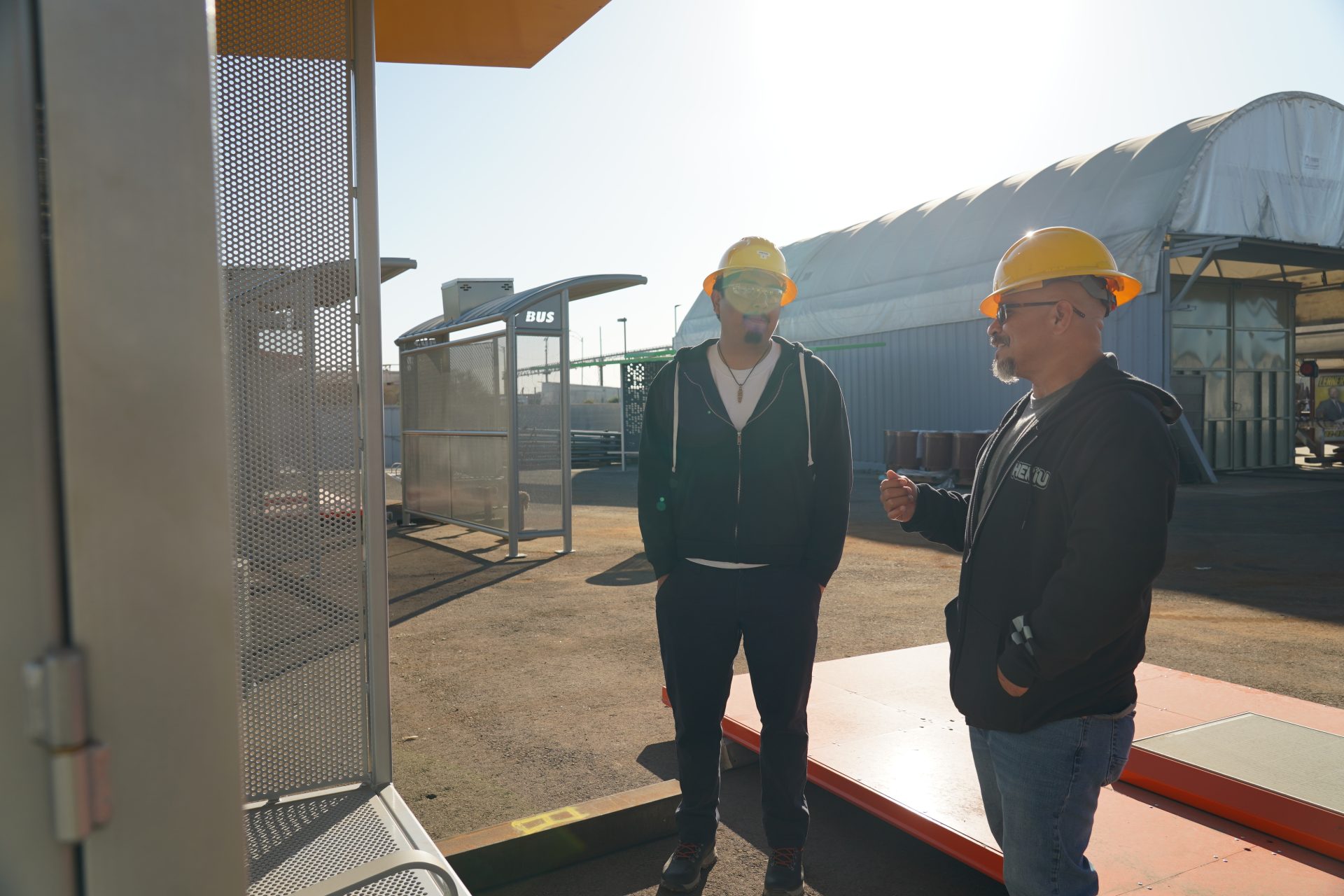
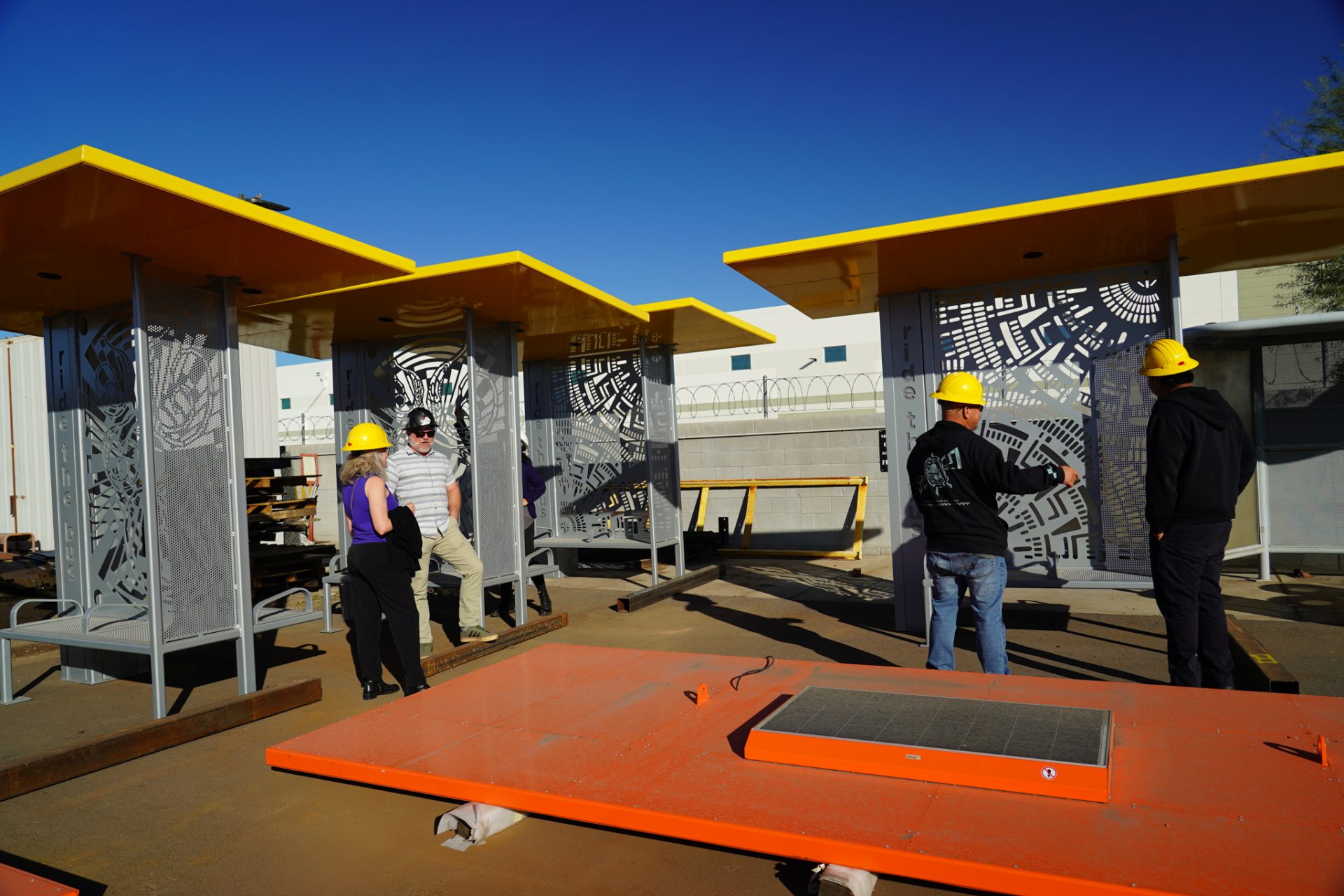
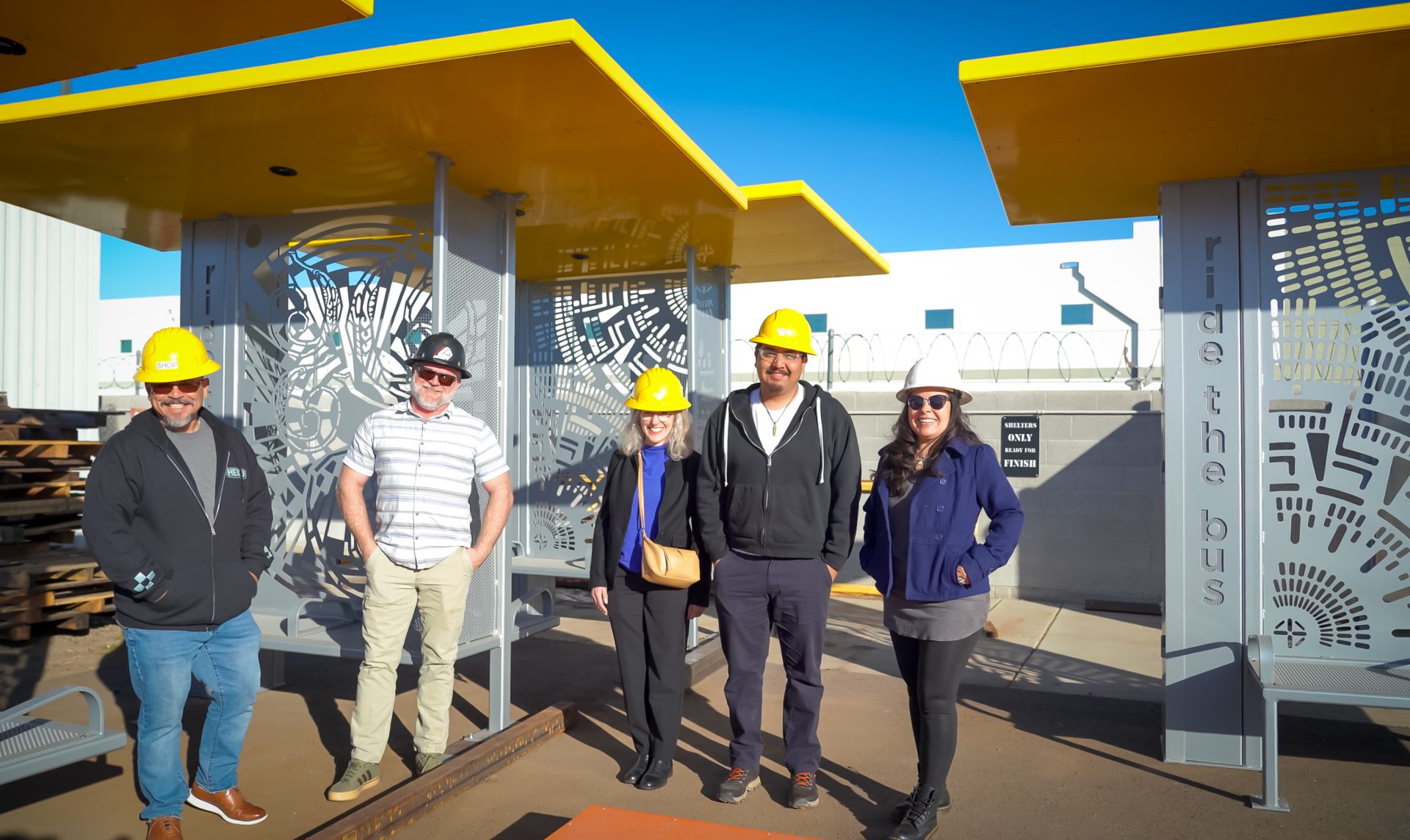
As part of the Downtown Tempe Refresh Project, in 2024 Tempe Arts and Culture and Tempe Public Art commissioned shaded bus shelters to be designed by members of the Hekiu Indigenous Artists Continuum.
The fabrication process was completed in February and three bus shelters are now installed along Mill Avenue. One more shelter is to be installed southbound on Mill Avenue off University Drive.
“This project reflects Tempe’s commitment to enhancing public transit infrastructure while honoring the Indigenous cultural heritage of the land,” said Tempe Public Art Coordinator Sharah Nieto.
“Partnering with Native artists, especially those whose ancestors are from the land where a project is being built, is not just a symbolic gesture. It creates deep cultural benefits that are unique to this landscape and a contemporary understanding of native people.”
3 Takeaways:
- Tempe Public Art and Hekiu Artists Continuum members Joshua Yazzie and Jacob Butler collaborated on designs for shaded bus shelters.
- The artwork on the shelters reflects O’odham perspectives and creative designs on traditional O’odham land.
- This was Yazzie’s first public art project.
O’odham/Diné weaver and digital artist Joshua Yazzie and Salt River Pima-Maricopa Indian Community member Jacob Butler designed the shelters and collaborated with the city.
This was Yazzie’s first public art project. After initial talks with the city about working on the installation, Hekiu member Amy Davila called Yazzie and asked him if he was up to the task.
Yazzie took on the challenge and provided a design to fit the guidelines for the project.
“I am confident I brought my quiet observance to the project,” said Yazzie. “And Jacob Butler’s natural leader tone was needed from the beginning and was very insightful.”
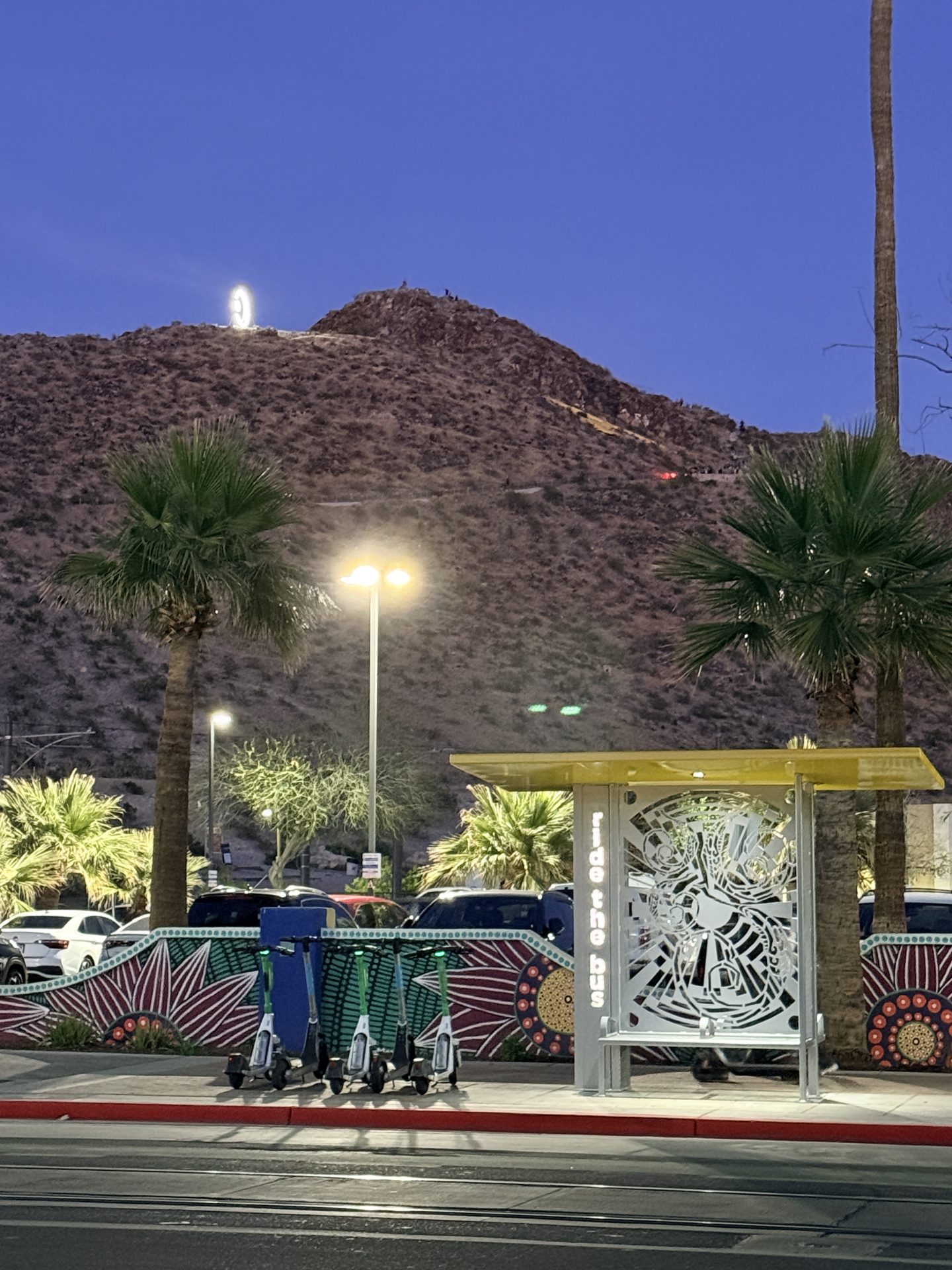
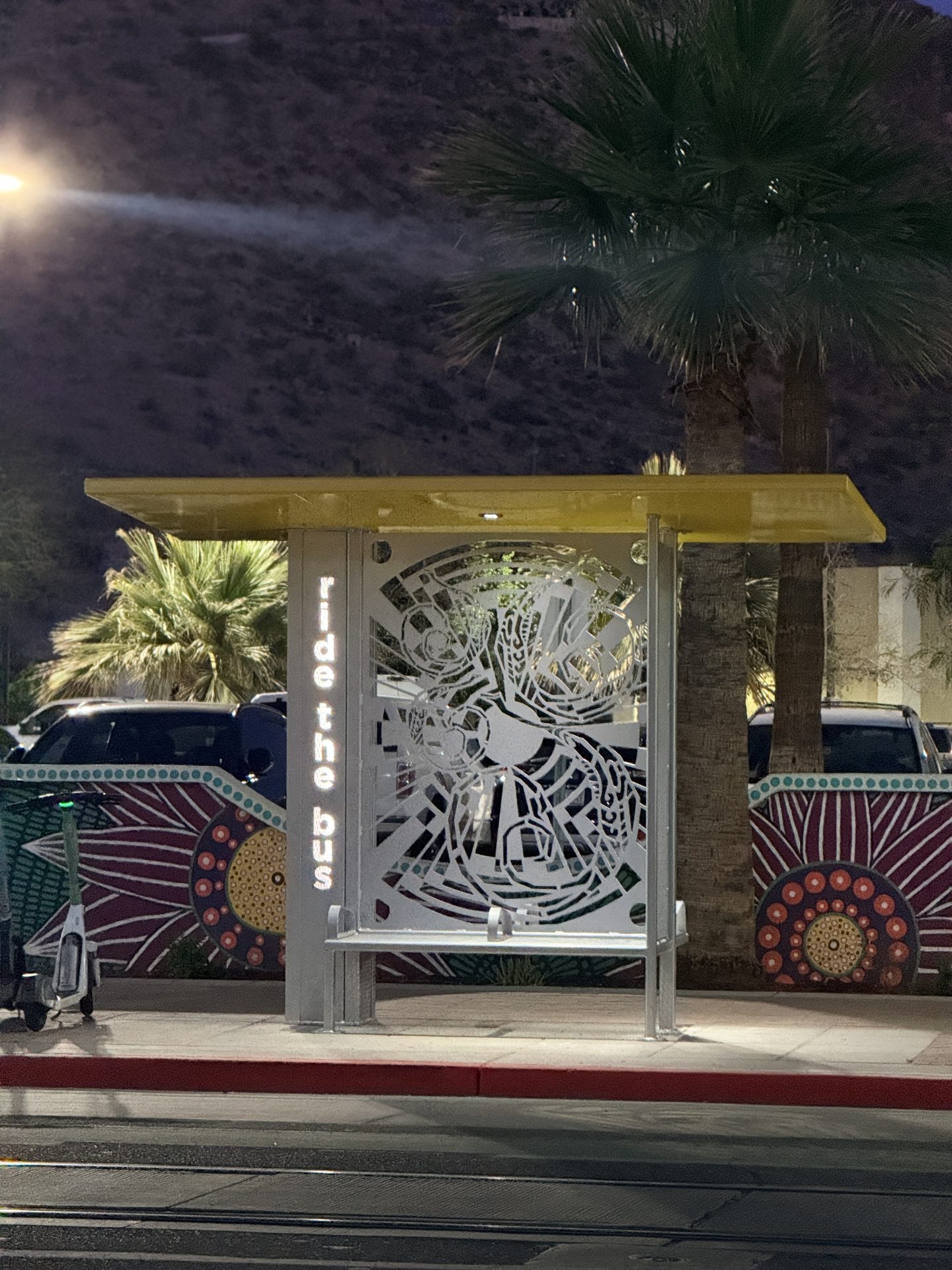
Yazzie’s design is called “Birds.”
“In my mind this has a 3-in-1 representation of my home in Vak-ki (District 5, Gila River Indian Community),” said Yazzie.
“The center fork-like lines are from Huhugam pottery, [it has the] continuous ‘water’ variation (canal systems), then finishes with dots for the blackbirds on top of telephone lines and a single coyote paw.”
Yazzie said Hekiu member Selina Martinez was a huge help in perfecting his design.
Butler wasn’t part of the original conversations involving Hekiu and Tempe. He came aboard during the next phase in planning. Hekiu wanted a Continuum member who had previously done public art to work with a member who hadn’t worked with a municipality before.
The city representatives were helpful and patient during the project, according to Butler. Most importantly, the Continuum brought their own creative take on how they envisioned cultural representation.
“They helped navigate concerns with design and functionality between multiple entities well,” said Butler.
“When I pitched my design, I wanted to highlight I:hug.”
I:hug is the O’odham word for devil’s claw.
Butler said O’odham basketry is easily recognized widely, but not many people can identify the plants used to make the baskets. He wanted to bring to the forefront a foundational material responsible for the images we all see and utilize today.
During his basketry demos, Yazzie said he meets too many people who say things like “I didn’t know this tribe was here and I’ve lived here my whole life.”
“I believe the entire Phoenix valley is the canvas for O’otham to be represented through infrastructure, and it is the responsibility of all O’otham to remind everyone else where they continue to occupy,” said Yazzie.
Butler said he appreciates having worked with Nieto and her help with the process. Yazzie also thanked Nieto and Tempe Manager of Public Art Rebecca Rothman for their collaboration.
“We’re honored to have the opportunity to collaborate with Hekiu and artists Joshua Yazzie and Jacob Butler to elevate Indigenous narratives while addressing community architecture and infrastructure needs, such as shaded bus shelters,” said Nieto. “We found value in how the artists took elements from basketry designs and traditional materials utilized in basketry like the martynia plant (devil’s claw) and translated it into a transit shelter design that deeply resonates with the landscape and its Indigenous presence.”
Nieto said that providing opportunities to Native artists from this land is about authenticity and cultural accuracy.
“Indigenous artists carry lived knowledge, stories and traditions directly tied to these places,” said Nieto.
“No one can tell that story better than them.”
Nieto continued, “When those voices are missing, or told by people interpreting Indigenous culture, designs can fall into stereotypes, pan-Indigenous motifs, the use of sacred imagery or incorrect symbols that may be disrespectful and or misrepresent local Indigenous cultures.”
Both Butler and Yazzie think highly of their public art having added functionality as a shaded space for people to wait for public transportation, as well having a cultural meaning behind it.
“I think it’s awesome! We say we claim affiliation with our ancestral lands and that relationship still matters to us,” said Butler. “The more representation through public art, the more people will be reminded that this relationship still exists.”
For Butler, having this opportunity to deliver public art from O’odham perspectives and culture helps reinforce understanding of the relationship the O’odham have with the lands surrounding O’odham communities.
“The more representation within the cities, the more that relationship is understood by the general public,” said Butler. “Artwork helps as visual reminders of things unique to a person or place.”