VIEWS: 586
May 5, 2026Getting to Know: Missing and Murdered Indigenous People Coordinator Paula Shaw
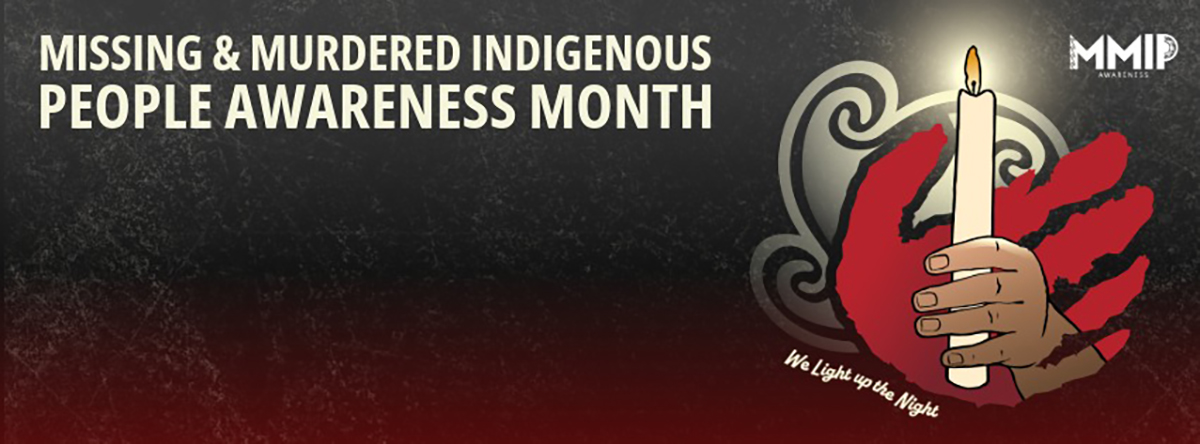
The ongoing trauma of missing and murdered Indigenous people (MMIP) continues to weigh heavily on the hearts and minds of many, especially in Indian Country.
Locally, to help navigate the harsh traumas of MMIP, the Salt River Pima-Maricopa Indian Community has established its own MMIP coordinator, Paula Shaw, who works closely with Salt River police, fire and other department staff in these cases.
“If families find themselves in this situation, the very first step they would need to do is contact the Salt River Police Department,” Shaw said. “In these cases, the police department investigates missing and murdered individuals as part of their job. I then get notified by the Salt River Police Department.”
Shaw shared that all MMIP cases received by local authorities are automatically registered into the National Missing and Unidentified Persons System (NamUs, namus.gov), an online resource center for information on missing, unidentified and unclaimed persons.
In the event of an MMIP situation in the Community, once the family contacts the SRPD and reports an individual as missing, SRPD authorities will contact Shaw and provide her with a brief overview of the situation.
“SRPD will let the family know that the MMIP coordinator will be reaching out to them. Afterward, I contact the family directly,” Shaw said.
She continued, “My full job is to provide support to the families. If the family needs someone to explain things in a different way, or simply if they don’t want to meet with police officers alone, I can be there for them. Those are the kind of things I provide to the families. Or even if they just need a ride. I do anything to help the whole process flow better.”
Shaw also works closely with SRPMIC Behavioral Health Services and other Community departments.
Part of her job is to ensure that the families take care of themselves while dealing with the difficult trauma of an MMIP situation.
“I stress to the families, like the statement the airlines use, ‘The parents must put their oxygen mask on first before they help their kids.’ [What I say is] very similar. I tell the families they must take care of themselves first in order to help their family members and loved ones,” said Shaw.
She added, “I worked in the court system for a long time. The majority of the time, when people go to court, it’s never for a happy reason, unless it’s for a marriage or adoption. So, I let the families know they must take care of themselves during this time as well.”
Shaw also revealed that if families find themselves dealing with an MMIP situation, they should avoid making big financial or other life-changing decisions during this time.
“[MMIP] is not a situation that anyone knows how to deal with. It’s unfortunate that these cases happen. Nobody knows what to do or how to feel in this situation. In addition to talking with police or government workers, they also have these emotions and feelings that they’re trying to deal with. I ease the family into each step that they’ll have to deal with,” she added.
Shaw will continue to be a supportive and resourceful presence here in the Community. Her official introduction to the Community occurred on May 5 at the Accelerated Learning Academy for the annual MMIP walk and candlelight vigil.
MMIP Checklist for Families
Here are steps to take and additional information if families ever find themselves in an MMIP situation.
Step 1: File a missing person report
- Contact the Salt River Police Department.
- For all MMIP cases in the Community, the SRPD will contact the Community’s MMIP Coordinator, Paula Shaw.
- Families do not need to contact Shaw directly.
- Write down the officer’s info, badge number and police report number.
- Write down the name of the officials that will follow up with the family.
- Document and record all information in a separate notebook.
- Verify/ensure the missing person report is submitted to the NAMUS.gov databases.
- All missing person reports taken by the Salt River Police Department are sent to the National Missing and Unidentified Persons System (NamUs) national database.
- Always provide honest and truthful information.
Step 2: Preliminary steps before opening a missing person case
- Determine the date of last contact with the missing individual and list the ways he or she can be contacted:
- Cell phone number
- Social media profiles
- Friends
- Family members
- Work colleagues
- School staff
- Other hangout spots
- Check local jails, detention centers, detox centers, domestic violence shelters and hospitals.
- Certain facilities may not be allowed to provide a person’s information for privacy reasons; they may simply state that they cannot confirm or deny certain information.
- Always use the full name and birthdate of the missing person.
- Nicknames can assist in the search; however, they may not be as useful as a legal name, especially if the nickname is a common one.
- List any cognitive, mental or physical disabilities or limitations the person may have.
- If applicable, list the person’s medications and the dosages.
Step 3: Generate a missing person poster
- Use a clear photo of the person that has not been altered in Photoshop.
- Avoid using group photos with other individuals in the image.
- Avoid using images that contain social media filters that can alter eye color, hair length or any other identifiers.
- Ask local restaurants, businesses, churches and other locations for permission and assistance with putting up posters at their locations.
- The poster should be informative and have the family’s contact information clearly listed.
- Designate an individual’s contact information to be listed on the poster.
Step 4: Mobilize your community
- Reach out to family members, loved ones, volunteers, co-workers and more to create a community search group.
- Create a community command post at a library meeting room, chapter house, local business, church, etc.
- Select a neutral location that is available and accessible to the public for meetings and gatherings.
- Establish a community team lead who can be a point of contact for all police and officials.
- Team leads should have:
- Reliable email
- Reliable phone number
- Good communication skills with family and officials
- Team leads should have:
Step 5: Prioritize self-care
- Physical
- Am I staying hydrated?
- Am I eating enough/too much?
- Psychological
- Am I depressed?
- Have I allowed time for myself to cry?
- Social
- Am I avoiding my friends and family?
- Do I need to take a moment for myself?
- Spiritual
- Do I need to pray about this? Meditation and prayer can ease some of the mental anguish individuals feel.
Step 6: What to avoid
- Avoid judging yourself.
- Avoid substance abuse.
- Avoid shame and guilt.
- Don’t make any important life/financial decisions.
Key points
- You are not alone.
- There are many SRPMIC advocates and staff ready to assist in these cases.
- Community health advocates such as SRPD officials and MMIP Coordinator Paula Shaw are trauma-informed and can help navigate and assist families during this traumatic time.